Table of Contents
ToggleCombining a fireplace and TV in the same living room can feel like solving a design puzzle, both elements demand attention, but they don’t always play nice together. The good news? With the right layout and a few proven strategies, you can create a space that’s as functional as it is inviting. Whether you’re working with a small living room with fireplace and TV constraints or a sprawling open-concept space, the key is balancing visual weight, viewing angles, and traffic flow. This guide walks through practical layouts, honest trade-offs, and design tips that help both features shine without competing for the spotlight.
Key Takeaways
- Living room with fireplace and TV ideas work best when you balance visual weight, viewing angles, and traffic flow—choose a layout that respects both features as focal points.
- Mounting a TV above the fireplace saves wall space but can cause neck strain and heat damage; use a pull-down mount ($150–$400) or heat shield to mitigate these issues.
- Place the fireplace and TV on opposite walls for optimal ergonomics and flexible seating arrangements, especially in rectangular rooms 14+ feet wide.
- Keep the TV at least 12 inches above the mantel and maintain 24–36 inches of spacing between the fireplace opening and TV to prevent heat damage to electronics.
- Use built-in cabinetry, matching materials, and coordinated lighting to create visual continuity and prevent your fireplace and TV layout from looking cluttered.
- Test furniture arrangements and measure sightlines before committing; prioritize a functional room that fits your lifestyle over trendy designs that compromise comfort.
Why the Fireplace and TV Combination Works
Fireplaces and TVs both serve as natural gathering points, which is why they’re often found in the same room. The fireplace brings warmth and a sense of coziness, while the TV anchors entertainment and daily downtime. When positioned thoughtfully, they complement each other rather than compete.
The challenge is that both are focal points. In traditional design, a room should have one dominant feature, but modern living demands flexibility. Most households use the TV daily, while the fireplace gets seasonal or occasional use. That usage pattern often dictates which element takes priority in the layout.
Successful combinations respect sightlines and ergonomics. You want comfortable viewing angles for the TV, ideally at eye level when seated, and a fireplace that doesn’t create glare or awkward neck strain. When planning furniture arrangements, consider how seating will orient toward each feature and whether you need separate zones for different activities.
Another factor is heat. If the TV sits too close to a wood-burning or gas fireplace, prolonged exposure to heat can damage electronics. Most manufacturers recommend keeping screens at least 12 inches above the mantel and ensuring adequate ventilation. Electric fireplaces run cooler and offer more flexibility for tight spacing.
TV Above the Fireplace: Pros, Cons, and Best Practices
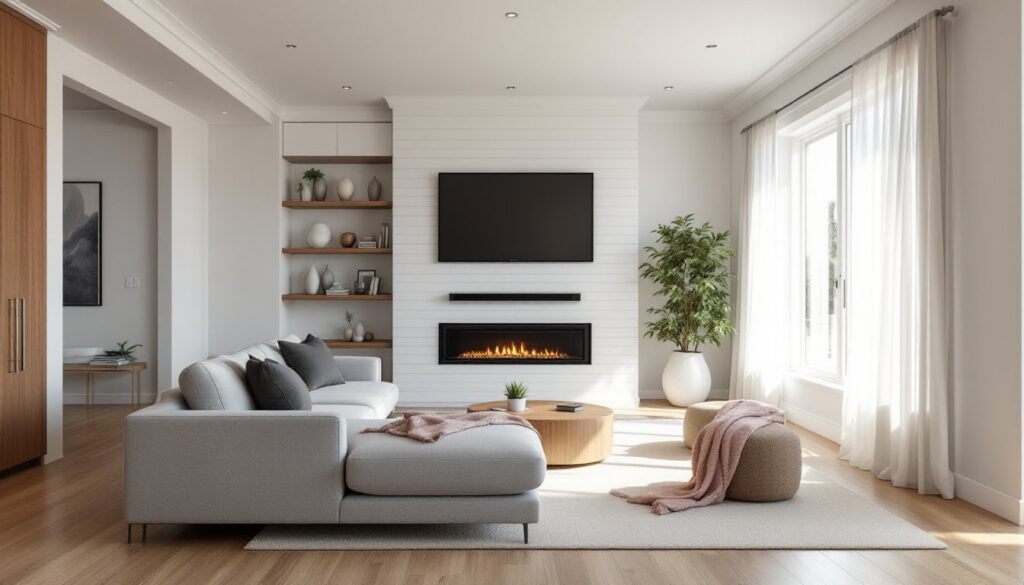
Mounting the TV above the fireplace is one of the most common solutions, especially in homes where wall space is limited. It centralizes both features on a single focal wall and frees up floor space for seating.
Pros:
- Saves valuable wall real estate in smaller rooms
- Creates a clean, symmetrical look
- Works well in open-concept layouts where furniture floats in the center
Cons:
- Viewing height is often too high, causing neck strain during long viewing sessions
- Heat from the fireplace can shorten TV lifespan or distort the screen
- Glare from flames can wash out darker scenes on-screen
Best Practices:
If you’re set on this layout, install a pull-down TV mount that lets you adjust the screen to eye level when in use. These mounts cost between $150–$400 and are worth it for daily TV watchers. Alternatively, lower the fireplace opening or raise the seating to reduce the angle, bar-height sofas and raised platforms can help in rooms with high ceilings.
For heat management, add a mantel or heat shield between the firebox and TV. A projecting mantel (at least 6 inches deep) redirects rising heat away from electronics. With gas or wood-burning units, consider a blower kit to push heat forward instead of straight up. Some homeowners opt for designing entertainment spaces that incorporate built-in cabinetry around the fireplace, which helps disguise the height and integrates storage.
Always check the TV manufacturer’s specifications for maximum operating temperature. Most LCD and OLED screens shouldn’t exceed 95°F during use.
Side-by-Side Fireplace and TV Arrangements
Placing the fireplace and TV side-by-side on the same wall eliminates the height problem and gives each feature equal billing. This works particularly well on long walls (12 feet or more) where you have room to spread out.
The layout typically involves flanking a centered fireplace with the TV offset to one side, or positioning both elements symmetrically with built-ins or cabinetry between them. Seating can angle slightly toward the TV while still enjoying the fireplace’s ambiance.
Key Considerations:
- Spacing: Leave at least 24–36 inches between the fireplace opening and the edge of the TV to prevent heat damage.
- Viewing Angles: The TV may sit off-center from the main seating area. Articulating mounts help angle the screen toward viewers.
- Visual Balance: Use matching millwork, stone cladding, or paint to unify both features. Without continuity, the wall can look cluttered.
This arrangement shines in rooms with how to arrange living room furniture with fireplace and tv on the same plane. Unique design choices like asymmetrical shelving or a gallery wall between the two can tie the composition together.
One downside: this layout demands more wall length, which can limit furniture placement on adjacent walls. It’s less ideal in narrow or small living room ideas with fireplace and tv constraints where every inch counts.
Opposite Wall Placement for Balanced Design
Putting the fireplace on one wall and the TV on the opposite wall is a designer favorite for good reason, it solves almost every ergonomic and aesthetic issue at once. Each feature gets its own focal wall, and seating can float in the middle to address both.
This layout works best in rectangular rooms (14 feet wide or more) where you have enough distance between walls to avoid a cramped feel. The fireplace often anchors one short wall, while the TV takes the opposite side. Sofas and chairs can form a conversational U-shape that faces the TV, with side chairs or ottomans angled toward the fire.
Advantages:
- TV sits at proper eye level without competing with the fireplace
- No heat or glare issues
- Allows for flexible furniture arrangements
- Creates two distinct activity zones (cozy fireside reading vs. TV viewing)
Challenges:
- Requires careful furniture placement to avoid blocking sightlines
- Can feel disjointed if the two walls aren’t visually connected (use rugs, lighting, or matching trim to unify the space)
When planning furniture for small living room with fireplace and tv on opposite walls, prioritize a sectional or L-shaped sofa that addresses both views. Swivel chairs are a practical addition, they let you pivot between the fireplace and TV without rearranging the room.
Incorporating wood tones in millwork or media consoles on both walls creates visual rhythm and ties the design together.
Corner Fireplace Layouts with TV Integration
Corner fireplaces are common in older homes and condos, and they present unique layout challenges. The angled placement limits wall space and can create awkward furniture angles, but with the right approach, a corner fireplace becomes a design asset.
Option 1: TV on Adjacent Wall
Place the TV on the wall perpendicular to the fireplace. Angle your sofa or sectional toward the corner so it addresses both features. This setup works in square or L-shaped rooms where seating can nestle into the corner. Keep the TV low (center of the screen 42–48 inches from the floor) to maintain comfortable viewing.
Option 2: TV Above or Beside the Corner Unit
If the corner fireplace has a tall surround or built-in mantel, you can mount the TV directly above it, though this reintroduces the height issue. Alternatively, build a custom media console that wraps the corner, placing the TV to one side. This works best with electric or gas inserts that produce minimal heat.
Option 3: Opposite Wall with Floating Furniture
Put the TV on the wall opposite the corner fireplace and float a sectional in the middle of the room. This maximizes seating and keeps both features visible from multiple angles.
Corner layouts demand strategic lighting. Add sconces or recessed lights on the walls flanking the fireplace to balance the room’s visual weight. Contemporary designs often use linear fireplaces or stacked stone that extends vertically, which modernizes the corner and provides a backdrop for nearby seating.
Design Tips for a Cohesive Fireplace and TV Room
Once you’ve settled on a layout, the details make or break the final result. Here’s how to bring it all together:
Use Built-Ins for Continuity
Custom cabinetry or open shelving around the fireplace and TV creates visual flow and adds storage. Matching materials, like painted MDF, stained oak, or shiplap, unify the elements. Budget around $2,000–$5,000 for a built-in unit, depending on materials and regional labor rates.
Mind the Mantel
If you’re mounting a TV above the fireplace, keep the mantel minimal. A deep, ornate mantel eats up vertical space and pushes the TV even higher. Consider a floating mantel or a slim ledge (4–6 inches deep) that provides a visual break without adding bulk.
Cable Management
Nothing ruins a clean design faster than visible cables. Run wiring through the wall using an in-wall cable management kit (around $20–$40) or hire an electrician to install an outlet behind the TV. For fireplace-mounted TVs, a cord cover raceway painted to match the wall keeps things tidy.
Scale Your Furniture
Oversized sectionals can overwhelm a fireplace, while dainty chairs look lost next to a large stone hearth. Aim for proportional balance, if your fireplace has a massive surround, go for substantial seating. Coordinated sets take the guesswork out of scaling.
Layer Lighting
Fireplaces and TVs both emit light, but you’ll need ambient and task lighting to make the room functional. Install dimmer switches so you can adjust levels for movie watching vs. entertaining. Wall sconces on either side of the fireplace add symmetry, while recessed lights prevent glare on the TV screen.
Add Texture and Color
Neutral palettes work well, but don’t shy away from accent colors in throw pillows, rugs, or art. Texture, like a woven rug, linen curtains, or a chunky knit throw, softens hard surfaces (stone, tile, drywall) and makes the room feel lived-in. Lighter furniture tones reflect more light and can make a small room feel airier, while darker pieces ground a large space.
Prioritize Function Over Trend
Design blogs may push dramatic black accent walls or floor-to-ceiling stone, but if it doesn’t fit your lifestyle or budget, skip it. A well-arranged room that serves your daily needs will always beat a Pinterest-perfect space that’s uncomfortable to live in. Check curated layout ideas for inspiration, then adapt them to your home’s architecture and your household’s routines.
Safety Note: Keep combustibles (like affordable decor or stacked firewood) at least 36 inches from the fireplace opening. Install a smoke detector and carbon monoxide alarm in any room with a gas or wood-burning unit.
Conclusion
Designing a living room with both a fireplace and TV doesn’t have to be a compromise. Whether you mount the TV above the mantel, place them side-by-side, or dedicate opposite walls to each, the best layout is the one that fits your space, your viewing habits, and your daily routine. Take the time to test furniture arrangements, measure sightlines, and plan for heat and cable management. With a little upfront planning, you’ll end up with a room that’s as practical as it is inviting.