Table of Contents
ToggleBlue furniture has been quietly dominating living rooms for a reason, it’s versatile, grounding, and works harder than almost any other color. Whether someone’s after a statement sofa or a subtle accent chair, blue bridges the gap between bold personality and lasting style. Unlike trendy hues that feel dated within a season, blue anchors a space while allowing flexibility with decor updates. This guide walks through choosing the right shade, selecting anchor pieces, styling with complementary colors, and picking materials that hold up to real life.
Key Takeaways
- Blue living room furniture is versatile, timeless, and psychologically calming, making it a superior choice compared to trendy hues that feel dated within a season.
- Navy blue furniture anchors spaces and pairs effortlessly with warm woods and brass hardware, while light blue shades work best for smaller rooms or spaces lacking natural light.
- A well-built blue sofa or sectional with hardwood frames and hand-tied springs is the most impactful anchor piece, dictating the rest of your living room design.
- Blue living room furniture pairs successfully with warm neutrals like tan and camel, complementary colors like mustard yellow, and the classic navy-and-white combination.
- Performance fabrics like Sunbrella and Crypton offer practical durability for households with children or pets, while velvet and linen provide refined aesthetics that mask wear better than light neutrals.
- Navy and darker blue shades hide stains and wear more effectively than lighter tones, making them a practical long-term investment for everyday living spaces.
Why Blue Furniture Is the Ultimate Choice for Modern Living Rooms
Blue operates on a psychological level that few colors can match. It’s associated with calm and stability, which makes it ideal for a room designed for relaxation and conversation. Unlike neutral grays or beiges that can read flat, blue adds dimension without overwhelming a space.
From a design standpoint, blue plays well with nearly every aesthetic. A navy velvet sofa fits into a traditional setup as easily as it does in a mid-century modern space. Light blue accent chairs work in coastal themes, Scandinavian minimalism, or even industrial lofts. According to color theory frequently cited on Elle Decor, blue is one of the most universally appealing colors, which explains why it holds resale value better than bolder, more polarizing choices.
Blue also hides wear better than lighter neutrals. Households with kids or pets benefit from darker shades like navy or teal, which don’t show every spill or paw print. Light blues, while more delicate, still mask minor discoloration better than stark white or cream. For those planning to keep furniture for years, blue’s forgiving nature and timeless appeal make it a practical investment.
Popular Shades of Blue and How to Choose the Right One
Navy Blue: Bold and Sophisticated
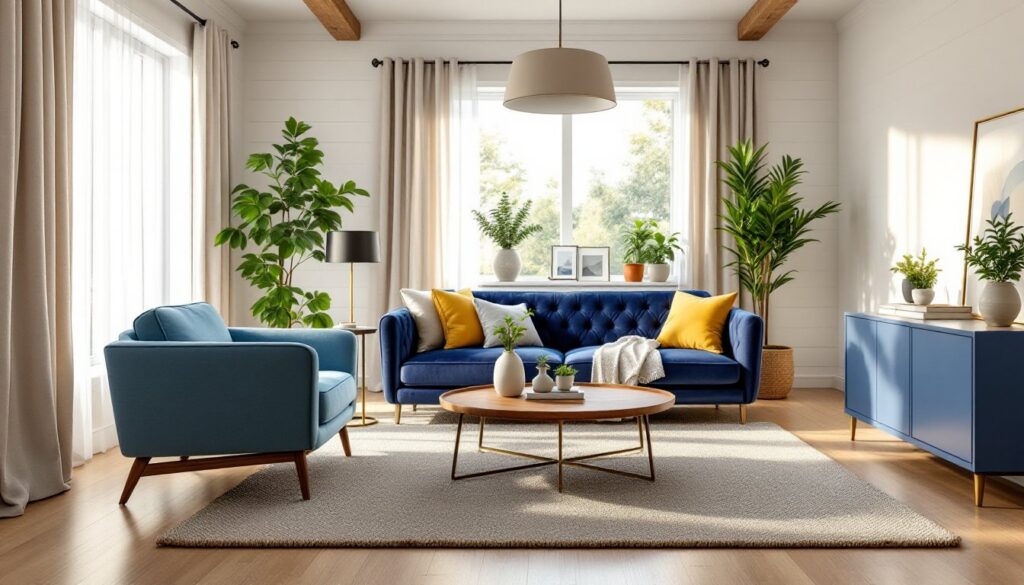
Navy blue is the workhorse of blue furniture. It’s dark enough to anchor a room but avoids the severity of black. A navy sofa or sectional pairs effortlessly with warm woods, brass hardware, and crisp whites. It’s a go-to for anyone building a living room set because it grounds the space while allowing accent colors to pop.
Navy works particularly well in rooms with abundant natural light. In dimmer spaces, it can feel heavy unless balanced with lighter textiles and strategic lighting. Consider pairing a navy couch with cream throws, light oak side tables, or a jute rug to prevent the room from feeling cave-like.
For upholstery, navy in velvet or linen reads more refined than synthetic microfiber. Velvet catches light differently depending on the angle, adding visual interest, while linen offers texture and breathability. Both are durable choices for high-traffic living rooms.
Light Blue and Powder Blue: Airy and Serene
Light blue and powder blue create a sense of openness, making them ideal for smaller living rooms or spaces that lack natural light. These shades evoke coastal vibes but aren’t limited to beach houses, they fit beautifully into modern farmhouse, Scandinavian, and even eclectic interiors.
Powder blue works well for accent chairs, ottomans, or smaller sectionals. It pairs naturally with whites, soft grays, and natural wood tones. Avoid pairing it with cool grays, which can make the space feel sterile. Instead, warm up the palette with beige, tan, or even blush pink accents.
One consideration: light blues show stains and wear more readily than darker shades. Choose performance fabrics like Crypton or Sunbrella if the furniture will see heavy use. These fabrics resist spills and UV fading while maintaining a soft hand feel, which is critical for everyday comfort.
Best Blue Furniture Pieces to Anchor Your Living Room
The sofa or sectional is the most impactful blue furniture choice. A well-built blue sofa becomes the room’s focal point and dictates the rest of the design. Look for hardwood frames (kiln-dried oak or maple) and eight-way hand-tied springs for longevity. Cheaper frames use engineered wood and sinuous (S-shaped) springs, which sag faster under regular use.
For smaller spaces, a blue accent chair provides color without commitment. A velvet or leather club chair in teal or cobalt adds personality without dominating. Pair it with a neutral sofa to avoid color overload. Accent chairs are also easier to reupholster down the line if tastes change.
Ottomans and benches in blue offer versatility. A large upholstered ottoman can serve as extra seating, a footrest, or even a coffee table with a tray on top. Blue ottomans work particularly well in rooms where the sofa is neutral, they inject color at a lower visual weight. Storage ottomans with lift-top lids are a practical choice for homes short on space.
For those layering unique living room furniture, consider a blue credenza or console table. Painted wood furniture in shades like Prussian blue or cerulean can act as a statement piece while providing storage for remotes, books, or barware. Just ensure the paint finish is durable, milk paint and chalk paint look beautiful but require topcoats (polyurethane or wax) to withstand daily handling.
Styling Tips: Pairing Blue Furniture with Colors and Decor
Blue’s versatility means it pairs well with a wide range of colors, but some combinations work better than others. Navy and white is the classic, fail-proof duo. Add brass or gold hardware, and the space leans traditional: swap in black metal accents, and it shifts modern.
Blue and warm neutrals (tan, beige, caramel) create a grounded, inviting palette. This combination softens blue’s coolness and adds warmth, which is especially useful in north-facing rooms that lack direct sunlight. A navy sofa with camel-colored pillows and a tan rug feels balanced without being boring.
For a bolder approach, try blue and mustard yellow or burnt orange. These complementary colors (opposite on the color wheel) create contrast without clashing. A teal sofa with mustard throw pillows and a rust-colored area rug feels vibrant but cohesive. Designers frequently discuss this pairing on platforms like MyDomaine, noting how it works across modern and eclectic styles.
Avoid pairing blue furniture with cool grays unless the space has plenty of warm lighting. The combination can read clinical or cold. If gray is unavoidable (existing flooring or walls), add warm wood tones, greenery, or textured textiles to offset the chill.
When mixing dark and light wood, blue acts as a unifying element. A navy couch bridges the gap between a walnut coffee table and a light oak media console, preventing the woods from competing visually.
Material and Fabric Considerations for Blue Living Room Furniture
Velvet is a top choice for blue upholstery. It has natural depth and catches light beautifully, which prevents darker blues from looking flat. Look for cotton velvet or cotton-poly blends: polyester-only velvet can look cheap and pill quickly. Velvet does require maintenance, vacuum with an upholstery attachment weekly and spot-clean spills immediately with a damp cloth. Avoid steam cleaners, which can crush the pile.
Linen and linen blends offer texture and breathability, making them ideal for warmer climates or year-round comfort. Linen wrinkles easily, which some homeowners love for a lived-in look and others find sloppy. Pre-washed linen softens over time and resists pilling. For durability, choose a linen-cotton blend (typically 55% linen, 45% cotton) rather than 100% linen.
Performance fabrics (like Sunbrella, Crypton, or Revolution) are engineered to resist stains, fading, and moisture. They’re not just for outdoor furniture anymore, indoor performance fabrics now rival traditional upholstery in softness. If the living room doubles as a TV room where snacks and drinks are common, performance fabric is worth the upcharge. Most can be cleaned with mild soap and water, and many carry 5–10 year warranties.
Leather in blue is less common but striking. Navy or cobalt leather ages beautifully, developing a patina over time. Full-grain leather (the top layer of the hide) is the most durable and breathable, but it’s also the priciest. Top-grain leather is a step down but still high quality. Avoid bonded leather (leather scraps glued to a backing), it peels and cracks within a few years.
For painted wood furniture in blue, check the finish. Furniture-grade paint with a topcoat (polyurethane or conversion varnish) holds up to daily use. Avoid pieces with thin, single-coat finishes, they chip easily and require frequent touch-ups. If buying vintage or thrifted blue furniture, plan to sand and refinish if the paint shows significant wear.
When considering white furniture alongside blue pieces, ensure the whites match in undertone. Blue furniture often has cool undertones, so pair it with bright or cool whites rather than creamy or warm whites. Mismatched whites can make a room feel disjointed.