Table of Contents
ToggleThat 108-inch sectional at the furniture showroom looked perfect under the vaulted ceiling and gallery lighting. But now it’s blocking your hallway and dwarfing every other piece in the room. Oversized living room furniture isn’t inherently a mistake, it just requires deliberate planning. When scaled and positioned correctly, large-scale pieces add luxury, comfort, and a statement-making presence that standard furniture can’t deliver. The trick is knowing when big works, how to measure for it, and what layout adjustments keep a room from feeling like a furniture warehouse.
Key Takeaways
- Oversized living room furniture requires careful measurement and planning to avoid blocking hallways or overwhelming spaces, but delivers luxury, comfort, and statement-making presence when scaled and positioned correctly.
- Apply the two-thirds rule—your primary seating should occupy roughly two-thirds of the wall length—and always verify delivery paths, door clearances, and ceiling height before purchasing large-scale pieces.
- Maintain at least 30–36 inches of clearance around oversized furniture for comfortable foot traffic, and use painter’s tape to outline furniture footprints before buying to prevent costly returns.
- Balance bulky oversized pieces with light neutrals, thin-profile accessories, height variation through vertical elements, and strategic negative space to prevent rooms from feeling like a furniture warehouse.
- Anchor oversized sectionals against the longest wall whenever possible, avoid blocking heating vents or outlets, and pair one large anchor piece with smaller accent furniture to create visual rhythm and prevent monotony.
- Light-colored fabrics like cream and soft gray recede visually, while leather tends to read heavier than fabric—pair your oversized sofa or sectional with appropriately scaled rugs and coffee tables to maintain proper proportion.
What Counts as Oversized Living Room Furniture?
“Oversized” doesn’t mean impractical, it means furniture scaled larger than standard residential dimensions. A typical three-seat sofa measures 84–90 inches wide. An oversized version runs 96–120 inches or more, often with deeper seat depths (24–28 inches versus the standard 20–22 inches). Sectionals crossing the 140-inch mark, armchairs with seats wider than 36 inches, and coffee tables exceeding 60 inches all fall into this category.
Oversized pieces also tend to have taller backs and wider arms. A standard sofa back sits around 32–34 inches off the floor: oversized models can reach 38–42 inches, creating a more enclosed, cocoon-like seating experience. Depth matters too, extra-deep sofas accommodate people who like to curl up or stretch out fully, but they eat into walkway clearance.
Don’t confuse oversized with modular. Modular furniture comes in separate units you can rearrange: oversized pieces are simply larger unified frames. Some sectionals are both, oversized modules that combine into very large configurations. Pay attention to arm width as well. Track arms (straight, boxy profiles) add 6–8 inches per side: English rolled arms can add 10–12 inches, significantly increasing overall width.
The Benefits of Going Big with Your Living Room Pieces
Large furniture makes large rooms feel intentional instead of empty. A 14×20-foot living room with a standard 84-inch sofa and two club chairs can look underfurnished and awkward. An oversized sectional or a deep sofa paired with a substantial ottoman anchors the space and defines the seating zone without requiring filler pieces.
Comfort is the other major upside. Extra seat depth lets users sit cross-legged, recline with legs extended, or share space without shoulder-to-shoulder contact. Families with kids or pet owners appreciate the added real estate, a 120-inch sectional seats five adults comfortably, or three adults plus two kids sprawled with devices.
Oversized furniture also reduces visual clutter. Instead of four separate chairs, two side tables, and a loveseat, one large sectional and a single coffee table can deliver the same seating capacity with fewer pieces. This streamlined approach works especially well in open-concept homes where you want to delineate the living area without walls or partitions.
Finally, bold-scale furniture commands attention. A tufted, high-back sectional or a 72-inch round ottoman becomes a focal point, reducing the need for excessive wall art or accessories. It’s a strategy borrowed from hospitality design, hotels use statement seating to create luxury without busy decor.
How to Choose the Right Oversized Furniture for Your Room Size
Measure the room before shopping, not just length and width, but also door openings, stairwell widths, and ceiling height. Most oversized sectionals ship in boxes and assemble on-site, but some solid-frame sofas won’t navigate a 32-inch door or a tight turn at the landing. Confirm delivery path clearances and ask retailers about in-home assembly options if needed.
For proportion, apply the two-thirds rule: your primary seating piece (sofa or sectional) should occupy roughly two-thirds the length of the wall it faces, or two-thirds the width of the conversation area. In a 12×16-foot room, a sofa between 96 and 108 inches works. Go longer and it crowds the space: go shorter and it floats awkwardly.
Ceiling height influences how tall and bulky furniture should feel. Standard 8-foot ceilings pair better with lower-profile pieces, seat backs around 34–36 inches, to avoid a top-heavy look. Rooms with 9- or 10-foot ceilings can handle taller, more vertical designs without feeling compressed. Vaulted or cathedral ceilings tolerate the tallest, deepest sectionals available.
Leave at least 30–36 inches of clearance around all sides of major furniture for comfortable foot traffic. If a piece forces you into a sideways shuffle or blocks access to windows or outlets, it’s too big. Use painter’s tape on the floor to outline furniture footprints before buying, it’s a low-tech sanity check that saves expensive returns.
Layout and Placement Strategies for Large-Scale Furniture
Anchor oversized pieces against the longest uninterrupted wall whenever possible. Placing a 120-inch sectional on a 14-foot wall creates symmetry and leaves corner space for floor lamps or plants. Floating a massive sectional in the center of a room works in very large or open-plan layouts but requires at least 5 feet of clearance behind the sofa to avoid a cramped, dead-end feeling.
In rectangular rooms, orient the primary seating perpendicular to the longest wall to widen the perceived space. A deep sectional running parallel to a long wall can create a bowling-alley effect. Position it facing the shorter wall, and the room feels more balanced. Use area rugs to reinforce the layout, choose a rug large enough that all front legs of seating rest on it, typically 8×10 feet minimum for oversized setups.
Avoid jamming multiple oversized pieces into one room unless square footage genuinely supports it. Pair one large-scale anchor (sectional or sofa) with smaller accent chairs, nesting tables, or a streamlined media console. This creates visual rhythm and prevents the space from reading as a furniture showroom.
Consider sightlines from adjacent rooms in open-plan homes. An oversized sectional back facing the kitchen or entryway can act as a visual divider, but choose upholstery and finish details that look intentional from all angles. TV room furniture often incorporates large sectionals for media-focused layouts, so think about screen placement and viewing distance, 8–10 feet is ideal for most setups.
Design Tips to Balance Oversized Pieces Without Overwhelming Your Space
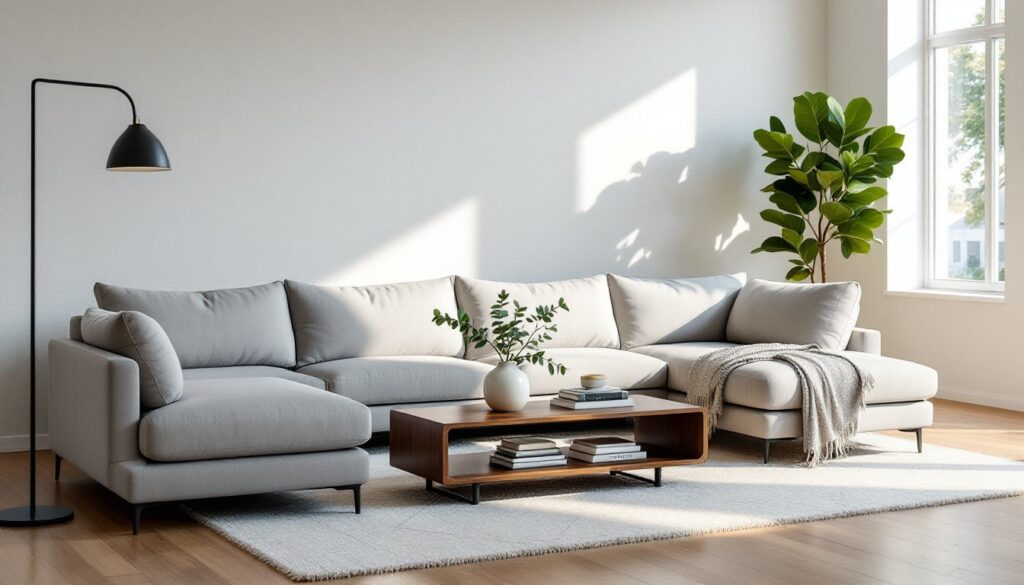
Color and upholstery make or break the impact of large furniture. Light neutrals, cream, soft gray, linen white, recede visually and keep oversized pieces from dominating. Dark colors (charcoal, navy, espresso) create drama but can shrink a room if not offset by lighter walls and rugs. Leather tends to read heavier than fabric: a charcoal leather sectional feels more imposing than the same piece in a nubby gray weave.
Balance bulky furniture with lighter-scale accessories. A chunky sectional pairs well with thin-profile side tables (metal or glass), open shelving, and minimal window treatments. Avoid heavy drapery, bulky media consoles, or thick-framed art, those compound the visual weight. Use slim-armed floor lamps and wall-mounted lighting to keep surfaces clear.
Play with height variation. If the sectional is low and deep, add taller elements, a 6–7 foot fiddle-leaf fig, vertical artwork, or a tall bookshelf, to draw the eye upward and counteract the horizontal mass. If the sofa has a high back, keep accessories low and horizontal: a long, low console, a squat ottoman, or a row of small succulents on a floating shelf.
Negative space is your friend. Don’t fill every corner. Leaving one wall mostly bare or keeping open floor area near windows prevents claustrophobia. Studies on living room design emphasize that strategic emptiness makes statement furniture feel curated, not crammed. Incorporate mirrors opposite windows to reflect light and visually expand square footage.
Common Mistakes to Avoid When Decorating with Oversized Furniture
The biggest error is buying on emotion in a showroom without verifying fit. Retail spaces have 12–14 foot ceilings and wide aisles: your living room doesn’t. Always get exact dimensions, width, depth, height, arm width, and leg clearance if you plan to vacuum underneath. Request a product spec sheet or CAD drawing if the retailer offers it.
Blocking architectural features is another rookie move. Don’t let a sofa arm cover heating vents, baseboard outlets, or window sills. You’ll lose functionality and create safety hazards (covering vents can reduce HVAC efficiency and violate building codes in some jurisdictions). Measure vent and outlet locations and map them onto your floor plan.
Using undersized rugs or coffee tables throws off proportion. A 5×7-foot rug under a 120-inch sectional looks like a bath mat. Go for at least 9×12 feet, and make sure the coffee table is roughly half to two-thirds the sofa’s length. A 48-inch round or 60-inch rectangular table works under most oversized sectionals.
Ignoring traffic flow creates daily frustration. Main walkways should be 36 inches wide minimum: 42–48 inches is better for households with kids, pets, or mobility aids. If guests have to shimmy past the sofa arm to reach the hallway, the layout isn’t working. Rearrange or downsize before you commit.
Finally, don’t let one oversized piece dictate the entire room’s style. If you’ve chosen a unique living room sectional in velvet or jewel tones, you can still mix in wood tones or white furniture accents to keep things from feeling one-note. Variety in material, texture, and scale prevents monotony. For inspiration on cohesive looks, platforms like Design Milk showcase how contemporary interiors layer different furniture scales successfully.
Conclusion
Oversized living room furniture isn’t a gamble if you measure carefully, plan circulation paths, and balance scale with lighter elements. Large pieces deliver comfort and presence that standard furniture can’t match, just make sure your room dimensions, door widths, and layout support them before the delivery truck arrives. When done right, going big transforms a room from functional to unforgettable.