Table of Contents
ToggleSalt Lake City’s high-altitude desert climate is a unique beast. Homeowners here deal with intense UV exposure, rapid temperature swings, dry air that warps wood, and surprise spring snowstorms that can dump six inches overnight. Choosing patio furniture for this environment isn’t just about aesthetics, it’s about picking materials and designs that won’t crack, fade, or rust before summer’s over. Whether you’re furnishing a covered deck in Sugarhouse or a sunny patio in Draper, understanding how local weather impacts outdoor furniture will save you money and frustration down the road.
Key Takeaways
- Patio furniture in Salt Lake City must withstand 15–20% stronger UV radiation, rapid temperature swings, and surprise spring snowstorms, making material selection critical for durability.
- Powder-coated aluminum and HDPE resin are the best materials for Salt Lake City patios, while standard wicker, wrought iron, and particleboard should be avoided due to warping and rust.
- Solution-dyed acrylic cushions like Sunbrella resist fading better than regular outdoor fabric in this high-altitude climate where UV exposure is intense.
- Store cushions and lightweight furniture indoors from November through March, and use breathable waterproof covers instead of plastic tarps to prevent mildew and rust.
- Budget-friendly options like refinished secondhand furniture, DIY concrete block benches, and end-of-season clearance sales (40–60% off in late August) offer quality patio furniture without premium pricing.
Why Salt Lake City’s Climate Demands the Right Patio Furniture
Salt Lake City sits at around 4,200 feet elevation, which means UV radiation is roughly 15–20% stronger than at sea level. That intense sun bleaches colors and breaks down plastics and fabrics faster than in lower-altitude cities.
Add in the dry air, average annual humidity hovers around 50%, but summer afternoons can drop into the teens, and you’ve got conditions that cause wood to dry out, wicker to crack, and metal to oxidize quickly without proper coatings. Temperature swings are brutal too. A sunny May afternoon might hit 75°F, then drop to 40°F by morning. That constant expansion and contraction stresses joints, welds, and finishes.
Snow is another wildcard. While Salt Lake winters are often dry, spring storms can arrive as late as May, covering outdoor furniture in heavy, wet snow. If you leave unprotected pieces outside year-round, expect warping, rust, and mildew. The takeaway? Standard big-box patio furniture won’t last five years here unless you choose materials built for extreme conditions, or commit to seasonal storage and regular maintenance.
Best Materials for Patio Furniture in Salt Lake City
Weather-Resistant Options for Four-Season Durability
Powder-coated aluminum is the top choice for Salt Lake City patios. It’s lightweight, rust-proof, and handles UV exposure without pitting. Powder coating (a baked-on finish thicker than spray paint) resists chipping better than standard paint. Look for furniture with welded joints rather than bolted, bolts loosen as metal expands and contracts.
HDPE (high-density polyethylene) resin is essentially recycled plastic lumber. Brands market it as “poly wood” or “all-weather wicker.” It won’t splinter, fade, or absorb moisture, and it’s heavy enough not to blow around in spring windstorms. Some homeowners worry it looks cheap, but higher-end HDPE furniture mimics wood grain well. Just avoid bargain-bin resin, thin-walled plastic cracks in cold snaps.
Teak and eucalyptus work if you’re willing to maintain them. Both are naturally oily hardwoods that resist rot, but Salt Lake’s dry air will turn them silvery-gray within a year unless you apply teak oil or sealer every spring. They’re heavy, stable, and age beautifully if you embrace the patina. Skip pine, cedar, or fir, they’ll warp and split in this climate.
Marine-grade stainless steel (304 or 316 grade) handles snow and moisture without rusting, but it gets scorching hot in direct sun. Pair it with solution-dyed acrylic cushions, the pigment is mixed into the fiber during manufacturing, so colors won’t fade even after years of UV bombardment. Sunbrella is the most common brand, and it’s worth the premium. Regular outdoor fabric fades to pastel within two seasons here.
Avoid standard wicker, untreated wrought iron, and particleboard. Wicker dries out and cracks, wrought iron rusts even though paint, and any furniture with particleboard or MDF cores will swell and delaminate after a single rainstorm.
Top Local Stores to Buy Patio Furniture in Salt Lake City
RC Willey (multiple locations) carries a wide range of budget to mid-tier patio sets. Their Riverton and Murray stores stock aluminum and resin wicker sets year-round, and they often run clearance sales in late August. Delivery and assembly are available, which helps if you’re buying a large dining set.
Deseret Industries and local estate sales are goldmines for solid wood or metal vintage pieces. You’ll need to refinish most finds, but a $40 wrought iron chair and a $15 can of Rust-Oleum hammered finish spray paint beats a $200 new chair that’ll rust anyway. Check DI locations in Murray and Sandy on weekdays for the best selection.
Costco (Salt Lake and South Jordan) brings in seasonal patio furniture from late March through June. Their sets lean toward larger dining tables and deep-seat sectionals. Quality varies by brand, look for Agio or Sunvilla labels, which use better frames and thicker cushions. Costco’s return policy is unbeatable if something fails early.
Smith & Edwards in Ogden isn’t strictly a patio store, but their surplus section sometimes has commercial-grade outdoor furniture at steep discounts. It’s hit-or-miss, but worth a trip if you’re hunting for heavy-duty aluminum or steel pieces.
For high-end or custom work, Design West in Holladay offers teak and powder-coated aluminum sets with customizable cushions. Expect to pay 30–50% more than big-box prices, but the build quality supports year-round outdoor use without covers. Many designs featured in outdoor living galleries prioritize durability and clean lines suitable for Utah’s modern mountain aesthetic.
How to Choose Patio Furniture for Your Salt Lake City Home
Start by measuring your space. A 10×12 foot patio fits a small bistro set or two lounge chairs: anything bigger crowds the area and blocks walkways. Use painter’s tape on the ground to map out furniture footprints before you buy.
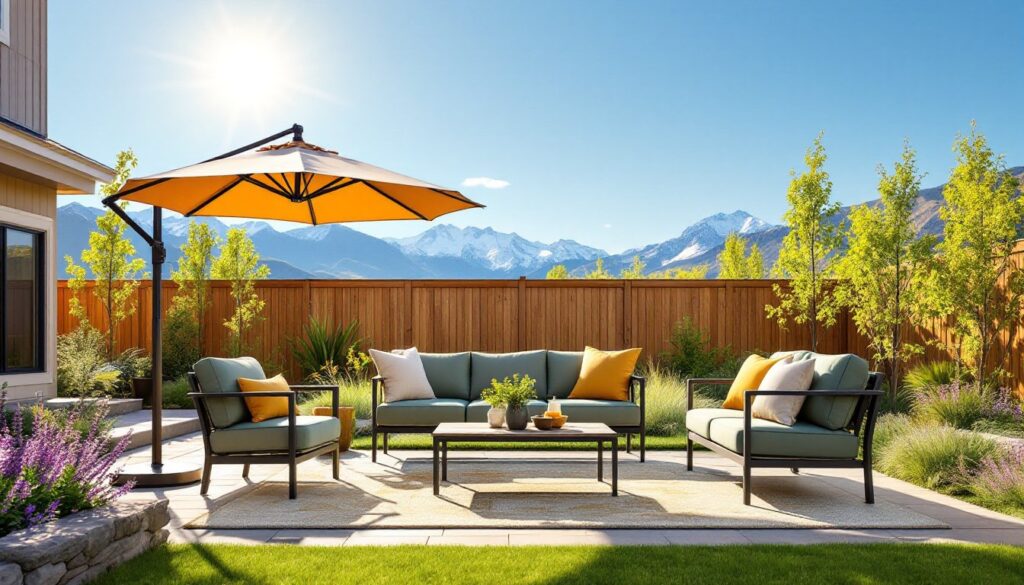
Consider sun exposure. South- and west-facing patios get blasted with afternoon sun from May through September. If your patio lacks shade, choose lighter-colored furniture (dark metal and resin absorb heat and become too hot to touch) and invest in a cantilever or market umbrella with a vented canopy. Vents let wind pass through instead of turning your umbrella into a sail.
Covered patios or three-season rooms can support a wider range of materials, including wood and upholstered pieces, since they’re protected from direct rain and snow. Uncovered patios need fully waterproof materials or a commitment to nightly furniture covers.
Think about storage. Most Salt Lake homeowners store cushions and lightweight furniture from November through March. If you don’t have garage or shed space, look for storage benches or deck boxes (Suncast and Keter make durable resin models that double as seating). A waterproof patio cover works, but Utah winds will shred cheap vinyl tarps in one season, spend the extra $40 on reinforced polyester with grommets and tie-downs.
Finally, match your furniture style to your home’s architecture. Mid-century ranch homes pair well with clean-lined aluminum and teak. Modern builds suit monochrome resin wicker or powder-coated steel. Craftsman and Tudor styles look best with heavier wood or wrought iron. Regional inspiration from porch and patio designs can spark ideas, though adapt any humid-climate advice for Utah’s dry conditions.
Maintenance Tips for Long-Lasting Outdoor Furniture
Aluminum and steel: Wash with mild dish soap and water twice a season. Check welds and joints for cracks annually. Touch up powder coating chips with matching spray paint to prevent corrosion from creeping under the finish.
HDPE/resin: Hose off dust and pollen monthly. For stubborn dirt, use a soft brush and soapy water. Avoid pressure washers, they can pit or crack lower-quality resin. Store cushions indoors when not in use: even solution-dyed fabric collects dust and loses loft over time.
Wood: Apply teak oil or outdoor wood sealer every April. Sand rough spots with 120-grit sandpaper before sealing. If you prefer the gray patina, skip sealing but still clean with a deck brush and water to prevent mildew in shaded spots.
Cushions: Remove and store indoors from October through April. Spot-clean spills immediately with water and mild soap. For deep cleaning, most Sunbrella fabrics can go in the washing machine on gentle cycle, air dry only, never use a dryer. Replace cushion foam every 3–5 years: it compresses and holds moisture over time.
Umbrellas: Close and secure with tie straps when not in use. Utah winds can snap ribs and tear canopies in minutes. Store indoors during winter. If the canopy fades or rips, most manufacturers sell replacement canopies for $50–$100, which beats buying a whole new umbrella.
Winter prep: Either move furniture into a garage or shed, or group pieces together and cover with a breathable, waterproof cover secured with bungee cords. Leave a gap at the bottom for airflow to prevent mildew. Don’t use plastic tarps, they trap condensation and cause rust and mold.
Budget-Friendly Patio Furniture Ideas for Salt Lake City Homeowners
DIY concrete block and lumber benches cost around $60 in materials for a six-foot seating area. Use 8×8×16-inch concrete blocks as supports (about $2 each at Home Depot) and a 4×4 or 2×10 pressure-treated board as the seat. Sand and seal the wood, then add outdoor cushions. It’s heavy enough to stay put in wind and handles snow without damage.
Refinish secondhand furniture instead of buying new. Metal patio chairs from thrift stores or Facebook Marketplace can be stripped, sanded, and repainted with Rust-Oleum Universal spray paint (about $6 per can, coverage roughly 15 square feet). Use a wire brush or drill-mounted wire wheel to remove rust, then apply a rust-converting primer before topcoat. Total cost for a four-chair set: under $50.
Shipping pallets are free or cheap from local warehouses and can be turned into sectional seating or coffee tables. Sand thoroughly (pallets can have splinters and chemical residue), then seal with exterior stain. Add cushions cut from outdoor foam (buy by the sheet at Joann Fabrics or online) and wrap in clearance outdoor fabric. A pallet sectional for four runs about $100 in materials.
End-of-season clearance is your friend. Local stores discount patio furniture 40–60% in late August and early September. Buy then, store through winter, and you’ll have new furniture ready for spring at half price. Similarly, landscape design inspiration from garden and patio ideas often includes budget-friendly projects using reclaimed materials that suit Utah’s climate.
Cinder block planters double as seating when topped with wood or cushions. A 12-block planter-bench costs about $30 and adds greenery to your patio while providing extra seating for gatherings. Fill blocks with soil and plant trailing succulents or herbs, both thrive in Salt Lake’s dry climate and need minimal watering.