Table of Contents
ToggleOutdoor furniture takes a beating, UV rays fade fabrics, metal oxidizes, plastic clips snap, and sling seats sag. Most homeowners assume a broken chair or wobbly table means it’s time to haul everything to the curb and start over. But replacing patio furniture can cost hundreds or thousands, and solid frames usually outlast the components that fail first. With the right repair parts and a few hand tools, most furniture can be restored for a fraction of replacement cost. This guide walks through the essential repair parts, supplies, and sourcing strategies to get outdoor furniture back in service, whether fixing a single loose bolt or reupholstering an entire dining set.
Key Takeaways
- Repair is significantly cheaper than replacement—most patio furniture repairs cost $100–300 versus $800–2,500 for new furniture, making repair the smarter financial choice.
- Essential patio furniture repair parts include replacement slings, elastic straps, stainless steel fasteners, glides, swivel mechanisms, and frame caps—with sling chairs and wicker needing material-specific components.
- Always use stainless steel hardware (304 or 316 grade) instead of standard bolts, which rust within a season in outdoor environments.
- Invest in marine-grade adhesives, rust converters, outdoor fabric with UV stabilization, and safety gear to complete repairs professionally and extend furniture longevity.
- Manufacturer websites and online specialty suppliers like Sling Replacements Unlimited offer the best selection of parts, while local upholstery shops can fabricate custom slings or cushion covers for a premium finish.
Why Repair Instead of Replace Your Patio Furniture
Patio furniture frames, especially aluminum, steel, and hardwood, are engineered to last 10–15 years or more. What fails first are wear components: fabric, straps, glides, and hardware exposed to moisture and temperature swings. A sling chair with a torn seat doesn’t need a new frame: it needs a $20–50 replacement sling. A wobbly table usually just needs fresh bolts and washers.
Repair makes financial sense. A mid-range patio set runs $800–2,500 new. Replacing slings, straps, and hardware on that same set typically costs $100–300, depending on the number of pieces. Even factoring in a Saturday afternoon of labor, the ROI is clear.
There’s also the sustainability angle. Furniture manufacturing is material- and energy-intensive. Keeping a frame in service reduces landfill waste and avoids the embodied carbon of new production. If the frame is solid and rust-free, repair is almost always the smarter move.
Essential Patio Furniture Repair Parts You Need to Know
Replacement Slings, Straps, and Fabric Components
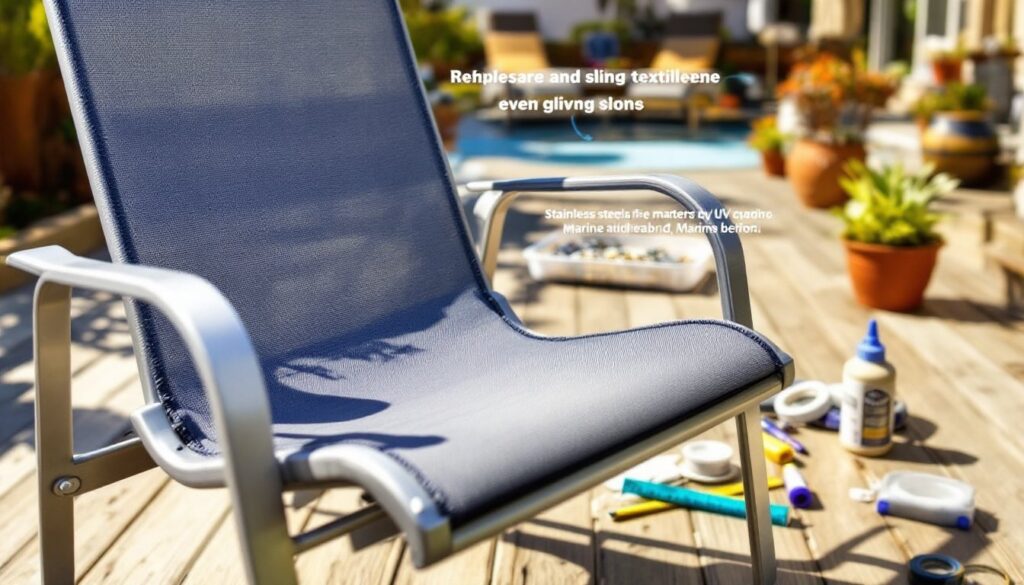
Sling chairs and chaise lounges use tensioned fabric stretched across a frame. Over time, UV exposure degrades the vinyl or textilene mesh, causing tears, sagging, or complete failure. Replacement slings are sold by chair model or as custom-cut fabric with edge hems and rod pockets.
When ordering, measure the existing sling from rail to rail and note the frame style, some use spline channels, others use bolt-on rods. Textilene (PVC-coated polyester mesh) and vinyl-coated polyester are the most common materials. Textilene breathes better and resists mildew: vinyl is heavier and more durable in high-traffic areas.
Elastic straps (also called webbing) support cushions on gliders, rockers, and some lounge chairs. These stretch over time and lose tension. Replacement straps are sold by the foot or in kits with clips. Measure strap width (typically 2″ or 3″) and calculate total linear feet needed, most chairs use 10–20 feet. Vinyl or rubber straps work: marine-grade elastic lasts longer in humid climates.
For cushioned furniture, replacement cushion covers are available in standard sizes (e.g., 18″ × 18″ seat, 20″ × 20″ back). Some suppliers offer outdoor fabric by the yard for custom sewing. Look for solution-dyed acrylic (Sunbrella-type fabric) with UV stabilization and water resistance.
Hardware, Fasteners, and Frame Parts
Stainless steel and zinc-plated fasteners are non-negotiable for outdoor use. Standard hardware-store bolts rust out in a season or two. Replace any corroded bolts, nuts, washers, and screws with 304 or 316 stainless steel hardware. Pay attention to thread pitch and length, outdoor furniture often uses metric fasteners (M6 × 1.0, M8 × 1.25).
Glides and leveling feet protect decks and patios from scratches and compensate for uneven surfaces. Replacement glides come in round, square, and insert styles. Measure the leg opening (inside diameter or outside diameter, depending on style) and note whether the glide inserts into a tube or caps over it.
Swivel mechanisms and rocker springs fail on motion furniture. Replacement swivel bases are available for most glider and rocker frames. Springs (tension or coil style) are sold individually or in sets. Bring the old spring to a hardware store or measure the wire gauge and overall length for online ordering.
Caps, plugs, and end covers seal frame tubing and improve appearance. These are molded plastic or vinyl and fit specific tube profiles (round, square, rectangular). Measure the outer dimensions of the tubing and check whether the cap inserts or snaps on.
For wicker and resin furniture, replacement weave material (flat or round wicker strand) and plastic clips that connect panels or legs are available from specialty suppliers. Match the strand width and color as closely as possible.
Must-Have Supplies for DIY Patio Furniture Repairs
Beyond parts, a few supplies make repairs cleaner and longer-lasting.
Adhesives and sealants: Use marine-grade epoxy for bonding metal or plastic components that can’t be bolted. For wicker repairs, a flexible outdoor adhesive (polyurethane-based) works better than cyanoacrylate (super glue), which turns brittle outdoors. Seal frame tubing end caps and joints with silicone sealant to prevent water intrusion and internal corrosion.
Rust treatment and protective coatings: If the frame shows surface rust, wire-brush or sand it down to bare metal, then apply a rust converter (phosphoric acid-based) to stabilize remaining oxidation. Follow with a rust-inhibiting primer (zinc-rich or epoxy primer) and a high-gloss enamel or powder coat-style spray paint formulated for metal outdoor use. For aluminum frames, clean with a degreaser and apply clear acrylic sealer to prevent oxidation.
Fabric and sewing supplies: If sewing custom sling fabric or cushion covers, use UV-resistant polyester thread (also called outdoor or marine thread). Standard cotton or poly-cotton thread degrades quickly. A heavy-duty sewing machine (capable of stitching through multiple layers of vinyl or canvas) is necessary: many home machines can’t handle the thickness. Alternatively, hand-stitching with a curved upholstery needle and waxed thread works for small repairs.
Measuring and marking tools: A tape measure, digital caliper (for precise fastener and tubing measurements), and permanent marker are essential. For sling and strap installation, a spring clamp or C-clamp holds fabric in tension while securing it to the frame.
Safety gear: Wear cut-resistant gloves when handling metal edges or working with slings under tension. Safety glasses are mandatory when drilling, grinding, or working with adhesives. If sanding or grinding metal, use a dust mask (N95 or better) to avoid inhaling metal particles.
Where to Buy Quality Repair Parts and Supplies
Start with the furniture manufacturer. Many brands (Tropitone, Brown Jordan, Woodard, Homecrest) sell replacement parts directly or through authorized dealers. Check the frame for a model number or manufacturer label, often stamped on the underside of a seat or leg. Manufacturer parts are pricier but guarantee fit and finish.
Online specialty suppliers stock generic and universal parts. Sites like Sling Replacements Unlimited, Furniture Leisure, and PatioPartsandMore offer slings, straps, hardware, and glides searchable by brand or measurement. These suppliers often provide installation instructions and fit guides.
For hardware and fasteners, Bolt Depot and McMaster-Carr carry stainless steel bolts, nuts, and washers in every size and thread pitch. McMaster ships fast and includes detailed specs and CAD drawings. Local Ace Hardware or Fastenal locations can special-order stainless hardware if needed.
Fabric stores (Joann, Hobby Lobby, or regional shops) carry outdoor fabric by the yard, but selection is limited. For a wider range of colors and weights, order from Sailrite or Fabric.com, both of which stock marine and outdoor upholstery fabric and matching thread.
Many DIYers find tutorials and parts lists on Instructables, where step-by-step repair projects break down the process with photos and material lists. For larger structural repairs or if rust damage is extensive, hiring a professional may be necessary. Platforms like Angi provide contractor reviews and project cost estimates, which helps set realistic expectations if DIY isn’t feasible.
Local upholstery shops sometimes fabricate custom slings or recover cushions. Expect to pay more than DIY, but the fit and finish are usually superior. Bring the old sling or cushion as a template.
Conclusion
Repairing patio furniture extends its life, saves money, and keeps usable frames out of the landfill. Most repairs, replacing slings, tightening hardware, or adding new glides, require basic tools and an hour or two. Stock up on stainless fasteners, outdoor adhesive, and the right fabric or strap material, and the furniture will be back in service for years.