Table of Contents
ToggleA fire pit transforms a patio from a place you walk through into a space where people actually want to hang out. Add the right furniture, and you’ve got a year-round gathering spot that handles everything from morning coffee to late-night conversations. But pairing fire pits with patio furniture isn’t as simple as dropping a fire bowl on the deck and dragging chairs around it. Clearances matter, materials matter, and getting the layout wrong means guests either roasting or shivering. This guide covers the practical side of building a fire pit seating area that’s safe, comfortable, and actually gets used.
Key Takeaways
- Patio furniture fire pit setups extend your outdoor season by 3–4 months and create defined gathering zones while keeping guests at safe distances from flames.
- Maintain minimum 36-inch clearances (48 inches for wood-burning pits) between the fire pit edge and furniture legs, with 8–10 feet vertical clearance for gas units and 10+ feet for wood-burning pits.
- Choose propane or natural gas fire pits for clean, instant-lighting reliability, or wood-burning pits for authentic ambiance—but verify local regulations since many municipalities restrict or ban fire features.
- Select aluminum frames for durability and low rust, steel for wind stability, and solution-dyed acrylic cushions (like Sunbrella) that resist scorching, avoiding polyester blends near open flames.
- Inspect gas connections annually for leaks, clean burner ports seasonally, and for wood fires, dump ash regularly into metal containers and only burn seasoned hardwood to minimize smoke and creosote buildup.
- Design circular layouts for conversation or linear arrangements for rectangular patios, always leaving one 36-inch-wide access path to the house and positioning the fire pit upwind of seating when possible.
Why Combine Patio Furniture With a Fire Pit
Fire pits extend the usable season of outdoor spaces by 3–4 months in most climates. Without seating, though, they’re just expensive lawn ornaments. Integrated furniture setups keep people at the right distance, close enough for warmth, far enough to avoid smoke and sparks.
A dedicated fire pit seating area creates a defined zone on larger patios or in yards, which helps with traffic flow and keeps kids and pets from wandering too close to the flames. Fixed or semi-permanent furniture also discourages the chair-shuffling that happens when seating is makeshift.
From a property value standpoint, outdoor living spaces with fire features consistently rank high with buyers. But only if the setup looks intentional. Random chairs circling a standalone pit read as temporary: a cohesive furniture-and-fire layout suggests permanence and care.
Types of Fire Pit Patio Furniture Sets
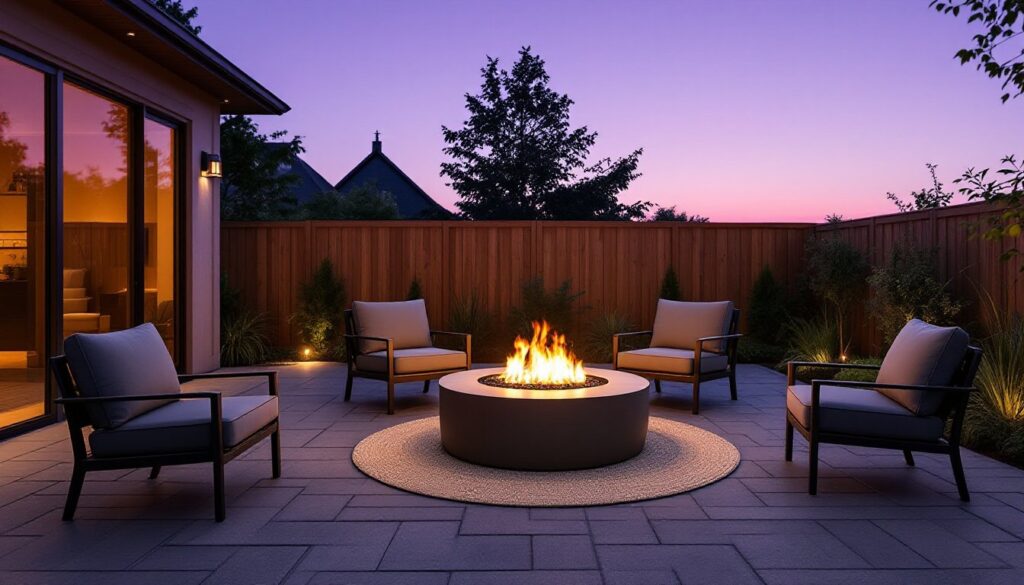
Conversation sets pair a central fire pit table with 4–6 deep-seat chairs or a sectional. These work best for patios 12×12 feet or larger. The fire pit is typically propane or natural gas, built into a table at standard coffee-table height (16–20 inches). Seating sits 24–30 inches away from the fire pit edge, measured center-to-center.
Dining-height fire pit tables combine a raised fire feature (28–30 inches) with bar-height chairs or stools. These are less common but useful on narrow patios where you need dual-purpose furniture. The fire element is usually smaller, a linear burner or compact round insert. Expect to sacrifice some flame visibility compared to conversation-height setups.
Modular sectionals with separate fire pits let you adjust the layout seasonally. The fire pit itself is freestanding (wood-burning or propane), and the sectional can be rearranged or moved entirely. This approach gives the most flexibility but requires more floor space and stable, level hardscape. Many outdoor gathering setups favor this modular approach for adaptability.
Built-in fire pit seating uses permanent benches, stone walls, or masonry seating that encircles a wood-burning or gas fire pit. Common in hardscaped patios or courtyards. This is the most labor-intensive option and usually requires a contractor, but it’s bombproof and low-maintenance once installed.
How to Choose the Right Fire Pit for Your Patio Setup
Fuel type drives nearly every other decision. Propane and natural gas fire pits light instantly, burn clean, and many municipalities allow them on wood decks (check local codes). Wood-burning pits deliver authentic campfire ambiance and higher heat output, but they require ash cleanup, produce smoke, and are banned in some urban and suburban areas. Gel-fuel and bioethanol pits exist but output low heat, fine for ambiance, not for warmth.
Size and BTU output need to match your seating area. A 40,000–50,000 BTU gas fire pit works for a 10–12 foot diameter seating circle. Smaller tabletop units (10,000–20,000 BTU) are decorative but won’t keep anyone warm below 55°F. Wood-burning pits don’t carry BTU ratings, but a 36-inch diameter bowl generates enough heat for a similar radius.
Portability vs. permanence comes down to your patio surface and how often you rearrange. Portable propane fire pits can be moved for cleaning or storage but need a stable, non-combustible surface, concrete pavers, stone, or tile. Built-in natural gas fire pits require a gas line run (hire a licensed plumber) and a permanent location. For renters or anyone testing layouts, start portable.
Ignition and controls vary widely. Push-button electronic ignition is standard on mid-range and higher gas fire pits: budget models use manual match-light valves. Variable flame control lets you dial heat up or down, which matters more than most people think, full blast isn’t always comfortable at close range.
Best Materials for Fire Pit Patio Furniture
Aluminum frames dominate outdoor furniture for good reason: they don’t rust, weigh less than steel, and hold up in wet climates. Powder-coated aluminum handles heat exposure well, though cheap finishes can flake near fire pits. Look for frames with welded joints, not fasteners.
Steel frames (usually powder-coated or galvanized) are heavier and more stable in wind, which matters for high-backed chairs near an open flame. Steel can rust if the coating chips, so inspect and touch up annually. Stainless steel is the premium option, pricey, but it’ll outlast aluminum in coastal or high-humidity zones.
Cushion fabrics need to be solution-dyed acrylic (Sunbrella is the household name) or a comparable all-weather fabric. These resist fading, mildew, and moisture. Avoid polyester-blend “weather-resistant” fabrics near fire pits, they can melt or scorch from stray embers. Store cushions when burning wood, or choose furniture with sling or woven seats that don’t use cushions at all.
Wicker and resin wicker (HDPE) can work, but keep it at least 30 inches from the fire pit edge. Real wicker is a fire hazard and rots outdoors. Resin wicker is durable and fine for the job, though prolonged heat exposure can make it brittle over time.
Wood furniture near fire pits should be hardwood, teak, eucalyptus, or acacia, and treated with a fire-retardant finish if you’re using a wood-burning pit. Softwoods and unfinished wood can dry out and become kindling. Stone or concrete benches are as fireproof as it gets but usually need cushions for comfort.
Layout and Spacing Tips for Fire Pit Seating Areas
Minimum clearances aren’t optional. Most manufacturers and fire codes call for at least 36 inches between the fire pit edge and the nearest furniture leg. For wood-burning pits, go 48 inches to account for sparks and radiant heat. If you’re placing furniture on a wood deck, the fire pit itself needs to sit on a fireproof pad or be specifically rated for deck use.
Seating height and sightlines affect comfort. Deep-seat lounge chairs (16–18 inches high) pair well with low fire tables or bowls. If the fire pit sits higher than 20 inches, standard dining or conversation chairs work better, otherwise, guests stare into the base instead of the flames.
Circular vs. linear layouts depend on your patio shape. A round fire pit naturally invites a circular seating arrangement, which encourages conversation but eats up square footage. Rectangular patios often work better with a linear burner and furniture on two or three sides, leaving one side open for access. Many cozy patio fire pit layouts favor asymmetrical or L-shaped configurations for flexibility.
Access and egress get forgotten until someone needs to refill a drink. Leave at least one 36-inch-wide path from seating to the house or grill. For built-in seating, include a deliberate gap or step-through so people aren’t climbing over benches.
Overhead clearance matters if you have a pergola, roof overhang, or tree canopy. Gas fire pits need 8–10 feet of vertical clearance to combustible materials: wood-burning pits need 10+ feet and often can’t be used under any overhead structure. Check your local fire code, some jurisdictions prohibit fire pits on covered patios entirely.
Maintenance and Safety Considerations
Personal protective equipment: Keep a fire extinguisher (Class ABC, 5-pound minimum) within 10 feet of any fire pit. A bucket of sand works as a backup for wood fires. If you’re burning wood, wear closed-toe shoes and keep long sleeves handy for tending the fire. Heat-resistant gloves are essential for adjusting logs or gas controls on a hot unit.
Gas fire pit upkeep is minimal but critical. Inspect hoses and connections annually for cracks or leaks using soapy water (bubbles = leak). Clean burner ports with a small brush to prevent clogging, which causes uneven flames. Covers help, but even covered units should be checked at the start of each season. If you smell gas, shut off the supply immediately and call a professional.
Wood-burning fire pit maintenance means regular ash removal, buildup restricts airflow and traps moisture, leading to rust. Dump ash into a metal container, never plastic (coals can stay hot for days). Inspect the fire bowl or ring for cracks or warping annually. If you’re burning on a paver or stone patio, soot stains are inevitable: a pressure washer and degreaser handle most of it.
Furniture maintenance near fire includes checking cushion fabrics for ember burns and wiping down frames monthly to remove soot and ash residue. Powder-coated finishes last longer if you avoid abrasive cleaners, use mild soap and a soft brush. For wood furniture, reapply sealant or oil yearly, especially if it’s exposed to high heat.
Smoke and spark management: Position the fire pit upwind of seating when possible, though wind shifts. Smokeless fire pits (brands using secondary combustion) cut down on smoke but cost more. For wood-burning setups, only burn seasoned hardwood (under 20% moisture content), wet or softwood creates excessive smoke and more creosote. A mesh spark screen is non-negotiable for wood fires, especially with nearby cushions or wood furniture.
Local regulations: Many cities and HOAs restrict or ban outdoor fire features. Check before you buy. Some areas require a permit for permanent fire pits, especially if you’re running a natural gas line. Open-flame restrictions during dry season or red-flag warnings are common in the western U.S. Don’t assume portability gets you around the rules, propane pits are often regulated the same as wood-burning.
Conclusion
A well-planned fire pit and furniture setup doesn’t happen by accident. It takes the right fuel type, clearances that meet code, materials that can handle heat and weather, and a layout that actually makes sense for how people sit and move. Get those details right, and you’ll have an outdoor space that works from April through October, or longer, depending on your climate. Skip the guesswork, measure twice, and don’t cheap out on materials that sit next to open flame.