Table of Contents
ToggleAustin’s outdoor living season runs nearly year-round, which means patio furniture takes a beating. Between the scorching summer sun, sudden spring storms, and the occasional hard freeze, choosing the right pieces isn’t just about looks, it’s about durability and smart material choices. Whether someone’s furnishing a compact downtown balcony or a sprawling Westlake backyard, understanding how Central Texas weather impacts outdoor furniture will save money and frustration down the line. This guide covers material selection, local shopping options, styling strategies, and maintenance tips tailored specifically to Austin’s climate.
Key Takeaways
- Austin’s extreme heat, humidity, occasional freezes, and spring storms require durable patio furniture materials like powder-coated aluminum, HDPE resin wicker, and marine-grade Sunbrella fabrics rather than standard outdoor pieces.
- Powder-coated aluminum and synthetic wicker are the best material choices for Austin patio furniture, while wrought iron, untreated wood, and standard polyester fabrics should be avoided due to rust, warping, and fading issues.
- Shop for patio furniture in Austin during March-April for peak selection or August-September for 40-60% clearance discounts, with local showrooms offering hands-on inspection and online retailers providing wider variety at competitive prices.
- Monthly cleaning and seasonal deep-maintenance tasks, such as hosing frames, checking for rust, and applying teak oil or wood sealer, extend patio furniture lifespan from years to decades in Austin’s challenging climate.
- Budget-conscious Austin patio furniture solutions include purchasing quality foundational pieces (aluminum or wicker sets for $400-800), DIY cushion covers from outdoor fabric, and phasing purchases over time to spread costs.
Why Austin’s Climate Demands the Right Patio Furniture
Austin’s climate throws curveballs that coastal or northern regions don’t see. Summer temperatures routinely hit 100°F+ from June through September, with direct UV exposure that fades fabrics and warps cheap plastics in a single season. The humidity sits around 65-70% year-round, creating conditions for mold and mildew on cushions and wood furniture.
Winter brings occasional freezes, sometimes dipping into the teens, that can crack ceramic, split untreated wood, and damage metal joints that aren’t powder-coated. Spring storms roll in fast, with hail and high winds that can flip lightweight furniture or tear through low-quality canopies.
Patio furniture here needs to handle extreme heat, moisture, UV radiation, and occasional freezes without constant babysitting. That means selecting materials rated for outdoor use, not just “weather-resistant” marketing language. Anyone shopping should verify UV stabilization in plastics, rust-proof coatings on metal, and water-repellent treatments on fabrics and wood.
Top Materials for Austin Patio Furniture That Last
Material choice determines whether patio furniture survives one season or ten. Not all “outdoor” labels mean the same thing, and Austin’s specific conditions rule out some popular options.
Best Weather-Resistant Options
Powder-coated aluminum ranks highest for Austin patios. It won’t rust, stays cool enough to touch even in direct sun (unlike steel or wrought iron), and weighs enough to resist wind without being impossible to move. Look for furniture with welded joints rather than bolted, they hold up better over time. Frames should have a minimum powder-coat thickness of 2-3 mils for adequate UV and corrosion protection.
Synthetic wicker (HDPE resin) handles heat and moisture better than natural rattan. Quality resin wicker won’t crack, fade, or unravel, and it’s typically woven over aluminum frames for added strength. Avoid PVC-based wicker, it gets brittle in Austin’s sun within two years.
Teak remains the gold standard for wood furniture, but it requires commitment. Untreated teak weathers to a silver-gray patina, which some people love and others hate. Maintaining the original honey color means applying teak oil every 3-4 months. Cheaper alternatives like eucalyptus or acacia need annual sealing and don’t hold up as long. Skip pine, cedar, or untreated hardwoods, they’ll rot in Austin’s humidity.
Marine-grade Sunbrella fabric is non-negotiable for cushions. It resists fading (rated for 1,500+ hours of UV exposure), sheds water, and resists mildew. Polyester “outdoor” fabrics without solution-dyed acrylic fibers will fade to pastels within one summer. Many design-focused outdoor spaces rely on Sunbrella or equivalent fabrics for long-term color retention.
Avoid:
- Wrought iron (too hot to touch, rusts in joints)
- Untreated wood (warps and splits)
- Standard outdoor polyester fabric (fades quickly)
- Thin-gauge steel frames (rust and bend)
Where to Buy Patio Furniture in Austin
Austin has a mix of big-box stores, local specialty shops, and online options. Each has trade-offs in selection, price, and service.
Local showrooms like Garden Ridge or independent patio stores on Research Boulevard offer hands-on inspection and often assemble furniture on delivery. Staff can answer material questions and some stores offer customization (frame colors, cushion fabrics). Pricing runs 20-30% higher than online, but warranty service is local.
Big-box retailers (Home Depot, Lowe’s, Costco) stock budget to mid-range sets, especially from March through June. Selection peaks in April, by July, inventory is picked over. These stores work well for aluminum frames and resin wicker but rarely carry high-end teak or custom cushions. Assembly is usually DIY.
Online retailers (Wayfair, Overstock, direct-from-manufacturer sites) offer the widest selection and competitive pricing, but shipping times and return logistics can be a headache. Read dimension specs carefully, photos make pieces look larger than they are. Verify that listings specify powder-coated metal, HDPE wicker, or solution-dyed acrylic fabric rather than vague “weather-resistant” claims.
Austin-area estate sales and ReStore locations sometimes have solid teak or quality aluminum pieces at steep discounts. Expect to refinish wood and replace cushions, but the frames often outlast new budget furniture.
Timing matters. March and April see peak selection but premium pricing. Late June through July brings clearance sales as retailers make room for fall inventory. End-of-season buys (August-September) offer the best deals if someone’s willing to store furniture until spring.
Styling Your Austin Patio: Design Tips for Texas Outdoor Spaces
Austin patios benefit from designs that balance sun exposure, privacy, and the indoor-outdoor flow that Central Texas weather encourages.
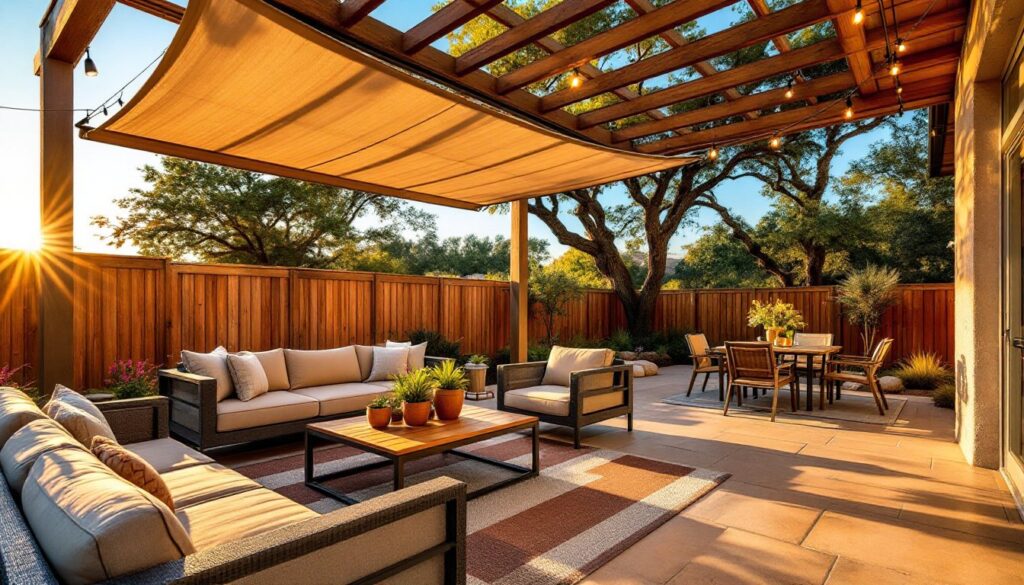
Shade structures aren’t optional, they’re necessary. A pergola with retractable canopy, a 10×10-foot cantilever umbrella, or a shade sail reduces surface temperatures by 15-20°F and extends furniture life. Position seating to take advantage of afternoon shade from the house or mature trees.
Scale furniture to the space. A sprawling sectional overpowers a 10×12 patio, while scattered bistro sets look lost on a 20×30 deck. Measure the area, subtract 3 feet of clearance on all sides for walking paths, and choose furniture that fits the remaining footprint. Visualizing various patio layouts can help balance function and flow.
Modular seating offers flexibility for Austin’s social culture, easy to reconfigure for solo morning coffee or weekend gatherings. Look for sectionals with separate pieces rather than fixed L-shapes.
Accent with Texas-friendly plants and textiles. Saltillo tile, terracotta planters, and drought-tolerant natives (like Texas sage or esperanza) tie patios into the regional landscape. Outdoor rugs in geometric patterns or earth tones anchor seating areas, choose polypropylene rugs that drain water and resist mold.
Lighting extends usability. String lights, low-voltage path lights, or LED uplights on trees create ambiance without harsh overhead glare. Solar options work well in Austin’s abundant sunshine but need monthly cleaning to maintain brightness.
Storage solutions keep cushions protected when not in use. Deck boxes (resin or aluminum) prevent mildew better than sheds or garages, where trapped humidity is common. Budget 30-50 gallons of storage for a standard 6-piece seating set.
Maintenance and Care for Long-Lasting Outdoor Furniture
Even the best materials need regular maintenance in Austin’s climate. A little upkeep extends furniture life by years.
Monthly tasks:
- Hose down frames and wipe with mild soap (dish soap works) to remove pollen, dust, and tree sap
- Check metal joints and hardware for early rust spots: treat with rust converter or touch-up paint immediately
- Shake out and spot-clean cushions: mildew starts in seams and corners
Seasonal maintenance:
- Deep-clean Sunbrella cushions with oxygen bleach solution (1 cup per gallon of water), scrub with a soft brush, and rinse thoroughly, do this in spring and fall
- Inspect wicker weave for cracks or loose strands: repair early before unraveling spreads
- Reapply teak oil or wood sealer before summer heat and after winter freezes
- Tighten all bolts and screws, temperature swings cause expansion and contraction that loosens hardware
Winter prep matters even in Austin. During freeze warnings, cover cushions or bring them inside. Metal furniture can stay out, but wood and wicker benefit from waterproof covers that allow airflow (avoid plastic tarps that trap moisture). Empty ceramic pots to prevent cracking.
Storage strategy: If space allows, store cushions in a climate-controlled area during summer’s peak heat and humidity. Frames can stay outside year-round if they’re quality materials, but cushions degrade faster than frames. Consider removing and storing cushions from June through August if the patio isn’t used daily.
Replacement timeline: Plan to replace Sunbrella cushions every 5-7 years, even with excellent care, UV exposure eventually breaks down all fabrics. Metal and resin frames should last 10-15 years: teak can go 20+ years with regular sealing.
Budget-Friendly Patio Furniture Solutions in Austin
Building a functional outdoor space doesn’t require a designer budget. Smart choices and a few DIY approaches stretch dollars.
Start with the essentials: A quality dining set or conversation set anchors the space. Budget $400-800 for a decent powder-coated aluminum or resin wicker set that’ll last 5+ years. Skip cheap folding chairs and flimsy stamped-steel frames, they’re false economy and end up in landfills within two seasons.
DIY cushion solutions: Buy high-density foam (3-4 inches thick) from a local upholstery supplier, cut to size, and sew simple covers from outdoor fabric. This runs 40-50% less than retail cushions. If sewing isn’t in the skill set, local seamstresses often do custom outdoor cushions for reasonable rates.
Repurpose and refinish: Thrift stores, Craigslist, and Facebook Marketplace regularly list teak or aluminum furniture that needs minor work. A $50 teak bench becomes a showpiece with 120-grit sanding and two coats of teak sealer (total investment under $100). Metal frames clean up with a wire brush, rust converter, and spray paint.
Phase the build: Start with seating, add a shade structure next season, incorporate lighting and accessories over time. This spreads costs and allows testing what actually gets used. Many homeowners over-invest in dining sets that sit empty while a simple seating area with a fire pit sees daily use.
Shop end-of-season clearance: August and September bring 40-60% discounts at big-box stores. The selection is limited, but prices drop dramatically. If colors don’t match perfectly, spray paint or fresh cushions unify mismatched pieces.
Consider multi-use pieces: Storage benches double as seating, nesting tables scale up or down, and foldable bistro sets work for small spaces that need flexibility. Furniture that serves multiple purposes justifies higher per-piece spending.
The key to budget patio design is investing where it matters, durable frames and quality shade, while keeping accents and accessories flexible and affordable. For inspiration on budget-conscious outdoor layouts, home design resources offer creative approaches to maximizing limited spaces and budgets.