Table of Contents
ToggleShopping for a modern living room sofa set isn’t like picking out a single chair, you’re committing to a layout, a look, and likely a chunk of your budget. Get it right, and you’ve got a comfortable, cohesive space that works for movie nights and dinner guests alike. Get it wrong, and you’re stuck with mismatched cushions and a sectional that blocks the walkway. This guide breaks down what actually defines modern sofa sets, the styles and materials worth considering, and how to match the right configuration to your space without second-guessing every decision.
Key Takeaways
- A modern living room sofa set combines clean lines, low profiles, and functional design—often with modular elements that adapt as your space evolves.
- Popular configurations include sofa-plus-loveseat layouts for rectangular rooms, L-shaped sectionals for open-concept spaces, and modular systems for flexible households.
- Accurate room measurements and clearance planning are essential: allow 30–36 inches for traffic flow, confirm doorway widths for sectionals, and use painter’s tape to mock up dimensions before purchasing.
- Material choice directly impacts durability—performance fabrics handle pet claws and spills, leather develops character with proper conditioning, and natural linen or cotton offer softness with higher maintenance needs.
- Modern sofa sets range from $800–$1,500 (budget options with particleboard frames) to $3,500+ (premium leather and custom configurations), with mid-tier options ($1,500–$3,500) offering the best balance of hardwood frames and cushion quality.
- Choose neutral base colors or warm earth tones to keep styling flexibility, prioritize hardwood frames and high-density foam cushions for longevity, and test-sit before committing to ensure comfort for long-term use.
What Defines a Modern Living Room Sofa Set?
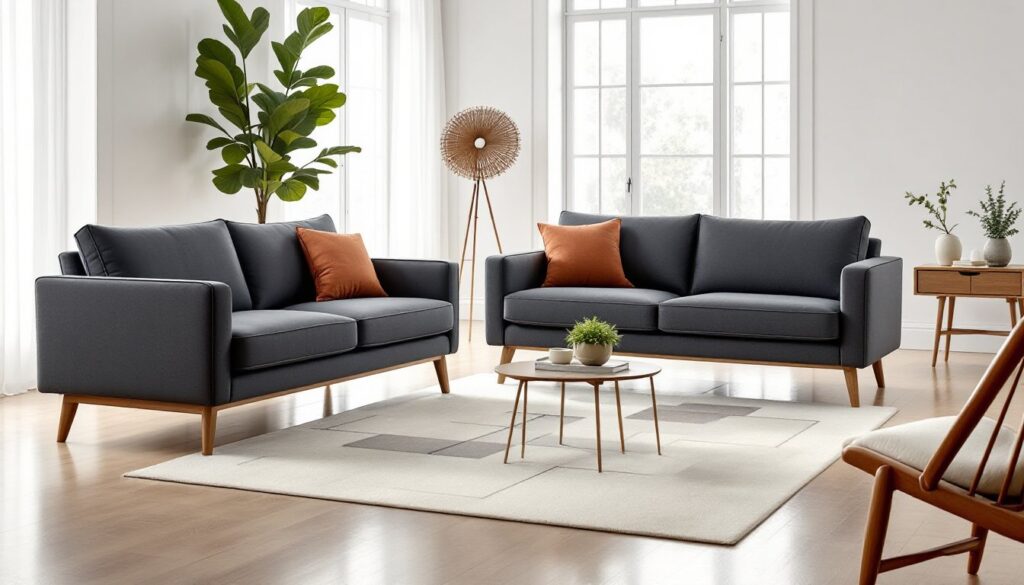
A modern living room sofa set typically includes two or more upholstered seating pieces designed to coordinate in style, scale, and finish. The most common configuration is a sofa paired with a loveseat or two accent chairs, though sectionals bundled with an ottoman also qualify.
What separates modern sets from traditional or formal living room furniture sets is the design language: clean lines, low profiles, and minimal ornamentation. You won’t find tufted backs with carved wooden frames here. Instead, expect track arms (straight, boxy edges), tapered legs in wood or metal, and upholstery that emphasizes texture over pattern.
Modern sets also lean functional. Many include modular elements, pieces you can rearrange as your layout evolves. According to design forecasts for 2026, modularity and adaptability continue to dominate, especially in homes where the living room pulls double duty as a workspace or guest area.
Unlike buying individual pieces and hoping they mesh, a curated set guarantees visual consistency. That said, “set” doesn’t mean rigid. Many retailers offer configurable bundles where you pick the sofa style, then choose complementary pieces in matching or coordinating fabrics.
Popular Styles and Configurations for Modern Sofa Sets
Sofa + Loveseat
This classic pairing fits most rectangular living rooms. A standard three-seat sofa (84–90 inches) faces the TV or fireplace, with a loveseat (58–64 inches) perpendicular or angled nearby. It’s a flexible layout that leaves the center open for a coffee table and doesn’t require the space commitment of a sectional.
L-Shaped Sectionals
Sectionals anchor open-concept spaces and define zones without walls. L-shaped configurations (a sofa with a chaise or corner module) range from 100 to 120 inches along the longest side. They’re ideal for families who sprawl or anyone who wants extra seating without crowding the room with multiple furniture pieces. Many living room sets now include reversible chaise options, letting you flip the layout as needed.
Modular Systems
Modular sets break seating into individual units, armless chairs, corner wedges, ottomans, that lock or rest together. You can start with a sofa-length setup and add sections later. This approach works well in growing households or spaces where furniture needs to adapt (think basements that double as game rooms). Look for sets with interlocking brackets or hook-and-loop fasteners to keep modules from drifting apart on hardwood or tile.
Sofa + Accent Chairs
For tighter budgets or smaller footprints, pair a single sofa with two matching or complementary accent chairs. This setup creates a conversational layout without eating wall space. Mid-century modern sets often follow this formula, with a streamlined sofa and a pair of upholstered or wooden-frame chairs that echo the leg style and fabric palette.
Choosing the Right Size and Layout for Your Space
Before you fall in love with a set, measure the room, and measure twice. A modern sofa set looks sharp in the showroom but can overwhelm a 12×14-foot living room if the pieces are too deep or long.
Key measurements to confirm:
- Overall sofa length (arm to arm)
- Seat depth (front edge to back cushion, typically 20–24 inches)
- Clearance around the set (leave at least 30–36 inches between seating and walls or other furniture for traffic flow)
- Doorway and stairwell widths (many sectionals require doorways of at least 32 inches: measure diagonally if the piece won’t fit flat)
For sectionals, sketch the layout to scale or use painter’s tape on the floor to mock up dimensions. Corner modules typically add 36–40 inches of depth, which can block windows or HVAC returns if you’re not careful.
In open-concept layouts, anchor the set with an area rug (at least 8×10 feet for most configurations) to visually define the zone. Position the sofa facing the room’s focal point, fireplace, TV, or picture window, then arrange companion pieces to encourage conversation rather than theater-style rows. Mixing styles like dark and light wood finishes in side tables or media consoles can add warmth without clashing with the modern aesthetic.
If you’re working with an awkward footprint, long and narrow, or a room with multiple doorways, modular or armless pieces offer more flexibility than a fixed three-cushion sofa. Consider sets that include an ottoman with a removable top: it can serve as extra seating, a coffee table, or hidden storage.
Materials and Upholstery: Finding Your Perfect Match
Material choice affects durability, maintenance, and how the set feels after an eight-hour Netflix binge. Here’s what to expect from common upholstery options in 2026.
Performance Fabrics
Polyester blends treated for stain and water resistance, think brands like Crypton or similar, are the workhorse of family-friendly modern sets. They handle spills, pet claws, and daily wear without requiring professional cleaning every six months. Expect a slightly stiffer hand than natural fibers, but the trade-off is a sofa that doesn’t show every coffee drip.
Linen and Cotton Blends
Natural fabrics bring a softer, more relaxed look. Linen wrinkles easily and may fade in direct sun, but it breathes well and ages with character. Cotton twill or canvas offers a middle ground, durable enough for moderate use, with a matte finish that fits minimalist spaces. Both need Scotchgard or similar fabric protectant applied annually if kids or pets are in the picture.
Leather and Faux Leather
Top-grain or full-grain leather develops a patina and lasts decades if you condition it twice a year. It’s cool in summer, warm in winter, and wipes clean with a damp cloth. Bonded or faux leather (polyurethane) costs less and mimics the look, but it can peel or crack after three to five years, especially on high-contact areas like armrests. If budget allows, go genuine.
Velvet
Velvet isn’t just for formal spaces anymore. Polyester velvet (not cotton) resists crushing and adds texture without the upkeep of silk-blend versions. It does show wear patterns, brush marks, sitting impressions, so it’s best for low-traffic rooms or households without toddlers.
Frame and cushion construction matter as much as the fabric. Look for kiln-dried hardwood frames (not particleboard) and high-density foam cushions (1.8 pounds per cubic foot or higher). Cheaper sets use sinuous spring supports (S-shaped wire), which sag faster than eight-way hand-tied springs, though the latter bumps the price significantly.
Color Trends and Design Features in 2026
Color psychology meets practicality in modern sofa sets. Neutral bases, charcoal, warm gray, beige, and off-white tones, still dominate because they’re easy to style and don’t dictate the rest of the room’s palette. Platforms like Design Milk showcase how designers layer texture and accent color through pillows and throws rather than committing to a bold upholstery choice.
That said, warm earth tones are having a moment. Think terracotta, rust, olive, and deep clay, colors that ground a space and pair well with natural wood accents. These work especially well in homes leaning into biophilic or Japandi-inspired design.
Design features to watch:
- Low, floating bases: Sofas with exposed legs in tapered wood or powder-coated metal (4–6 inches high) keep sightlines open and make rooms feel larger. They also simplify vacuuming underneath.
- Integrated USB ports and power outlets: More sets now include built-in charging in armrests or console sections, a practical upgrade if you’re replacing older furniture.
- Removable, reversible cushions: Extends the life of the set. Flip or rotate cushions every few months to even out wear.
- Contrast stitching and piping: Subtle details, topstitching in a contrasting thread color or welt cord along seams, add visual interest without veering into ornate territory.
If the room has white furniture elsewhere, like a media console or bookshelf, a medium-toned sofa set prevents the space from feeling too clinical. Conversely, a white or cream set can brighten a room with darker walls or limited natural light, though maintenance goes up.
Budget Considerations and Where to Shop
Pricing for modern living room sofa sets spans a wide range. Expect to spend:
- $800–$1,500 for budget-friendly sets with particleboard frames and polyester upholstery (retailers like Walmart or Wayfair)
- $1,500–$3,500 for mid-tier options with hardwood frames, performance fabrics, and better cushion density (Article, West Elm, Crate & Barrel)
- $3,500–$7,000+ for high-end or designer sets with premium leather, custom configurations, and extended warranties (Room & Board, DWR, Joybird)
Prices fluctuate with lumber costs, shipping, and regional demand. If you’re shopping in early 2026, expect 10–15% higher prices than 2023 due to tariffs and material shortages affecting hardwood and foam suppliers.
Where to shop:
- Big-box furniture stores offer financing and in-stock inventory but limited customization. Delivery is usually fast (one to three weeks).
- Direct-to-consumer brands (Burrow, Floyd, Interior Define) focus on modularity and ship flat-pack, cutting costs but requiring assembly. Most include 30–60 day trial periods, helpful if you’re unsure about fit or comfort.
- Local furniture makers or custom upholstery shops let you specify fabric, dimensions, and frame details. Lead times run 8–12 weeks, and you’ll pay more, but the result fits your exact needs.
- Secondhand and outlet options: Sites like Chairish or Facebook Marketplace sometimes list floor models or gently used modern sets at 30–50% off retail. Inspect frames and cushions carefully: reupholstering can cost as much as buying new.
Delivery and assembly notes: Full sectionals often ship in multiple boxes. Confirm whether assembly is included or if you’ll need a drill, hex keys, and a second pair of hands. Some sets require leg attachment only: others involve connecting modules with brackets. Budget 1–3 hours for assembly on modular or sectional configurations.
For shoppers drawn to unique statement pieces, consider mixing a modern sofa set with one standout item, a sculptural coffee table or a vintage rug, to personalize the space without sacrificing the clean, cohesive look.
Conclusion
A modern living room sofa set is one of the most visible investments in a home, and getting it right means balancing style, scale, and budget without cutting corners on frame quality or comfort. Measure carefully, choose upholstery that fits your household’s reality, and don’t be afraid to test-sit before committing. The right set should feel as good five years in as it does the day it arrives.