Table of Contents
ToggleSetting up a guest bedroom isn’t just about filling a room with furniture, it’s about creating a space where overnight visitors feel comfortable, welcome, and genuinely cared for. Whether it’s family staying for the holidays or friends visiting from out of town, the right furniture turns a basic spare room into a true retreat. The pieces selected, from the bed to storage solutions, directly impact how rested and at-home guests feel during their stay. With some strategic planning and the right essentials, any homeowner can transform an unused or underutilized space into a guest room that rivals a quality hotel experience.
Key Takeaways
- Guest bedroom furniture creates a welcoming retreat that directly impacts visitor comfort and demonstrates genuine hospitality without requiring premium price tags.
- A queen-size bed with a quality medium-firm mattress, adequate storage, and proper lighting form the foundation of functional guest bedroom furniture that accommodates diverse visitor needs.
- Space-saving solutions like Murphy beds, daybeds with trundles, floating nightstands, and vertical storage maximize guest bedroom functionality in small rooms without overcrowding.
- Prioritize investing in high-quality mattresses and bedding while saving money on bed frames and decorative elements—guests remember sleep quality, not ornate designs.
- Neutral color palettes and classic furniture styles ensure your guest bedroom furniture appeals to all visitors and won’t become outdated with shifting design trends.
- Building a guest room is a gradual process; start with essential pieces and add thoughtfully over time rather than rushing to fill space with low-quality items.
Why Choosing the Right Guest Bedroom Furniture Matters
Guest bedroom furniture serves a fundamentally different purpose than pieces in the rest of the home. These furnishings need to accommodate visitors with varying needs, from elderly relatives who need easy bed access to friends traveling with business attire that requires wrinkle-free hanging space.
The right furniture selection communicates hospitality without words. A sturdy nightstand with a reading lamp tells guests they can wind down comfortably. Adequate drawer space means they won’t live out of a suitcase. A luggage rack or bench prevents floor clutter and back strain from constant bending.
Functional furniture also protects the homeowner’s investment. Quality pieces withstand intermittent use better than budget items that might see daily wear in a primary bedroom. Choosing durable materials and construction means the guest room stays ready for visitors without constant replacement or repair.
Think of guest bedroom furniture as part of the home’s hospitality infrastructure, it works quietly in the background but makes a measurable difference in visitor comfort and the homeowner’s stress level when hosting.
Must-Have Furniture Pieces for Every Guest Bedroom
The Bed: Comfort and Size Considerations
The bed is the non-negotiable centerpiece. For maximum versatility, a queen-size bed (60″ x 80″) accommodates couples comfortably while fitting in most spare rooms without overwhelming the space. Full-size beds (54″ x 75″) work in tighter rooms but feel cramped for two adults.
Mattress quality matters more than the bed frame. A medium-firm mattress suits the broadest range of sleepers and body types. Memory foam, hybrid, and innerspring all work well, prioritize one with at least a 10-year warranty and good edge support so guests don’t feel like they’re rolling off.
Bed frame selection depends on the room’s needs. Platform beds with built-in storage drawers maximize space in smaller rooms. Metal frames cost less and assemble easily but may squeak over time. Solid wood frames offer durability and a more substantial feel, though they’re heavier and pricier.
Don’t skimp on the headboard, it provides back support for guests who read or watch TV in bed and prevents wall damage from pillows and body oils. Upholstered headboards add comfort: wood or metal versions are easier to clean.
Bedding basics should include two pillows per person (one firm, one soft to accommodate preferences), a mattress protector, quality sheets with at least a 300 thread count, a blanket, and a duvet or comforter. Layer bedding so guests can adjust to their comfort level.
Storage Solutions That Keep Clutter at Bay
Guests need somewhere to unpack, even for short stays. A dresser with at least four drawers provides adequate space for a week’s worth of clothing. If floor space is limited, a tall chest of drawers (sometimes called a tallboy) offers similar storage in a smaller footprint.
Line one drawer with cedar blocks or lavender sachets to keep stored linens fresh between visits. This same drawer can hold extra blankets, pillows, or seasonal bedding when the room isn’t occupied.
A closet with at least 24 inches of hanging space handles suits, dresses, and jackets without wrinkling. Install a closet rod at 68 inches high for long garments. Add 4-6 quality hangers (wood or velvet-covered to prevent slipping) and leave them in the closet, guests shouldn’t have to hunt for basics.
If the guest room lacks a closet, a freestanding wardrobe or garment rack works. Sturdy modern design pieces combine functionality with aesthetic appeal and can handle the weight of winter coats and multiple garments without tipping.
A luggage rack or storage bench at the foot of the bed keeps suitcases off the floor and makes packing easier. Benches with lift-up seats provide bonus storage for extra linens or out-of-season items.
Space-Saving Furniture Ideas for Small Guest Rooms
Small guest rooms require creative furniture solutions that maximize function without overcrowding. A Murphy bed or wall bed folds up when not in use, converting the guest room into a home office, workout space, or hobby room. Modern mechanisms operate smoothly and don’t require professional installation, though having a helper for the initial setup makes the job easier.
Daybeds serve double duty as both seating and sleeping surfaces. They work particularly well in multi-purpose rooms and typically measure 38″ x 75″ (twin size), taking up less floor space than a traditional bed. Add a trundle beneath for accommodating two guests in the space of one.
Consider a folding or nesting furniture approach. Nesting side tables tuck away when not needed. Folding luggage racks store flat in a closet. Wall-mounted drop-leaf tables provide a work surface that disappears when guests leave.
Vertical storage makes the most of limited square footage. Tall bookcases and wall-mounted shelving keep the floor clear while providing display and storage space. Install shelves at 16″ on-center to hit wall studs for maximum weight capacity.
Floating nightstands mounted to the wall eliminate the floor space a traditional nightstand occupies. They should be installed 24-28 inches above the mattress top for comfortable reach from bed. Use a stud finder and mount to studs with 2.5-inch wood screws rated for at least 50 pounds.
Ottomans with internal storage replace bulky dressers in very tight spaces. They provide seating, serve as a luggage stand, and hide extra bedding or pillows inside.
Style and Design Tips for Guest Bedroom Furniture
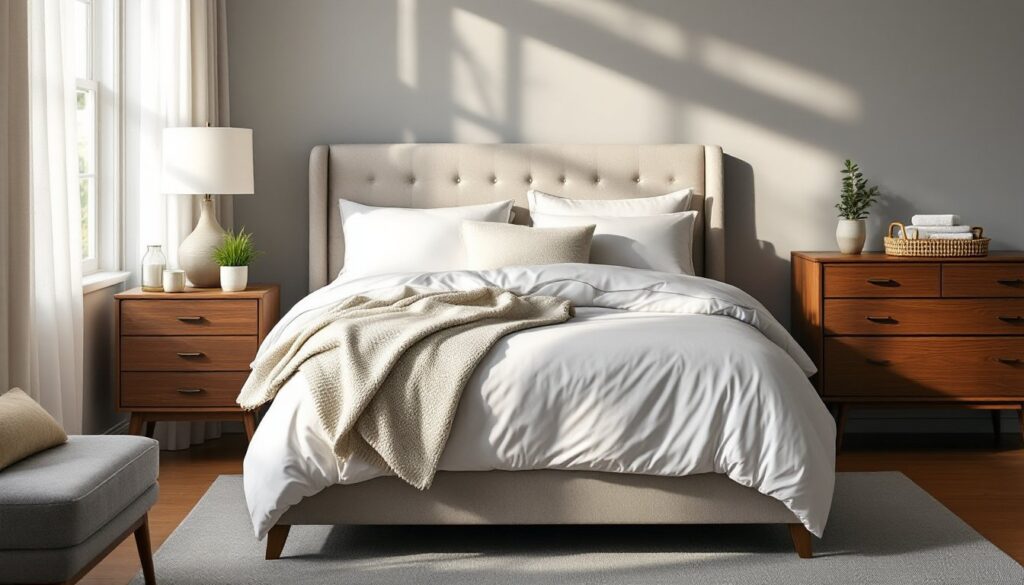
Guest bedroom furniture should create a cohesive, calming environment without imposing strong personal style that might clash with visitor preferences. Neutral color palettes, soft grays, warm whites, beiges, and taupes, provide a versatile backdrop that appeals to most guests and coordinates easily with various bedding choices.
Matching furniture sets create visual harmony but aren’t mandatory. Mixing finishes works well if pieces share a common style era or proportions. A mid-century modern dresser pairs naturally with a simple platform bed, even in different wood tones.
Consider furniture scale carefully. Oversized pieces overwhelm small rooms, while furniture that’s too delicate looks out of place in larger spaces. Measure doorways and hallways before purchasing, a beautiful armoire means nothing if it won’t fit through the door frame. Standard interior doors measure 30-36 inches wide.
Texture adds visual interest without color commitment. Many home design platforms showcase how woven rattan, brushed metal hardware, linen upholstery, and natural wood grains create depth in neutral rooms.
Lighting layers matter as much as furniture. A bedside lamp with a 3-way bulb lets guests adjust light levels for reading or ambient lighting. Position lamps so the bottom of the shade sits at shoulder height when someone’s sitting up in bed, typically 20-26 inches above the nightstand.
Avoid trendy pieces that’ll look dated in a few years. Classic furniture styles, Shaker, Mission, traditional, or clean-lined contemporary, age well and won’t require replacement when design trends shift.
Personalize without cluttering. A few thoughtful touches, a small plant, a basket of current magazines, a water carafe on the nightstand, make the space feel curated without overwhelming guests with personal items or decor.
Budget-Friendly Furniture Options Without Sacrificing Quality
Building a functional guest bedroom doesn’t require premium furniture prices. Strategic shopping and smart choices deliver quality results within modest budgets.
Prioritize where quality matters. Spend more on the mattress and less on the bed frame. A $600 quality mattress on a $150 basic platform frame outperforms a $300 mattress on a $400 ornate frame. Guests remember sleep quality, not decorative spindles.
Shop unfinished furniture and add finish yourself. An unfinished solid wood dresser runs 40-50% less than finished equivalents. One weekend with sandpaper, stain, and polyurethane yields custom results for less. Wear safety goggles and a respirator when sanding and finishing, wood dust and finish fumes cause respiratory irritation.
Estate sales, consignment shops, and online marketplaces often have solid wood furniture from past decades that outlasts modern particle board pieces. Inspect joints carefully, dovetail drawer construction and mortise-and-tenon joints indicate quality that justifies refinishing effort.
Consider flat-pack furniture from reputable manufacturers. While not heirloom quality, well-made flat-pack pieces from companies focused on engineering rather than just cost-cutting can serve a guest room well for years. Check weight ratings, dressers and bed frames should support significantly more than they’ll ever hold.
Repurpose furniture from other rooms. That dresser from a child’s room or the nightstands from a master bedroom refresh work perfectly in a guest space. Fresh paint or new hardware updates the look inexpensively. Similar techniques work well when furnishing transitional spaces throughout the home.
DIY simple pieces to save significantly. A basic nightstand requires minimal woodworking skills, a single sheet of 3/4-inch plywood, basic tools, and an afternoon build a functional piece for under $40 in materials. Pocket hole joinery makes assembly straightforward without advanced skills.
Timing matters when shopping. Furniture retailers typically discount floor models and last season’s styles in January and July. Holiday sales events offer genuine savings, not just marketing hype.
Focus spending on items guests interact with directly: the mattress, pillows, bedding, and lighting. Skimp on purely decorative elements. A $20 lamp that provides good task lighting serves guests better than a $100 decorative lamp that doesn’t illuminate properly.
Remember that building a guest bedroom is often a project completed over time. Start with the essentials, bed, mattress, basic storage, then add pieces as budget allows. A thoughtfully furnished but incomplete room beats rushing to fill space with low-quality items that need replacing within a few years.