Table of Contents
ToggleFormal dining rooms serve as the heart of refined entertaining, where holiday meals, milestone celebrations, and important gatherings unfold. Unlike casual eating spaces, formal dining rooms demand furniture that balances elegance with function. The right pieces create an atmosphere of occasion without sacrificing comfort or usability. Whether renovating an existing dining room or furnishing a new one, understanding what distinguishes formal furniture from everyday pieces makes the difference between a space that feels intentional and one that falls flat. This guide walks through the essentials: what defines formality in furniture design, which pieces complete the room, and how to select materials and arrange them for maximum impact.
Key Takeaways
- Formal dining room furniture is distinguished by solid hardwood construction, larger proportions (tables 72+ inches for six), refined decorative details, and high-quality upholstery rather than casual materials like engineered wood or simple padding.
- A complete formal dining room requires a well-proportioned table, dining chairs with proper seat height (18-19 inches), and supporting pieces like sideboards or buffets for storage and serving, arranged with 42-48 inches of clearance for comfortable movement.
- Choose hardwood species based on durability and aesthetic—mahogany offers warm tones, walnut provides dramatic grain, cherry darkens over time, and oak delivers durability at mid-range pricing—and select finishes (polyurethane, lacquer, wax) that match your maintenance preferences.
- Formal dining room furniture styles range from traditional period designs with carved details to modern minimalist pieces, but consistency in craftsmanship and material quality matters more than matching a single style.
- Proper arrangement, including centering the table beneath a chandelier, using adequately sized rugs (10×14 feet minimum for a 96-inch table), and positioning buffets to avoid direct sunlight, creates both functional flow and visual balance.
- Extension tables with quality hardware adapt to varying guest sizes, while upholstered side chairs and armchairs (26 inches wide) provide comfort for extended meals and formality through tailored fabrics and eight-way hand-tied springs.
What Makes Dining Room Furniture ‘Formal’?
Formal dining furniture differs from casual pieces in proportion, material quality, and decorative detailing. The distinction isn’t just aesthetic, it’s structural.
Scale and proportion matter first. Formal tables typically measure 30 inches high (standard dining height) but run longer and wider than casual tables, often seating eight to twelve. A formal table for six would measure at least 72 inches long, allowing 24 inches of elbow room per person plus serving space. Casual tables squeeze tighter.
Material density sets formal pieces apart. Solid hardwoods, mahogany, walnut, cherry, oak, dominate formal furniture construction. These species offer the weight, grain depth, and durability expected in heirloom pieces. Veneers appear on formal furniture but always over solid wood cores, never particleboard. Casual furniture often uses pine, engineered wood, or mixed materials.
Decorative elements signal formality through restraint and craftsmanship. Look for turned legs, carved aprons, inlaid details, or hand-applied finishes rather than bold paint colors or distressed treatments. Formality relies on subtle sophistication: a cove molding on a buffet edge, cross-banding on a tabletop, or reeded columns on chair legs. These details require skilled joinery, mortise-and-tenon, dovetail, dowel, not just screws and brackets.
Upholstery quality elevates chairs from functional to formal. Expect tailored fabrics (velvet, damask, linen), double-welt trim, and frames with eight-way hand-tied springs or high-resilience foam. Casual chairs often skip upholstery entirely or use simple padded seats.
Essential Pieces for a Complete Formal Dining Room
A functional formal dining room requires more than a table and chairs. Storage, serving surfaces, and accent pieces complete the space.
Dining Tables: The Centerpiece of Elegance
The table anchors every formal dining room. Choose between fixed-length tables and extension tables based on room size and entertaining frequency.
Fixed tables work when space is generous and guest counts remain consistent. A 96-inch table seats eight comfortably and makes a bold architectural statement. Pedestal bases (single or double) maximize legroom and allow flexible seating. Trestle bases suit traditional or farmhouse-formal styles. Four-leg tables require careful chair placement to avoid leg interference.
Extension tables adapt to varying group sizes. Designers recommend leaving 42-48 inches of clearance around the table perimeter for comfortable chair movement and serving access. Drop-in leaves store separately: self-storing leaves hide within the table frame via mechanical slides. Expect to pay more for quality extension hardware, cheap mechanisms bind, wobble, or misalign.
Table thickness matters. Tops measuring 1.5 to 2 inches thick (actual, not nominal) convey substance. Thinner tops feel flimsy, especially on larger tables. Aprons should measure at least 3 inches tall to provide structural support without crowding seated knees (which need 7 inches of clearance below the apron).
Dining Chairs: Comfort Meets Sophistication
Formal dining chairs balance visual elegance with seated comfort for extended meals. Plan for six to twelve chairs depending on table capacity.
Armchairs (host chairs) traditionally mark the table ends. Arms add presence but require more width, allow 26 inches per armchair versus 22-24 inches for side chairs. Skip armchairs entirely if the table measures less than 84 inches or if mobility is limited: arms make entry and exit more difficult.
Side chairs form the majority of seating. Look for seat heights between 18-19 inches to pair properly with a 30-inch table. Upholstered seats provide comfort: fully upholstered backs add luxury but show wear faster in high-use homes. Wood-back chairs wear better and often cost less but sacrifice padding.
Frame construction determines longevity. Quality chairs use hardwood frames with corner blocks glued and screwed into place. Check joint tightness, wobble indicates weak joinery that’ll worsen over time. For homes with kids or frequent use, consider performance fabrics (solution-dyed acrylics, crypton, microfiber) that resist staining.
Don’t forget storage and serving pieces. A sideboard or buffet provides dish storage and serving surface area, plan for 60-72 inches of length and 18-20 inches of depth. China cabinets display formal dishware and glassware, though they’ve fallen out of favor in modern homes: a bookcase-style hutch offers similar display in less formal silhouettes. Serving carts add mobility for clearing courses or mixing drinks.
Choosing the Right Materials and Finishes
Material selection affects durability, maintenance, and visual weight. Formal dining furniture traditionally uses solid hardwoods, but material mixing creates visual interest.
Wood species deliver distinct grain patterns and color tones. Mahogany offers reddish-brown warmth and fine, straight grain: it’s softer than oak but finishes beautifully. Walnut provides rich chocolate tones with dramatic grain variation, expect higher prices than other domestic hardwoods. Cherry darkens with age, shifting from pinkish-tan to deep reddish-brown over years of light exposure. Oak (red or white) delivers pronounced grain and exceptional durability at mid-range pricing.
Just as mixing wood tones in adjacent rooms requires thoughtful balance, combining materials in dining furniture adds dimension. Glass tabletops over wood bases lighten visual weight in smaller rooms. Tempered glass measuring at least 0.5 inches thick resists scratching and shattering. Metal accents, nailhead trim, iron stretchers, brass hardware, bridge traditional and contemporary styles.
Finish types protect wood and define style. Lacquer creates high-gloss, mirror-smooth surfaces common in Asian-inspired and Art Deco pieces: it’s durable but shows scratches. Polyurethane (water- or oil-based) offers tough, practical protection for high-traffic tables. Water-based versions dry clear: oil-based adds amber warmth. Wax and oil finishes deliver low-sheen, natural appearance but require periodic reapplication and offer less moisture resistance, avoid them on tabletops prone to spills.
Stain colors range from natural (clear-coated raw wood) to ebonized (near-black). Medium tones, walnut, espresso, fruitwood, hide wear better than very light or very dark finishes. Distressing and antiquing suit casual styles: formal furniture relies on clean, even color application.
Upholstery fabrics demand similar care in selection. Velvet adds luxury but shows crush marks. Linen offers texture and breathability but wrinkles and stains easily unless treated. Leather (top-grain, not bonded) ages gracefully and wipes clean, ideal for families even though higher cost.
Styles of Formal Dining Room Furniture
Formal furniture spans multiple design periods, each with distinct proportions and ornamentation. Matching style to home architecture creates cohesion: contrasting styles can work if scale and material quality remain consistent.
Traditional encompasses English, French, and American period styles (Queen Anne, Chippendale, Federal). Expect cabriole legs, carved details, rich wood tones, and classical proportions. These pieces suit Colonial, Tudor, and historic homes. Mix traditional dining furniture with study room pieces in the same wood species for whole-home continuity.
Transitional bridges traditional and contemporary by simplifying ornamentation while retaining classic proportions. Straight or tapered legs replace carved ones: fabric choices lean neutral. Transitional suits most home styles, it’s the safe middle ground when architectural cues conflict.
Modern prioritizes clean lines, minimal ornamentation, and innovative materials. Parsons tables (straight, flush legs), Saarinen tulip bases, and geometric forms define the category. Modern formal furniture relies on proportion and material quality rather than decorative carving. Publications like Architectural Digest regularly feature high-end modern dining rooms that balance minimalism with luxury.
Rustic-formal (farmhouse-refined, lodge-style) combines substantial wood construction with understated finishes. Trestle tables, ladder-back chairs, and planked tabletops deliver formality through scale rather than polish. This style suits mountain homes, converted barns, and modern farmhouses.
Hollywood Regency and Glam lean into metallics, mirrored surfaces, and bold silhouettes. Lucite chairs, brass-trimmed tables, and lacquered finishes create drama. These styles require commitment, they dominate a room.
Style consistency matters less than quality consistency. A French bergère chair can work at a Shaker table if both pieces demonstrate equivalent craftsmanship and finish quality.
How to Arrange Your Formal Dining Room Furniture
Furniture placement affects traffic flow, conversation ease, and visual balance. Start with the table, then layer supporting pieces.
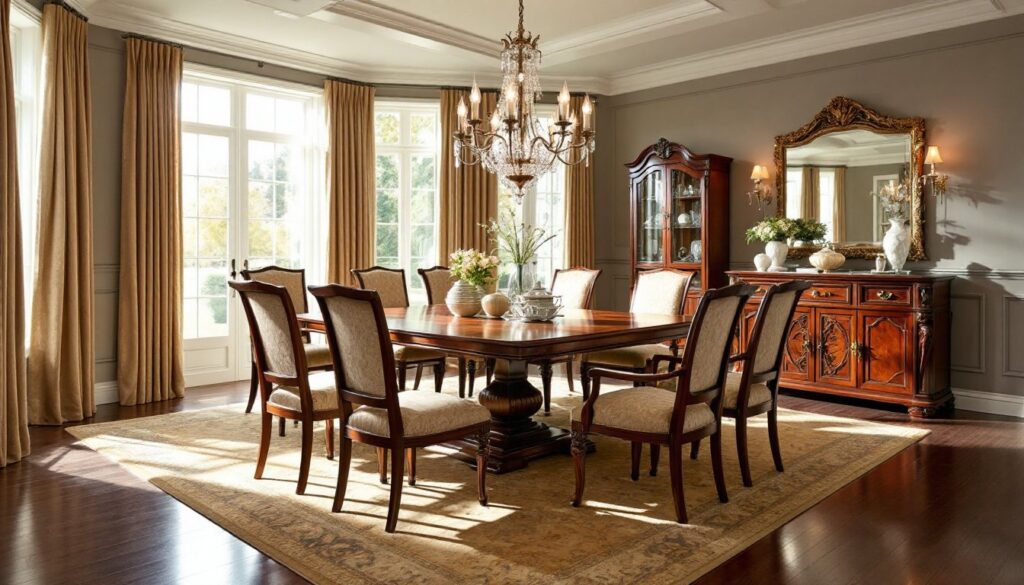
Table placement centers on the room’s architectural features. Position the table aligned with a chandelier (or plan lighting around the table). Leave equal clearance on all sides when possible, minimum 36 inches for tight spaces, 42-48 inches for comfortable passage, 60 inches if chairs need to pull out while others remain seated. In rectangular rooms, orient the table along the longest dimension unless a stunning window view dictates otherwise.
Rug sizing grounds the arrangement. The rug should extend at least 24 inches beyond the table on all sides to accommodate pulled-out chairs. For a 96-inch table, that requires a 10×14-foot rug minimum. Too-small rugs create tripping hazards and look unbalanced. Hand-knotted wool or low-pile synthetics resist staining better than high-pile or natural-fiber options.
Buffets and sideboards anchor against walls opposite windows (avoiding direct sun exposure that fades wood). Float them slightly from the wall, 2-4 inches, to allow airflow and easier cleaning. Match buffet length to table length roughly: a 60-inch buffet pairs well with an 84-96-inch table.
China cabinets work best flanking a buffet or positioned in room corners where they won’t obstruct flow. These tall pieces (often 80+ inches) require wall anchoring to prevent tip-over, use the included hardware or add L-brackets secured to wall studs. This isn’t optional: bookcases and cabinets kill kids every year.
Similar considerations apply when arranging living room furniture sets where conversation zones replace dining clearances. Interior design platforms like MyDomaine offer room-specific layout guidance that translates across furniture categories.
Lighting height follows a standard rule: hang chandeliers 30-36 inches above the tabletop for 8-foot ceilings. Raise the fixture 3 inches for each additional foot of ceiling height. The chandelier should measure one-half to two-thirds the table width to maintain proportion.
Accent pieces, mirrors, console tables, servers, fill wall space without cluttering pathways. A mirror above a buffet amplifies light and expands perceived space, but avoid placing mirrors directly opposite windows where glare becomes an issue during daytime meals.