Table of Contents
ToggleA dining room cabinet isn’t just furniture, it’s the workhorse that keeps linens tucked away, dishes organized, and your sanity intact when guests arrive. Whether you’re storing Grandma’s china or hiding the mismatched napkins you grabbed on clearance, the right cabinet transforms a chaotic dining space into something functional and polished. But walk into any furniture store and you’ll face a wall of options: buffets, sideboards, hutches, china cabinets. They all look similar until you start measuring your wall space and realize half of them won’t fit. This guide cuts through the noise, helping homeowners choose a dining room cabinet that actually works for their space, storage needs, and style, without the sales pitch.
Key Takeaways
- A dining room cabinet consolidates tableware, linens, and serving essentials in one functional space, eliminating clutter from counters and closets while anchoring the room visually.
- Choose between buffets and sideboards (32–36 inches tall) for surface serving space or china cabinets and hutches (60–84 inches tall) for vertical display, depending on your room’s ceiling height and storage needs.
- Measure your dining room carefully—wall length, table clearance (at least 36 inches), and ceiling height—and count your actual items before purchasing a dining room cabinet to avoid overspending on unnecessary size.
- Solid wood cabinets ($800–$2,500+) outlast veneer options ($300–$800), but check joinery quality (dovetail drawers and mortise-and-tenon frames) regardless of price point to ensure durability.
- Style your cabinet by grouping items in odd numbers, leaving 20–30% of shelf space empty, and mixing functional pieces with decorative accents to create visual balance without an overstuffed appearance.
- Secure tall cabinets over 60 inches with furniture anchor straps to wall studs, plan 2–4 hours for assembly with help, and use battery-operated LED lighting to highlight glassware and enhance ambiance.
What Is a Dining Room Cabinet and Why You Need One
A dining room cabinet is a freestanding or built-in storage piece designed to hold tableware, linens, serving dishes, and dining essentials. Unlike kitchen cabinets, which focus on daily cookware and food storage, dining room cabinets prioritize presentation and accessibility for entertaining.
Most dining room cabinets combine closed storage (drawers or cabinets) with open or glass-fronted display areas. This dual purpose keeps everyday clutter hidden while showcasing decorative pieces, think your wedding china, a collection of vintage glassware, or even a row of cookbooks that actually look good.
The functional case is simple: dining rooms accumulate stuff. Table runners, candlesticks, extra flatware, napkin rings, serving platters, without dedicated storage, these items migrate to kitchen counters or hall closets. A well-chosen cabinet consolidates everything in one spot, making setup and cleanup faster. It also anchors the room visually, filling wall space that might otherwise feel bare or unbalanced.
From a design perspective, a cabinet adds architectural weight to a dining room. Rooms dominated by a single table and chairs can feel sparse: a substantial cabinet introduces vertical interest and a focal point opposite or beside the table. It’s not decorative filler, it’s a practical solution that happens to look good.
Types of Dining Room Cabinets to Consider
Buffets and Sideboards
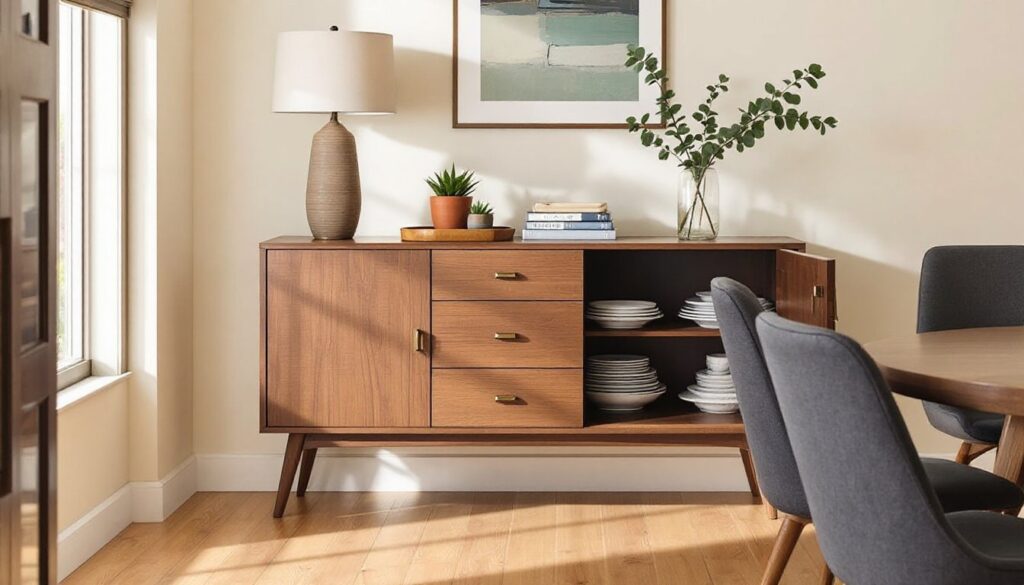
Buffets and sideboards sit low and wide, typically between 32–36 inches tall and 48–72 inches wide. They’re built for surface area and storage below, ideal if you need a serving station during meals or a spot to stage dishes before bringing them to the table.
A buffet usually features a mix of drawers and cabinets, offering flexible storage for everything from tablecloths to wine bottles. Some include built-in wine racks or silverware dividers. The top surface is prime real estate for a serving spread, a coffee bar, or decorative items like lamps and trays.
A sideboard is functionally identical but traditionally narrower and more streamlined. The terms are often used interchangeably, though sideboards lean slightly more formal in design. Both work well in smaller dining rooms or open-concept spaces where you don’t want to block sightlines. If you’re working with limited square footage, measure depth carefully, most buffets run 18–24 inches deep, which is shallower than standard kitchen base cabinets (24 inches).
For a DIY-friendly option, woodworking plans like the Shanty Sideboard offer accessible builds using standard lumber and basic joinery. Expect to budget for 2x4s, plywood, and hardware: total material cost typically runs $150–$300 depending on wood grade and finish.
China Cabinets and Hutches
China cabinets and hutches add vertical storage with glass-fronted display areas, typically standing 60–84 inches tall. A china cabinet is a standalone unit with enclosed shelving, often featuring interior lighting and adjustable glass shelves to showcase dishes or collectibles. They’re built for display first, storage second, great if you’ve got heirloom pieces worth showing off.
A hutch is a two-piece design: a lower cabinet (essentially a buffet) topped with an open or glass-fronted upper section. The base provides closed storage, while the upper shelves display items at eye level. Hutches are modular by nature, so you can sometimes buy the base and top separately or even repurpose an existing buffet with a DIY hutch top. The Fix This Build That site offers project plans for building custom hutch tops if you’re comfortable with a miter saw and pocket-hole jig.
Both styles demand wall space and ceiling height. In rooms with 8-foot ceilings, a full-height china cabinet can feel imposing, stick to hutches under 72 inches or opt for a buffet instead. If you’re placing a hutch on carpet, account for settling: use adjustable leveling feet or shims to keep doors aligned over time.
How to Choose the Right Cabinet for Your Dining Room
Start with measurements, not just the cabinet, but your room. Measure wall length, distance from the table to the proposed cabinet location (aim for at least 36 inches of clearance for chair pullout), and ceiling height. Sketch a floor plan to scale: this prevents the common mistake of ordering a cabinet that technically fits but kills traffic flow.
Consider storage needs honestly. If you rarely entertain and own six dinner plates total, a massive china cabinet is overkill. Conversely, if you host Thanksgiving annually and own multiple serving platters, a shallow sideboard won’t cut it. Count your items: How many place settings? How many serving pieces? Do you need drawer space for linens or bottle storage for wine? Match interior layout (shelves, drawers, compartments) to what you actually own.
Material and construction affect longevity and price. Solid wood (oak, maple, walnut) offers durability and can be refinished, but expect to pay $800–$2,500+ for quality pieces. Veneer over engineered wood (MDF or particleboard) costs less ($300–$800) and works fine for lighter use, but it won’t hold up to repeated moves or humidity swings. Check joinery, dovetail drawers and mortise-and-tenon frames outlast stapled or doweled construction. If buying online, read specs carefully: “wood” sometimes means wood-look laminate.
Style should complement existing furniture without being matchy-matchy. A sleek, mid-century sideboard works in a room with modern chairs, while a rustic farmhouse hutch pairs well with a reclaimed wood table. Mixing finishes is fine, actually, it’s better than a showroom set, but keep lines and proportions consistent. If your table and chairs have tapered legs and clean edges, a chunky, ornate cabinet will clash. Design resources like Design Milk showcase contemporary cabinet styling if you need visual references.
Hardware and finish matter for maintenance. Oil-rubbed bronze and matte black hide fingerprints better than polished brass or chrome. If you have kids, skip high-gloss lacquer finishes, they show every smudge. For painted cabinets, confirm whether the finish is water-based (less odor, easier cleanup) or oil-based (more durable). If you’re refinishing a vintage piece, plan to strip, sand (120-grit followed by 220-grit), prime, and apply at least two topcoats. Allow for 72 hours of cure time before loading it with dishes.
Finally, assembly and delivery. Larger cabinets often ship in pieces or require professional assembly. Confirm whether delivery includes setup and debris removal, especially for pieces over 100 pounds. If you’re assembling yourself, budget 2–4 hours and recruit help, tall cabinets are awkward and tippy until secured. For hutches and china cabinets over 60 inches tall, use a furniture anchor strap attached to a wall stud to prevent tip-over, particularly in homes with children or pets.
Styling Your Dining Room Cabinet Like a Pro
Styling a dining room cabinet isn’t about filling every shelf, it’s about balance and function. Start by grouping items in odd numbers (three candlesticks, five plates) for visual interest. Layer heights using risers or small pedestals to create depth: flat arrangements look static and uninspired.
For cabinets with glass doors or open shelving, curate what you display. Mix functional items (stacked dinner plates, glassware) with decorative pieces (a small vase, a framed photo, a vintage pitcher). Leave 20–30% of shelf space empty, negative space prevents the “overstuffed antique store” look. If you’re displaying china, plate stands or acrylic plate holders keep pieces upright and visible.
The top surface of a buffet or sideboard functions as a service bar or display zone. A common formula: anchor one end with a lamp or tall object (30–36 inches), center a tray or decorative bowl, and balance the opposite side with a small stack of books or a framed piece. Rotate seasonal items, a bowl of ornaments in December, a tray of lemons in summer, to keep it fresh without a full redesign.
Lighting makes a huge difference, especially in cabinets with interiors. Battery-operated LED puck lights or adhesive strip lights add ambiance and highlight glassware without hardwiring. Position lights toward the back of shelves to minimize glare on glass doors. If your cabinet lacks interior lighting, consider a small accent lamp on top to draw the eye upward.
Finally, keep it practical. Don’t bury everyday items behind a decorative wall, if you use those napkins weekly, they should be in an accessible drawer, not stacked behind a ceramic rooster. Store what you need where you need it, and save the showpieces for the spots you see most. If you’re reworking other rooms for cohesion, similar principles apply to spaces like a living room set or white furniture arrangement, where balance and accessibility drive good design.
Conclusion
Choosing and styling a dining room cabinet comes down to honest assessment, measure your space, count your dishes, and buy what fits your actual needs, not a showroom fantasy. Prioritize quality construction, plan for clearance and assembly, and style with restraint. Done right, a cabinet becomes the most useful piece in the room.