Table of Contents
ToggleShopping for dining chairs shouldn’t feel like deciphering a cryptic puzzle. Ashley Furniture has built a reputation for delivering solid value in the furniture market, and their dining chair lineup is no exception. Whether someone’s furnishing a first apartment or replacing worn-out seating, Ashley’s range hits a sweet spot between affordability and decent build quality. This guide cuts through the marketing fluff to help buyers understand what Ashley chairs actually offer, how to pick the right style for a space, and what to expect in terms of durability and upkeep.
Key Takeaways
- Ashley Furniture dining room chairs offer solid mid-range value, ranging from $100 to $400 per chair with engineered hardwood frames and standard joinery that handle everyday family meals reliably.
- Farmhouse and contemporary styles dominate Ashley’s collections, with rustic distressed finishes and modern upholstered options that suit both traditional and urban aesthetics.
- Proper measurements matter most when selecting Ashley dining chairs—seat height must be 10-12 inches lower than your table, and allow 24-26 inches of table edge per person for comfortable spacing.
- Polyester-blend fabrics resist staining better than natural materials and are ideal for active households, while performance fabrics with tight weaves justify the upcharge for frequent entertainers.
- Regular maintenance including six-month hardware checks, weekly vacuuming of upholstered seats, and immediate attention to spills extends the lifespan of Ashley chairs from 7-10 years with proper care.
- Open-back designs work better in open-concept spaces than solid upholstered backs, maintaining sightlines and preventing furniture from visually chopping rooms into cramped zones.
Why Ashley Furniture Dining Room Chairs Stand Out
Ashley operates as one of North America’s largest furniture manufacturers, which translates to economies of scale that keep prices competitive. Their dining chairs typically range from $100 to $400 per chair depending on materials and design complexity, a middle ground that appeals to budget-conscious shoppers who don’t want particle board garbage.
Most Ashley dining chairs use engineered hardwood frames rather than solid wood, which reduces cost while maintaining structural integrity for everyday use. The joinery often combines mortise-and-tenon construction with corner blocks and glue, a standard approach that holds up well under normal dining room conditions. Upholstered models generally feature polyester or polyester-blend fabrics with foam cushioning, sometimes adding a layer of batting for softness.
One practical advantage: Ashley’s widespread retail presence and established supply chain mean replacement parts and matching sets stay available longer than offerings from smaller brands. If someone needs to add two more chairs three years down the line, there’s a decent chance the collection is still in production.
The build quality sits firmly in the “good enough” category. These aren’t heirloom pieces destined for antique shows, but they’re engineered to handle daily family meals, assignments sessions, and the occasional impromptu craft project. Expect minor wobble after five to seven years of heavy use, standard for furniture in this price bracket. Weight capacity typically hovers around 250-300 pounds per chair, adequate for most adults but worth verifying on specific models for larger households.
Popular Ashley Dining Chair Styles and Collections
Ashley rotates collections seasonally, but certain design families remain consistent anchors in their catalog. Understanding these categories helps narrow down choices without drowning in SKU numbers.
Farmhouse and Rustic Designs
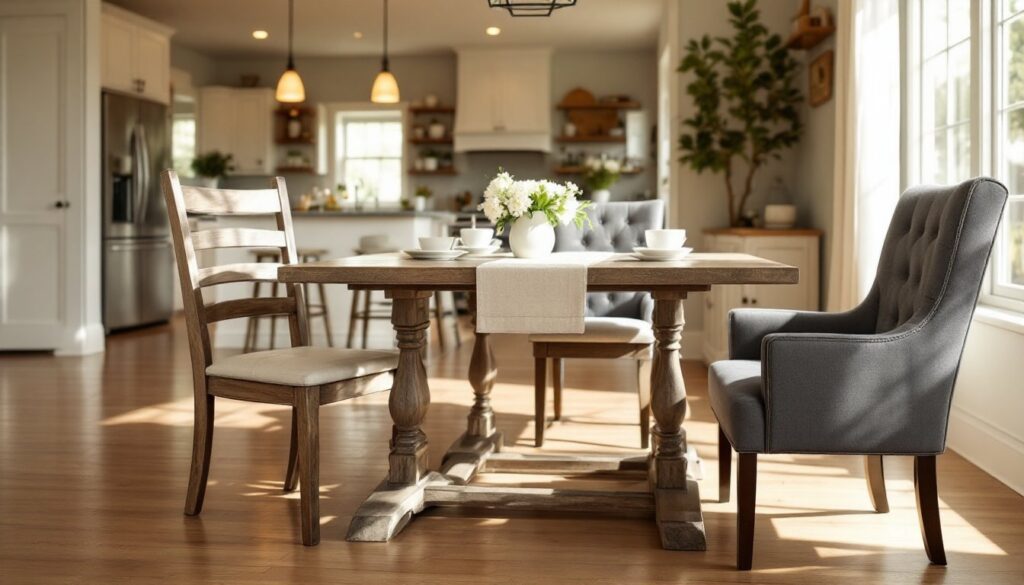
The farmhouse aesthetic dominates Ashley’s rustic offerings, featuring distressed wood finishes, X-back designs, and ladder-back styles that pair well with reclaimed wood tables. Popular finishes include weathered gray, barn brown, and antique white, all designed to look pre-loved straight from the warehouse.
Typical construction uses rubberwood or acacia with wire-brushed textures to emphasize grain patterns. The Bolanburg collection exemplifies this approach with two-tone finishes (weathered oak tops with antique white bases) and turned legs that reference traditional Windsor chair styling. Seat heights generally measure 18-19 inches, standard dining height that works with tables in the 28-30 inch range.
These designs coordinate naturally with shiplap walls, open shelving, and industrial lighting fixtures. For readers exploring cohesive room design, pairing dining chairs with complementary living room sets creates visual flow between adjacent spaces, especially important in open-concept floor plans.
Modern and Contemporary Options
Ashley’s contemporary lines lean into cleaner profiles with upholstered seats, metal accents, and geometric forms. The Centiar collection showcases this direction with spindle-back metal frames and faux leather seats, while the Parlone series offers fully upholstered parsons-style chairs with button tufting.
Material combinations get more interesting in this category: brushed nickel legs with linen-look fabrics, or matte black powder-coated steel frames paired with gray polyester. Seat depths run slightly deeper than traditional styles at 17-18 inches, accommodating a more relaxed dining posture favored in modern interiors.
These chairs work especially well in urban apartments and renovated lofts where midcentury and industrial elements mix. According to design professionals at Dwell, the key to successful modern dining spaces lies in balancing hard and soft materials, exactly what these mixed-media chairs achieve. Color palettes stick to neutrals: charcoal, slate, taupe, and cream dominate, with occasional navy or olive options for buyers wanting subtle contrast.
How to Choose the Right Ashley Dining Chairs for Your Space
Selecting dining chairs involves more than eyeballing pretty pictures online. Three measurements matter most: seat height, chair width, and total height with backrest.
Standard dining tables measure 28-30 inches tall, requiring chairs with seat heights of 18-19 inches to maintain proper ergonomics. Measure from the floor to the underside of the table apron (the horizontal support connecting table legs) and subtract 10-12 inches, that’s the maximum seat height that allows comfortable leg clearance. Counter-height tables (34-36 inches) need 24-26 inch seat heights, while bar-height tables (40-42 inches) require 28-30 inch stools.
Chair width determines how many fit around a table. Allow 24-26 inches of table edge per person for elbow room. A 60-inch rectangular table comfortably seats six using chairs around 18-20 inches wide, but squeeze seven or eight with armless designs measuring 16-17 inches.
For total room space planning, leave 36 inches minimum between the table edge and any walls or furniture, that’s the clearance needed to pull out a chair and stand up without playing furniture Tetris. High-traffic areas benefit from 42-48 inches to allow passage behind seated diners.
Fabric choice impacts maintenance burden significantly. Polyester blends resist staining better than cotton or linen, crucial for households with kids or messy eaters. Performance fabrics (marketed as “easy-clean” or “stain-resistant”) feature tighter weaves and topical treatments that repel liquids, worth the upcharge if someone’s hosting frequent dinners. Leather or faux leather wipes clean easily but shows scratches and may feel sticky in humid climates.
Armchairs add comfort but reduce flexibility. They don’t tuck fully under tables, creating visual clutter in compact spaces. A common compromise: arm chairs at table ends with armless versions along sides. This arrangement works particularly well when coordinating dining areas with nearby living room furniture, maintaining a cohesive yet varied seating landscape.
For open floor plans where dining areas flow into kitchens or living spaces, consider how chair backs appear from multiple viewing angles. Slatted or open-back designs maintain sightlines better than solid upholstered backs, preventing a “wall of furniture” effect that chops rooms into cramped zones.
Caring for and Maintaining Your Ashley Dining Chairs
Proper maintenance extends chair lifespan from “decent” to “actually worth the money.” Start with assembly, if chairs arrive unassembled, apply wood glue to dowel joints before inserting screws or bolts. The factory doesn’t do this to speed production, but a bead of carpenter’s glue strengthens connections significantly.
Check hardware every six months. Dining chairs endure constant racking forces (side-to-side stress when someone leans back or shifts weight), which loosens screws over time. Keep an Allen wrench or Phillips screwdriver handy and retighten all fasteners annually. This simple step prevents wobbly joints from becoming cracked frames.
For wood finishes, skip furniture polish entirely, it builds gunky residue that dulls surfaces. Use a barely-damp microfiber cloth for regular cleaning, then dry immediately. Spills need instant attention: blot (don’t wipe) liquids to prevent them from seeping into seams or penetrating finish coats. Deep scratches can be disguised with furniture markers or wax fill sticks matched to the finish color, available at any hardware store.
Upholstered seats demand more attention. Vacuum weekly using an upholstery attachment to prevent dust and crumbs from working into fabric weave. For spot cleaning, test any cleaner on a hidden area first, under the seat or along the back bottom edge. Mix a few drops of dish soap in cool water, apply with a barely-damp sponge using circular motions, then blot dry with clean towels. Avoid soaking fabric, which can damage foam padding underneath and create mildew issues.
Performance fabrics tagged as stain-resistant can handle isopropyl alcohol (70% solution) for stubborn spots like ink or wine. Apply with a cotton swab, work from the stain’s outer edge inward to avoid spreading, then blot dry. Interior designers featured in Elle Decor consistently recommend professional upholstery cleaning every 18-24 months for dining chairs in active households.
Protect chair feet to prevent floor damage. Felt pads (the adhesive-backed kind) reduce scratching on hardwood and tile but compress over time, replace every 3-4 months. For carpeted dining rooms, plastic or nylon glides slide more easily than felt. On high-gloss or delicate flooring like luxury vinyl plank or cork, consider chair leg caps or furniture coasters to distribute weight more evenly.
If chairs wobble even though tight hardware, check for uneven legs. Flip the chair upside down on a flat surface. If one leg doesn’t touch, trim it with a handsaw or add a felt pad shim to the short leg. For severe wobbles, inspect corner blocks, those triangular wooden braces where legs meet the seat frame. Reattach loose blocks with wood glue and finish nails.
Conclusion
Ashley Furniture dining chairs deliver solid mid-range value for buyers prioritizing cost-efficiency over artisan craftsmanship. With realistic expectations about materials and longevity, these chairs serve most households well for 7-10 years of regular use. Focus on proper measurement, honest assessment of maintenance habits, and diligent hardware checks to maximize that investment. Whether outfitting a first home or refreshing a well-used dining space, Ashley’s range offers enough variety to match most aesthetics without emptying wallets.