Table of Contents
ToggleShopping for dining room furniture isn’t about following a trend, it’s about picking pieces that’ll handle decades of family dinners, assignments sessions, and holiday chaos. The right table, chairs, and storage can turn an awkward room into a functional space that actually gets used. This guide breaks down what to look for in dining furniture that combines durability, comfort, and smart construction. No design fluff, just practical advice on materials, measurements, and how to mix pieces that work together without buying a matching set.
Key Takeaways
- Quality dining room furniture requires solid joinery, material thickness of at least ¾ inch in apron rails, and durable finishes like catalyzed lacquer to resist water rings and daily wear.
- Standard rectangular dining tables measure 36 inches wide by 60–96 inches long and require 24 inches of edge per person plus 36 inches of clearance for chair movement.
- Choose dining chairs with proper seat height (18 inches for standard tables, 24 inches for counter-height) and reinforced frames with double dowels at stress points to ensure durability.
- Storage pieces like buffets and sideboards should feature dovetail joints, soft-close drawers, and plywood bottoms at least ¼ inch thick—proportioned at roughly two-thirds your table length for visual balance.
- Mix dining room furniture pieces by aligning wood tones, finish sheens, and scale rather than buying matching sets; quality veneer over plywood performs excellently and resists warping in humid climates.
- Tempered safety glass tabletops must be at least ½ inch thick, while metal bases should use 14-gauge steel tubing welded with powder-coated finishes for stability and corrosion resistance.
What Makes Dining Room Furniture Worth Investing In?
Quality dining furniture comes down to three factors: solid joinery, material thickness, and finish durability. A table worth buying uses mortise-and-tenon joints or reinforced corner blocks, not just glue and screws. Check underneath the tabletop: you should see apron rails at least ¾ inch thick connecting the legs.
Chairs take more abuse than any other furniture in a home. Look for frames with double dowels at stress points (where the seat meets the back) and reinforced stretchers between legs. Avoid chairs held together only by staples or thin screws, they’ll wobble within a year.
Finish quality matters for longevity. Dining surfaces need either a catalyzed lacquer or conversion varnish to resist water rings, scratches, and the inevitable spill. Oil finishes look great but require regular maintenance and won’t hold up to daily use. A good finish should feel smooth but not plasticky.
Weight is a reliable indicator. Solid wood tables weigh significantly more than veneer-over-particleboard. If a 6-foot dining table feels light enough to move easily by yourself, it’s probably not built to last. Real hardwood and quality veneers over plywood cores add heft and stability.
Top Dining Tables for Every Style and Space
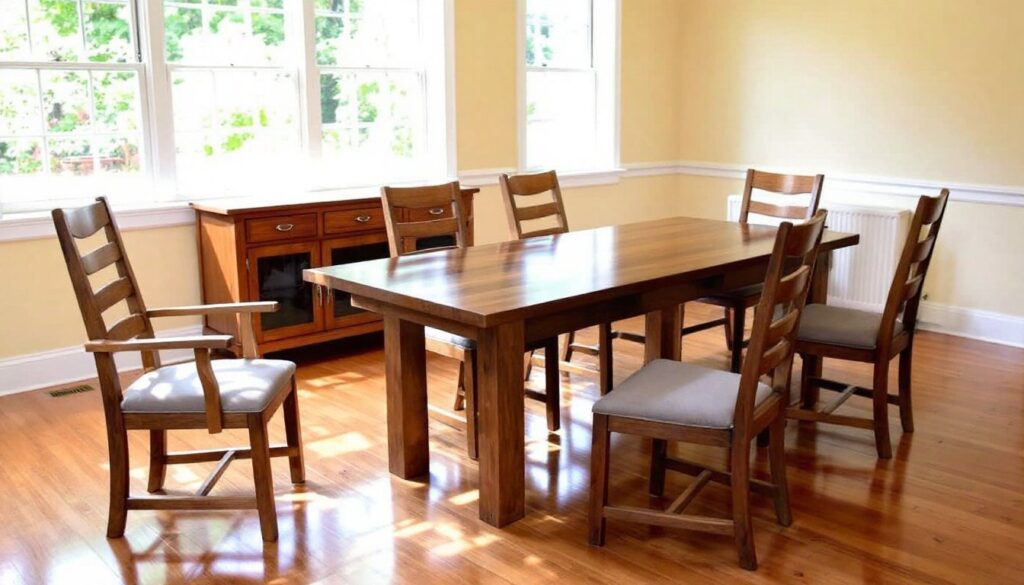
Rectangular tables remain the most practical choice for formal dining rooms. Standard dimensions run 36 inches wide by 60 to 96 inches long, enough for six to ten people depending on length. Allow 24 inches of table edge per person and at least 36 inches of clearance from the table edge to walls or other furniture for chair movement.
For smaller spaces or eat-in kitchens, round pedestal tables eliminate corner legs that interfere with seating. A 48-inch diameter comfortably seats four: 60 inches handles six. The single center pedestal offers better leg room than four-legged designs, but ensure the base is weighted properly, top-heavy tables tip when someone leans on the edge.
Extension tables with self-storing leaves beat separate leaf storage. Look for models where leaves slide out from the center or fold up from underneath. Avoid butterfly leaves that require you to pull the table apart manually, the alignment never stays tight after repeated use. Modern contemporary design elements favor sleek extension mechanisms hidden within the table frame.
Live-edge and farmhouse-style tables offer character but come with trade-offs. Live-edge slabs need proper kiln-drying and stabilization: ask for moisture content readings below 8% to prevent cracking. Farmhouse tables with distressed finishes hide wear well but make cleanup harder, food gets trapped in grooves and intentional dents.
Choosing the Right Dining Chairs for Comfort and Durability
Seat height is non-negotiable: 18 inches from floor to seat works for standard 30-inch-tall tables. Counter-height tables at 36 inches need 24-inch seat heights. Measure before buying, even an inch off makes dining uncomfortable.
Upholstered seats add comfort but require either performance fabrics or removable covers. Crypton or similar stain-resistant treatments survive spills better than untreated linen. Skip light colors unless covers are washable. For families with kids, consider chairs with removable slip seats, you can reupholster or replace the foam pad without replacing the entire chair.
Armless chairs tuck under tables completely and allow flexible seating arrangements. Armed chairs (often called captain’s chairs) need an extra 6 to 8 inches of table clearance and work best at table ends. Mixing two armed chairs at the heads with armless sides is a common approach when creating coordinated room furniture that doesn’t match exactly.
For durability, hardwood frames beat engineered wood every time. Beech, oak, and maple handle stress better than pine or rubberwood. The affordable furniture market often uses rubberwood, which works for light use but won’t survive a household with active kids or frequent entertaining.
Storage Solutions: Buffets, Sideboards, and China Cabinets
Buffets and sideboards serve the same purpose with minor differences, buffets traditionally sit lower (around 32 to 36 inches tall) while sideboards may reach 40 inches. Both provide storage for table linens, serving pieces, and dinnerware. Look for adjustable interior shelves and soft-close drawers: cheap drawer slides bind after a year of use.
Drawer construction reveals quality. Dovetail joints at drawer corners, especially English dovetails on drawer fronts, indicate solid craftsmanship. Drawers should have plywood or solid wood bottoms at least ¼ inch thick, not thin hardboard that sags under weight. Pull out drawers fully: they should glide smoothly and have stops preventing them from falling out.
China cabinets with glass doors protect displays while keeping items visible. Check that glass panels sit in proper rabbeted grooves, not just against the frame. Interior lighting (usually puck LEDs now) should be hardwired or have hidden cord management, dangling power cords ruin the look. Adjustable glass shelves with edge-polished safety glass are standard in quality cabinets.
Proportions matter for storage pieces. A buffet should be roughly two-thirds the length of your dining table for visual balance. In smaller dining areas, a narrow console table (12 to 18 inches deep) can substitute for a full-depth buffet while still offering storage.
Material Matters: Wood, Metal, and Glass Options Compared
Solid hardwood remains the gold standard for dining furniture that lasts generations. Oak, maple, walnut, and cherry age well and can be refinished multiple times. Be aware that “solid wood” legally includes pine and other softwoods, verify species. Hardwoods cost more upfront but calculate cost-per-year over a 20-year lifespan.
Veneer over plywood gets a bad reputation but quality veneers perform excellently. Plywood cores resist warping better than solid wood in humid climates. The veneer should be at least 1/32 inch thick (called “thick-sliced”) so it can survive one refinishing. Veneer over particleboard or MDF won’t hold hardware well and can’t handle refinishing.
Metal bases with wood, glass, or stone tops offer industrial appeal and extreme durability. Steel bases should use square or rectangular tubing at least 1.5 inches across with 14-gauge thickness for tables. Welded joints beat bolted connections for stability. Powder-coated finishes resist chipping better than paint. Check that metal doesn’t have sharp edges, quality fabricators deburr and radius all edges.
Glass tabletops need to be tempered safety glass at minimum ½ inch thick for dining use. Thinner glass flexes under weight and risks breakage. Tempered glass shatters into small pebbles rather than dangerous shards if it breaks. Glass shows every fingerprint and water spot, requiring constant cleaning, consider if that maintenance fits your lifestyle. When considering materials for mixed wood tones, glass acts as a neutral element that doesn’t compete visually.
How to Match Furniture Pieces Without Buying a Set
Matching sets look fine but mixing pieces adds character and flexibility. Start with a unifying element, wood tone, leg style, or finish sheen. A walnut table with walnut-toned chairs in different styles reads as intentional. Pairing a dark table with lighter chairs creates contrast without clashing, especially when one element connects them (matching metal accents or similar seat heights).
Scale and proportion matter more than matching. If your table has chunky 4×4-inch legs, pair it with substantial chairs, not delicate spindle-backs. Visual weight should balance. A heavy farmhouse table looks odd with lightweight acrylic chairs unless you’re going for deliberate contrast.
For diverse furniture combinations, finishes can vary as long as undertones align. Cherry has warm red tones: walnut runs cool and brown. Mixing them looks muddy. Oak with maple works, both have neutral undertones. When in doubt, introduce a third finish through a buffet or rug that bridges the two.
Design advice from interior styling guides often suggests the “rule of three”, using three finishes or materials creates depth without chaos. A wood table, metal-framed chairs, and a painted buffet hit that balance. Keep hardware consistent across storage pieces even if wood tones vary.
Avoid matching table and chair seat heights too precisely to a single manufacturer’s product line. Most curated dining furniture collections from different makers work together if you verify measurements. A DIY approach to furniture mixing requires more measuring and planning than buying a set, but the result feels custom rather than catalog.
Conclusion
Buying dining room furniture that lasts means prioritizing construction over trends. Check joinery, test drawer slides, verify wood species, and measure everything twice. Whether selecting a single statement table or coordinating mixed pieces, the fundamentals, solid materials, proper proportions, and quality finishes, determine whether furniture survives a decade or ends up on the curb in three years.