Table of Contents
ToggleWhite furniture transforms bedrooms into serene retreats that feel larger, brighter, and more versatile than darker alternatives. Whether someone’s working with a cozy 10×10 space or a sprawling master suite, white pieces adapt to nearly any decorating style, from coastal cottage to modern minimalist. The color’s enduring appeal lies in its ability to reflect natural light and serve as a neutral backdrop for changing tastes in bedding, wall color, and accessories. This guide walks through selecting, styling, and maintaining white bedroom furniture to create a space that feels intentional rather than incomplete.
Key Takeaways
- White bedroom furniture reflects up to 80% of natural light, making small rooms feel significantly larger and more open.
- Choose warm whites with cream undertones for cozy spaces or cool whites with gray undertones for modern aesthetics, then test samples in your actual room lighting.
- Layering textures—linen, chunky knits, jute, and raw wood—prevents all-white bedrooms from feeling sterile and adds intentional warmth to the space.
- Essential white furniture pieces include a quality bed frame, proportional nightstands with drawers, a multi-drawer dresser with dovetail joints, and optional storage benches or vanities.
- Budget-conscious options like thrift-store refinishing or IKEA hacks with white furniture reduce costs while delivering durability and long-term design flexibility.
- Maintain white furniture with weekly microfiber dusting, immediate spot-cleaning, and biannual hardware tightening to prevent yellowing and preserve painted finishes.
Why White Furniture Remains a Top Choice for Bedrooms
White bedroom furniture holds its value in both resale and design flexibility. In real estate, staged bedrooms with white furniture consistently photograph well and appeal to a broad buyer pool, agents know this.
From a practical standpoint, white reflects up to 80% of natural light, making small bedrooms feel significantly more open. A 12×12 room with white furniture and pale walls can read almost as spacious as a 14×14 with dark wood pieces. This isn’t just perception: measured lumens increase measurably in lighter-furnished spaces.
The color works across decorating styles without requiring a complete overhaul when tastes shift. A white dresser transitions seamlessly from a bohemian bedroom (paired with macramé and terracotta) to a Scandinavian setup (with gray linens and black accents) to a farmhouse look (layered with reclaimed wood and vintage textiles). That adaptability extends furniture life and reduces the need for costly replacements.
White also conceals construction variations better than stained wood. Furniture-grade pine, poplar, or MDF all take white paint evenly, whereas stain highlights every grain inconsistency and knot. For budget-conscious DIYers, this makes white pieces easier to build or refinish at home.
Essential White Furniture Pieces for Your Bedroom
Start with the anchor piece: the bed frame. Platform beds in white eliminate the need for a box spring and typically sit 12–18 inches off the floor, creating clean lines and easy under-bed access for storage. Panel beds with headboards add architectural interest, look for raised panels or board-and-batten detailing to prevent a flat, builder-grade appearance.
Nightstands should match the bed’s height proportionally. Standard nightstand height is 24–28 inches, aligning with most mattress tops (including foundation). Choose pieces with at least one drawer for storing phone chargers, reading glasses, and medications out of sight. Open-shelf nightstands collect dust quickly and make spaces feel cluttered.
A dresser serves dual duty in bedrooms without closets or in homes where closet space is tight. Six-drawer dressers (typically 30–36 inches tall) fit comfortably under windows, while taller seven- or nine-drawer chests work in corners. Look for dovetail joints in drawers, they’ll outlast stapled or glued construction by decades.
Optional but valuable: a chest of drawers (for additional folded-clothing storage), a vanity or desk (if the room doubles as a dressing area or home office), and storage benches at the foot of the bed. Benches should be 16–18 inches tall to avoid knee-banging when climbing into bed.
Many DIYers build custom pieces using free plans from woodworking sites. A simple mission-style collection offers straightforward joinery and clean lines that suit white paint finishes.
Choosing the Right White Finish and Material
Not all whites read the same under bedroom lighting. Warm whites (with cream or yellow undertones) soften spaces and pair well with brass hardware and honey-toned wood floors. Cool whites (with gray or blue undertones) feel crisper and suit modern or coastal aesthetics. Test paint samples on furniture in the actual room, north-facing bedrooms skew cooler, while south-facing spaces intensify warm tones.
Solid wood (oak, maple, pine) takes paint beautifully but requires proper prep. Sand to 220-grit, apply an oil-based primer (for tannin bleed prevention), and finish with two coats of satin or semi-gloss latex paint. Flat paint on furniture shows every fingerprint: high-gloss reads too formal for most bedrooms. Expect to use about one quart of paint per dresser, assuming two coats.
MDF (medium-density fiberboard) costs less than solid wood and provides an ultra-smooth surface, ideal for painted furniture. It’s heavy (a four-drawer MDF dresser weighs 80–100 pounds) and doesn’t handle moisture well, so avoid it in basement bedrooms prone to humidity.
Veneered furniture (a thin wood layer over plywood or particleboard) splits the difference in cost and durability. Quality veneers accept paint after light sanding, but cheap veneers can peel at edges after a few years.
For hardware, brushed nickel and matte black offer the most versatility with white furniture. Polished brass works in traditional or eclectic spaces but can read dated if the rest of the room lacks warmth. Replace builder-grade knobs with pulls that have at least a 3-inch spacing for ergonomic gripping.
Styling Tips to Prevent a Sterile or Cold Look
All-white bedrooms risk feeling like a staged model home or a hospital room, intentional layering prevents that.
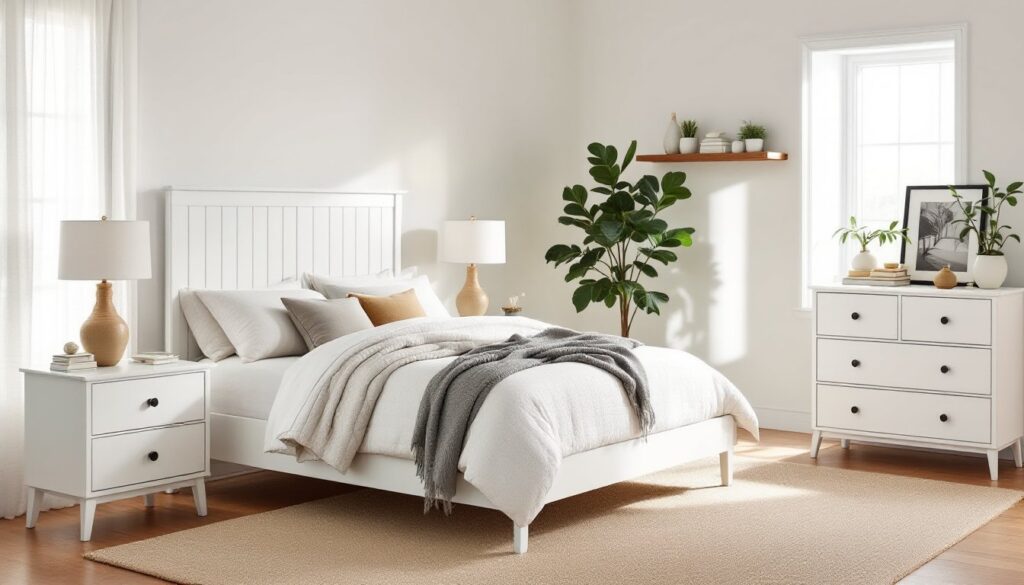
Start with texture. Mix linen duvet covers, chunky knit throws, jute rugs, and raw wood picture frames. Even an all-white palette gains warmth when five different textures interact. Avoid matching bedroom sets sold as suites: they flatten visual interest.
Introduce wood tones through floating shelves, picture frames, or a reclaimed-wood accent wall. Walnut, oak, and teak all ground white furniture without overwhelming it. A single live-edge shelf above a white dresser adds organic contrast.
Layered bedding makes the bed feel inviting rather than stark. Start with white sheets, add a textured coverlet or quilt in linen or matelassé, then top with two Euro shams and two standard shams in complementary neutrals (taupe, gray, soft blue). A lumbar pillow in a subtle pattern ties it together. DIY enthusiasts often find budget furniture makeover tutorials helpful for coordinating existing pieces with new styling.
Use plants as living accessories. A fiddle-leaf fig or snake plant in a textured ceramic pot softens hard furniture edges. Plants also improve air quality, NASA studies show common houseplants reduce VOCs from paint and finishes.
Art and lighting add personality. Avoid small, scattered frames: instead, hang one large piece (24×36 inches or larger) above the dresser or bed. Warm-toned Edison bulbs in bedside lamps (2700K color temperature) counteract the coolness of white furniture better than daylight bulbs (5000K+).
Consider extending your white furniture aesthetic to adjacent spaces: for example, white furniture in living rooms follows similar styling principles.
Maintaining and Cleaning White Bedroom Furniture
White furniture shows dust, fingerprints, and scuffs more readily than darker finishes, consistent, light maintenance beats infrequent deep cleans.
Weekly dusting with a microfiber cloth (dry or barely damp) prevents buildup. Avoid feather dusters: they redistribute dust rather than capturing it. For textured surfaces (beadboard panels, carved details), use a soft-bristle brush attachment on a vacuum set to low suction.
Spot-clean marks immediately. Use a magic eraser (melamine foam) on painted surfaces, it’s mildly abrasive, so test in an inconspicuous spot first. For stubborn marks, dampen a cloth with a 1:1 mixture of water and white vinegar, wipe gently, and dry immediately. Never let water sit on MDF furniture: it causes irreversible swelling.
Scuff marks from shoes, luggage, or vacuum cleaners respond well to a paste of baking soda and water. Apply with a soft cloth, rub gently in circles, and wipe clean. For deeper scratches, use a white paint pen or small artist’s brush with matching paint (keep leftover paint from the original finish for touch-ups).
Prevent yellowing by keeping furniture away from direct sunlight. UV rays yellow white paint over time, especially oil-based finishes. Use sheer curtains or UV-blocking window film on south- and west-facing windows.
Hardware maintenance matters. Tighten drawer pulls and knobs every six months, loose hardware causes uneven stress on drawer fronts and can crack painted surfaces. Lubricate drawer slides annually with white lithium grease or paraffin wax: avoid WD-40, which attracts dust.
For painted furniture, a clear wax topcoat (applied every 18–24 months) adds a protective barrier against stains and makes future cleaning easier. Use paste wax formulated for furniture, buff with a lint-free cloth, and allow 24 hours to cure before use.
Budget-Friendly White Furniture Options and DIY Ideas
New white bedroom furniture varies widely in cost. A basic three-piece set (bed, dresser, nightstand) from big-box retailers runs $600–$1,200 in MDF or particleboard. Solid wood equivalents start around $2,000 and climb to $5,000+ for dovetailed, furniture-grade hardwood.
Thrift stores and estate sales offer solid-wood pieces at a fraction of retail. A 1980s oak dresser might cost $75–$150 and, with prep work, takes paint as well as new furniture. Inspect for structural soundness: open drawers fully (they shouldn’t stick or tilt), check for loose joints, and avoid pieces with water damage or veneer peeling.
Painting existing furniture saves the most money. A gallon of quality latex paint ($35–$50) covers approximately 400 square feet, enough for a full bedroom set. Add $15 for primer, $10 for sandpaper (120- and 220-grit), and $20 for new hardware.
DIY steps for painting furniture:
- Disassemble: Remove drawers, doors, and hardware. Label pieces with painter’s tape.
- Clean: Wipe all surfaces with TSP substitute (trisodium phosphate cleaner) to remove grease and grime. Rinse and dry completely.
- Sand: Scuff existing finish with 120-grit sandpaper (random orbital sander speeds this up). Smooth with 220-grit. Wipe dust with a tack cloth.
- Prime: Apply oil-based primer (blocks wood tannins better than latex). Use a foam roller for flat surfaces, a brush for details. Allow 8 hours to dry.
- Paint: Apply two thin coats of latex paint, sanding lightly with 220-grit between coats. Allow 24 hours between coats.
- Seal (optional): Apply clear wax or water-based polyurethane for durability.
- Reassemble: Install new hardware for a fresh look.
Sites like Young House Love document real-world furniture painting projects with cost breakdowns and lessons learned.
IKEA hacks offer another route. A HEMNES six-drawer dresser ($279) in white is solid pine, uses dovetail joints, and accepts additional customization, swap knobs, add a wood top, or mount it as a floating credenza. The construction quality exceeds most particleboard alternatives at the same price point.
Build from scratch if you have basic carpentry skills. A simple platform bed requires: four 2×6 boards (for frame, actual dimensions 1.5″×5.5″), one sheet of ¾-inch plywood (for slats), wood glue, 3-inch deck screws, and white paint. Total material cost: $80–$120. Cutting can be done at most home centers for free or minimal charge.
Conclusion
White bedroom furniture delivers lasting value through light reflection, design flexibility, and broad appeal. Success lies in choosing the right finish for the space’s lighting, layering textures to add warmth, and committing to consistent maintenance. Whether buying new, refreshing thrift finds, or building from plans, white pieces adapt as tastes and trends evolve, a practical choice that doesn’t sacrifice style.