Table of Contents
ToggleAcademy Sports + Outdoors has built a solid reputation for affordable, functional outdoor gear, and their patio furniture line follows that same philosophy. Whether you’re outfitting a small balcony or a sprawling backyard, Academy offers a range of seating, dining, and lounge options that balance cost, durability, and everyday usability. This guide walks through what sets Academy’s outdoor furniture apart, which collections deliver the best value, and how to keep your investment looking good season after season. No fluff, just the details you need to make a smart purchase.
Key Takeaways
- Academy patio furniture balances affordability with durability by using powder-coated steel frames, weather-resistant wicker, and UV-treated fabrics that require minimal maintenance compared to premium brands.
- Most Academy patio furniture pieces assemble in 30–60 minutes with basic tools, and the retailer stocks replacement cushions and parts for current collections, extending the lifespan of your investment considerably.
- Properly measure your space and subtract 24–30 inches for walkways; a six-seat dining set requires roughly a 10-by-10-foot footprint, while a standard four-piece conversation set needs about 8-by-10 feet.
- Choose materials based on your climate: aluminum and resin wicker perform best in humid coastal areas, while UV-stabilized plastics and powder-coated metals are ideal for dry, high-UV regions.
- Extend the life of Academy outdoor furniture by washing metal frames and wicker every few weeks, storing cushions indoors during off-season, and using 600-denier protective covers if furniture stays outside year-round.
- Shop Academy’s clearance section in late summer and early fall for 30–50% discounts, with most furniture remaining durable when stored properly through winter.
What Makes Academy Patio Furniture Stand Out
Academy’s outdoor furniture isn’t trying to compete with high-end showroom brands. Instead, it targets the sweet spot between big-box basics and specialty retailer pricing. Most collections are built around powder-coated steel frames, weather-resistant wicker, and UV-treated polyester fabrics, materials that hold up reasonably well in sun, rain, and humidity without requiring constant maintenance.
The assembly process is straightforward, most pieces arrive flat-packed with pre-drilled holes and hardware included. Expect to spend 30–60 minutes per chair or table with a basic Phillips-head screwdriver and an adjustable wrench. Some larger sectionals may benefit from a second pair of hands to align frame sections during assembly.
One practical advantage: Academy stores stock replacement cushions and parts for many current-season collections. If a cushion cover tears or a frame bolt strips out, you’re not hunting down third-party replacements. This isn’t common among budget-tier outdoor furniture retailers, and it extends the usable life of your set considerably.
Pricing typically ranges from $150 for a basic bistro set to $800+ for a full conversation set with cushions. That puts Academy in direct competition with similar offerings from Walmart, Target, and Amazon’s house brands, but with the added benefit of in-store inspection before purchase.
Top Academy Patio Furniture Collections to Consider
Conversation Sets and Seating Groups
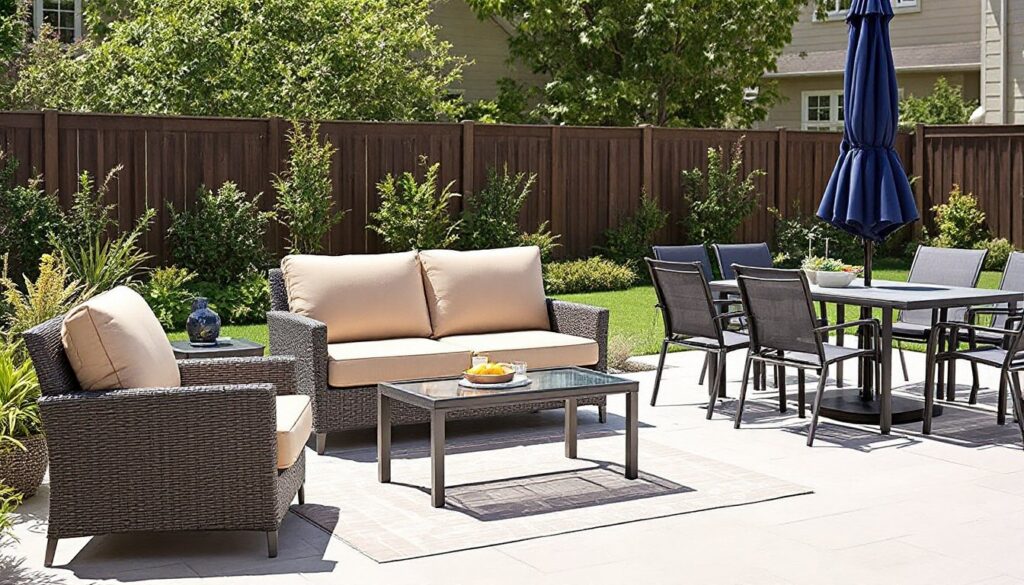
Academy’s conversation sets focus on modular seating with cushioned chairs, loveseats, and ottomans arranged around a low coffee table. The Mainstays Stanton and Mosaic Paloma lines (both frequently stocked at Academy) use resin wicker over a steel frame, with cushions running 3–4 inches thick. The cushion cores are typically polyurethane foam wrapped in polyester batting, then covered in solution-dyed acrylic fabric.
Solution-dyed fabrics resist fading better than printed or dyed-after-weaving options, but they’re not invincible. In full-sun Southern climates, expect noticeable fading after two to three seasons if cushions aren’t stored during off-months. Much like the porches and patios featured in regional design, outdoor furniture in high-UV areas benefits from seasonal rotation or protective covers.
Most conversation sets include a tempered glass tabletop supported by a wicker or metal frame. The glass is typically 5mm thick, adequate for casual use, but not designed for heavy loads or impact. If you have young kids or active pets, consider swapping the glass for a custom-cut piece of 1/4-inch polycarbonate or a wooden tabletop insert.
Dining Sets for Outdoor Entertaining
Academy’s dining sets range from compact bistro-style tables (30–36 inches round or square) to full six- or eight-seat rectangular tables measuring 60–84 inches long. Frame materials include powder-coated aluminum, steel, and occasionally cast aluminum for higher-end models.
Aluminum frames weigh less and resist rust better than steel, but they’re more prone to dings and surface scratches. Steel frames offer better rigidity and can handle heavier tabletops, but they require intact powder coating to prevent corrosion. Inspect welds and joints carefully in-store, poorly finished welds are a weak point for budget outdoor furniture.
Chairs in dining sets typically come in two styles: stackable sling chairs and cushioned stationary seats. Sling chairs use a suspended fabric seat over a metal frame, which sheds water quickly and requires minimal maintenance. They’re lighter and easier to store, but less comfortable for extended meals. Cushioned chairs provide better lumbar support and comfort but demand more care to prevent mildew.
If you’re planning regular outdoor dinners, add a 9-foot market umbrella with a 50-pound umbrella base to your setup. Academy stocks both, and the combination keeps direct sun off diners and extends usable hours into midday. Make sure the umbrella pole diameter matches your table’s center hole, most Academy tables use a standard 1.5-inch or 2-inch diameter.
How to Choose the Right Academy Patio Furniture for Your Space
Start by measuring your available space and subtracting at least 24–30 inches on all sides for walkways and chair clearance. A six-seat dining set typically requires a footprint of roughly 10 feet by 10 feet when chairs are pulled out. Conversation sets vary widely, but a standard four-piece set (two chairs, loveseat, coffee table) occupies about 8 feet by 10 feet.
Consider your patio surface before selecting furniture. Concrete slabs and composite decking provide stable, level support for any furniture style. Pavers and gravel patios can cause wobbling if chairs have narrow feet or uneven leg lengths, opt for furniture with adjustable leveling feet or wider footpads to distribute weight.
Match furniture materials to your local climate. In humid, coastal areas, aluminum and resin wicker outperform steel. In dry, high-UV regions like the Southwest, UV-stabilized plastics and powder-coated metals hold up better than natural wicker or untreated wood. If you live in an area with four distinct seasons, plan for winter storage. Most Academy furniture is light enough to move into a shed or garage, but larger sectionals may require disassembly.
Think about your typical use case. If you host large gatherings, prioritize dining sets with expansion leaves or stackable chairs. If you’re outfitting a space for morning coffee or evening reading, a bistro set or a pair of Adirondack chairs with a side table suffices. Avoid the temptation to overfill a small space, cramped outdoor seating feels more like an obstacle course than a retreat.
Check Academy’s clearance section in late summer and early fall. Much like the seasonal garden care tips shared by design and gardening resources, patio furniture follows a predictable sales cycle. End-of-season discounts can run 30–50% off, and most furniture holds up fine if stored properly through winter.
Caring for and Maintaining Your Academy Outdoor Furniture
Routine cleaning extends the life of any outdoor furniture. For metal frames, hose off dirt and pollen every few weeks, then wipe down with a solution of mild dish soap and water. Rinse thoroughly, soap residue attracts grime. Once a season, inspect powder coating for chips or scratches. Touch up bare metal immediately with rust-inhibiting spray paint to prevent corrosion from spreading.
Wicker and resin furniture benefits from the same soap-and-water treatment, but use a soft-bristle brush to clean between weave gaps. Avoid pressure washers, high pressure can fray synthetic wicker strands and crack joints. For stubborn stains or mildew, mix one part white vinegar to three parts water and scrub gently.
Cushions require the most attention. Remove covers and machine wash on a gentle cycle with cold water and mild detergent. Air-dry only, heat from a dryer can shrink covers and degrade elastic. If covers aren’t removable, spot-clean with a sponge and soapy water, then rinse and allow to dry fully before use. Never store damp cushions: trapped moisture leads to mildew and foam breakdown.
During off-season or extended non-use, store cushions in a deck box or climate-controlled space. UV exposure and moisture are the two biggest threats to cushion longevity. If indoor storage isn’t an option, invest in waterproof cushion storage bags, they run $15–$30 and add a year or more to cushion life.
Protective covers for tables and chairs are worth the investment if your furniture stays outside year-round. Look for covers made from 600-denier polyester with water-resistant backing and reinforced seams. Cheaper covers (300-denier or less) tear easily and don’t block UV effectively. Tie-down straps or elastic hems keep covers secure in wind.
Inspect hardware, bolts, screws, and joints, at the start of each season. Stainless steel hardware resists rust, but cheaper zinc-plated fasteners can corrode. If bolts are stuck, apply penetrating oil and let sit for 15 minutes before attempting removal. Replace any stripped or corroded fasteners with stainless steel equivalents from a hardware store.
For glass tabletops, use a standard glass cleaner or a mix of equal parts water and white vinegar. Dry with a microfiber cloth to avoid streaks. Store glass tops indoors during winter if possible, repeated freeze-thaw cycles can stress tempered glass and increase the risk of spontaneous breakage.
Conclusion
Academy patio furniture delivers solid value for homeowners who want functional outdoor seating without a premium price tag. Focus on matching materials to your climate, measure your space carefully, and don’t skip maintenance. With routine care and seasonal storage, a mid-tier outdoor set can easily provide five to seven years of reliable use.