Table of Contents
ToggleVictorian-era design brings ornate detail and old-world charm to outdoor living spaces. For homeowners looking to create a garden retreat or porch that feels pulled from a 19th-century estate, Victorian patio furniture delivers intricate scrollwork, curved lines, and substantial construction that modern pieces can’t match. This style isn’t just about looks, it’s about durability and weight that stands up to wind and weather without constant maintenance. Whether someone’s restoring a period home or simply loves the aesthetic, understanding the materials, construction, and upkeep requirements helps make smart choices that’ll last decades.
Key Takeaways
- Victorian patio furniture delivers ornate detail and durability through heavy cast iron construction that resists wind and weather, with pieces like bistro sets typically weighing 100-150 lbs.
- Choose materials based on sun exposure: cast iron with quality enamel finishes for partial shade, resin wicker or aluminum-frame pieces for full sun areas, and any material for covered spaces.
- Cast iron requires seasonal maintenance including thorough cleaning, rust inspection, wire-brushing damaged areas, and applying rust-inhibiting primer with exterior enamel topcoat to prevent deterioration.
- Natural wicker and rattan need protection from weather and direct rain exposure; authentic pieces cost $300-800 per chair but require storage or covered areas, while modern resin wicker survives outdoors year-round.
- Victorian patio furniture styling emphasizes layered arrangements with conversation groupings, deep jewel tones, decorative accessories like cast iron urns, and period-appropriate lighting to capture authentic 19th-century estate aesthetics.
- Verify structural integrity when selecting antique pieces by checking for cracks in cast iron (test with a metal tap for a ringing sound), loose wicker joints, rust perforation, and previous repairs before committing to refinishing costs of $75-300 per piece.
What Defines Victorian Patio Furniture?
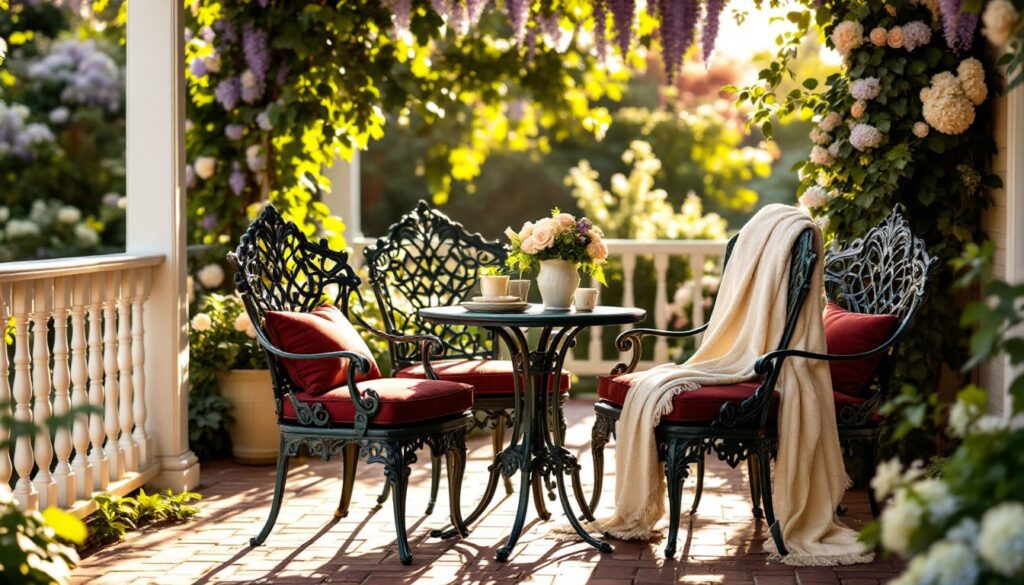
Victorian furniture emerged during Queen Victoria’s reign (1837-1901) and carried distinct characteristics that separated it from earlier Georgian simplicity or later Art Nouveau curves. Outdoor Victorian pieces feature elaborate decoration, think acanthus leaves, grape clusters, fern fronds, and geometric patterns cast or forged into the structure itself.
Key identifying features include:
• Heavy construction with substantial material thickness (cast iron bases often weigh 40-80 lbs for a single chair)
• Ornamental details that serve no structural purpose but add visual interest
• Curved or cabriole legs rather than straight posts
• Detailed back panels with pierced designs or woven patterns
• Earth-tone finishes, dark green, bronze, black, and occasionally white
Authentic Victorian pieces used available industrial materials: cast iron for mass production, wrought iron for custom work, and woven natural fibers for seats and backs. Modern reproductions follow these templates but may incorporate aluminum for lighter weight or powder-coated finishes for better weather resistance.
The style works particularly well on covered porches, under pergolas, or in garden areas with partial shade. Full sun exposure accelerates finish deterioration and can make metal surfaces uncomfortably hot during summer months.
Popular Materials Used in Victorian Outdoor Furniture
Cast Iron and Wrought Iron Pieces
Cast iron dominates Victorian outdoor furniture because it holds fine detail through the casting process. Molten iron poured into sand molds captures every scroll and leaf pattern. The material’s density (around 450 lbs per cubic foot) creates furniture that won’t tip in wind but requires serious muscle to move.
Cast iron’s main vulnerability is rust. Without proper finishing and maintenance, it’ll develop surface oxidation within months of exposure. Quality pieces come with a factory primer and topcoat (enamel or powder-coat), but any chips or scratches expose raw metal that rusts quickly.
Wrought iron offers greater tensile strength than cast iron, making it suitable for chair backs, table legs, and decorative railings that need to flex slightly under load. Blacksmiths forge wrought iron by heating and hammering, which aligns the metal’s grain structure. This process costs more than casting, so wrought iron typically appears in higher-end Victorian reproductions or restoration pieces.
Weight considerations matter for placement. A cast iron bistro set (two chairs and a small table) typically weighs 100-150 lbs total. Plan on leaving it in place seasonally rather than moving it weekly. For decks with weight limits (typically 40-50 lbs per square foot for residential builds per IRC standards), check load calculations before clustering heavy furniture in one area.
Wicker and Rattan Options
Natural wicker and rattan provided Victorian-era homeowners with lighter, more comfortable seating than solid iron. Wicker refers to the weaving technique, not a specific plant, historically, craftspeople wove willow, reed, or rattan into chair frames and backs.
Natural rattan (from climbing palms native to Southeast Asia) became widely available during Victoria’s reign thanks to expanded trade routes. The material’s flexibility when steamed allowed for the curved, organic shapes popular in Victorian design. Expect genuine rattan furniture to cost $300-800 per chair for quality construction.
Natural fibers require protection from weather. Even “outdoor” wicker should live under a porch roof or receive seasonal storage. Direct rain exposure causes the fibers to swell, dry, and eventually split. UV radiation from sunlight degrades the lignin that holds plant fibers together, leading to brittleness within 2-3 years of constant exposure.
Modern alternatives include resin wicker (polyethylene strands woven over aluminum or steel frames), which mimics the Victorian aesthetic with better weather resistance. Quality resin wicker uses UV-stabilized material rated for 2,000+ hours of sun exposure. It won’t match the authentic feel of natural fiber, but it’ll survive outdoors year-round in most climates. Distinctive vintage-style patio furniture captures this traditional craftsmanship with materials suitable for modern outdoor use.
How to Choose the Right Victorian Furniture for Your Patio
Start with space measurements. Victorian furniture tends toward generous proportions, armchairs run 24-28 inches wide, and tables rarely measure less than 30 inches across. Measure the patio or porch area and sketch a basic layout, leaving at least 30 inches of clearance for walking paths around furniture groups.
Match material to exposure level:
• Full sun, no cover: Aluminum-frame pieces with powder-coat finish or resin wicker rated for outdoor use
• Partial shade or covered areas: Cast iron with quality enamel finish, natural wicker with waterproof cushions
• Three-season rooms or fully covered porches: Any material, including painted wood frames with wicker panels
Consider the substrate underneath. Cast iron on wooden deck boards concentrates weight on small contact points (typically four feet at 1-2 inches diameter). If the deck feels bouncy or was built before 2000, check joist spacing and condition before loading it with 200+ pounds of furniture. Concrete patios, brick, or pavers handle the weight without concern.
Cushion compatibility matters for comfort. Bare cast iron seats require cushions for anything beyond brief sitting. Measure seat dimensions and back height, Victorian chairs don’t follow standardized sizes. Custom cushions cost $40-100 each depending on fabric choice. Marine-grade fabrics like Sunbrella resist fading and mildew but require occasional cleaning with mild soap.
For authentic detail-seekers, antique or vintage pieces offer genuine Victorian construction but require inspection for structural integrity. Check for:
• Cracks in cast iron (tap with a metal tool, damaged iron sounds dull rather than ringing)
• Loose joints in wicker frames (wobble indicates broken interior wrapping or weak glue)
• Rust perforation (small holes indicate metal loss that compromises strength)
• Previous repair work (visible welds, mismatched paint, or replacement parts)
Reputable sellers should disclose condition issues upfront. Budget for refinishing costs, stripping and repainting a cast iron chair runs $75-150 in labor if DIYing, or $200-300 through professional restoration services.
Caring for and Maintaining Victorian Patio Furniture
Cast and wrought iron need seasonal attention to prevent rust and finish failure. Perform these tasks in spring and fall:
- Clean thoroughly with mild dish soap and water. Use a soft brush for ornate details. Rinse completely, soap residue traps moisture.
- Inspect for damage. Look for paint chips, bubbles, or rust spots. Mark any issues with painter’s tape.
- Address rust immediately. Wire-brush rust down to bare metal (wear safety goggles and dust mask, rust particles irritate lungs). Wipe clean with denatured alcohol.
- Prime exposed metal with rust-inhibiting primer. Rust-Oleum Clean Metal Primer or similar products work well. Apply thin coats, thick layers crack when metal expands in heat.
- Topcoat with exterior enamel or powder-coat equivalent spray paint. Multiple thin coats perform better than one thick coat. Allow 24 hours cure time between coats.
- Apply paste wax (automotive or furniture wax) to finished surfaces. This adds a protective barrier and makes future cleaning easier.
Store cushions indoors during winter or prolonged rain. Even “waterproof” cushions develop mildew if left constantly wet.
Wicker and rattan require gentler care:
• Vacuum regularly with a brush attachment to remove debris from weave gaps
• Spot-clean with damp (not soaking) cloth and mild soap
• Keep out of standing water, elevate with furniture pads if sitting on surfaces that puddle
• Apply clear exterior varnish (spar urethane) every 2-3 years to natural fibers for UV protection
• Tighten loose weaving with hidden dabs of exterior wood glue applied with toothpicks
For resin wicker, pressure washing on low setting (1200-1500 PSI) works for deep cleaning. Hold the nozzle 12+ inches away to avoid damaging weave structure.
Winter storage extends furniture life significantly. If storage space allows, bring cast iron pieces into a garage or shed. If leaving outside, cover with breathable furniture covers (not plastic tarps, these trap condensation that accelerates rust). Elevate furniture off ground contact using plastic pads or bricks to prevent moisture wicking.
Styling Your Outdoor Space with Victorian Decor
Victorian outdoor spaces emphasized abundance, layered plantings, multiple seating areas, and decorative accessories that modern minimalism avoids. To capture the aesthetic without creating cluttered chaos, work in zones.
Furniture arrangement should create conversation areas. Place chairs facing each other at 6-8 feet apart (close enough to talk without shouting). A small table between seats holds drinks and provides a visual anchor. Avoid pushing furniture against walls, Victorians preferred freestanding arrangements that could be viewed from multiple angles.
Color palette traditionally featured deep jewel tones and earth colors. Dark green cast iron pairs well with burgundy or gold cushions. White or cream wicker works with soft pastels, lavender, sage, or dusty rose. Avoid bright primary colors, which clash with Victorian sensibilities.
Textile layers add authenticity. Beyond seat cushions, consider:
• Small throw pillows (12×12 or 14×14 inches) with fringe or tassel details
• Lightweight throws draped over chair backs (useful for cool evenings)
• Table runners or lace toppers for metal-top tables
Plant containers extend the period feel. Cast iron urns or ceramic planters in ornate designs hold ferns, ivy, or trailing flowers. Victorian gardens favored structured plantings, roses, lavender, boxwood, and hydrangeas all fit the era. Group pots in odd numbers (three or five) at varying heights.
Lighting sets evening ambiance. Victorian options include:
• Wall-mounted gas-style lanterns (electric with Edison bulbs)
• Freestanding lamp posts (solar versions available for areas without electrical access)
• String lights with large glass bulbs (not modern mini-LEDs)
Accessory pieces complete the scene without overwhelming it. A cast iron plant stand, small side table, or decorative wall plaque adds visual interest. When creating ornate porch designs, architectural details like turned posts and decorative brackets enhance furniture choices. Avoid going overboard, three or four statement pieces read as curated style, while ten pieces look like a flea market overflow.
Finally, consider the surrounding architecture. Victorian furniture looks natural against period homes with gingerbread trim, turrets, or wrap-around porches. On modern homes with clean lines, the contrast can be striking if intentional, but it requires confidence to mix styles successfully. For reference, various outdoor furniture styles demonstrate how Victorian elements integrate with contemporary spaces through careful material and color choices.