Table of Contents
ToggleWatching patio furniture deteriorate is frustrating, especially after spending good money on it. Sun, rain, and humidity slowly rot wood, rust metal, and fade fabric until what was once a comfortable outdoor retreat becomes an eyesore. The good news? Most patio furniture damage isn’t a death sentence. With the right approach and a few hours of work, homeowners can restore pieces to near-original condition without replacing them. This guide walks through repairing the most common types of outdoor furniture, from splintered wood and rusted metal to torn cushions and brittle wicker. Whether it’s a simple touch-up or a full rebuild, these repairs pay off in extended furniture life and saved dollars.
Key Takeaways
- Most patio furniture damage can be repaired without replacement by addressing common issues like wood rot, rust, and fabric damage through proper refinishing and structural fixes.
- Patio furniture repair requires essential tools such as sanders, wire brushes, clamps, and paintbrushes, plus material-specific supplies like wood glue, rust converters, and outdoor-grade thread.
- Wooden furniture repair starts with surface refinishing using progressive sanding and protective coats of spar varnish or marine-grade polyurethane, while structural damage requires wood glue, clamping, and dowel reinforcement for loose joints.
- Metal furniture requires removing rust with wire brushes and rust converters, then applying self-etching primer and rust-inhibiting spray paint to restore the protective coating and prevent future corrosion.
- Cushion and fabric restoration involves washing covers in cold water with vinegar to kill mildew, patching torn seams with outdoor-grade thread, and replacing collapsed foam with high-density polyurethane to extend furniture life.
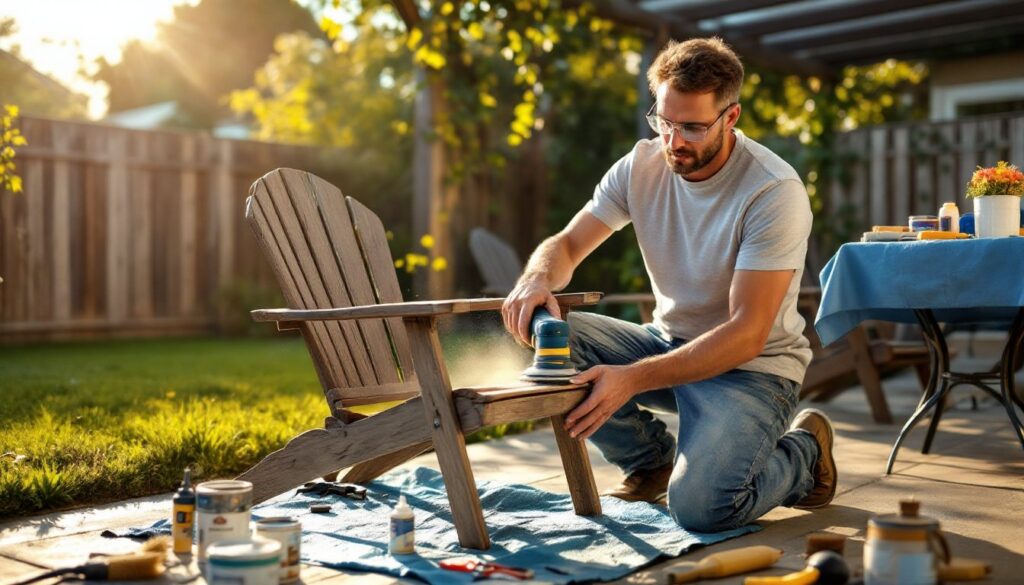
- Catching patio furniture damage early and completing repairs promptly—such as refinishing a wooden chair—can extend its lifespan by years and save hundreds of dollars compared to replacement costs.
Common Types of Patio Furniture Damage and Their Causes
Different materials fail in different ways. Wood furniture typically suffers from rot, splintering, cracked joints, and finish degradation. Cedar and teak hold up better than pine, but all wood needs maintenance. Moisture penetration is the main culprit, water enters through worn finish, gets trapped in joints, and starts the decay process.
Metal furniture, whether aluminum, steel, or wrought iron, battles rust and corrosion. Steel and iron rust when the protective coating chips or scratches. Aluminum doesn’t rust but can develop white oxidation and pitting in coastal environments. Welded joints often fail first, especially on cheaper furniture with thin-gauge metal.
Wicker and rattan become brittle from UV exposure. Natural rattan dries out and cracks: synthetic resin wicker fades and breaks at stress points. Unraveling strands and loose wrapping are telltale signs of age. Cushions and fabric face fading, mildew, torn seams, and foam breakdown. Even outdoor-rated fabrics degrade after a few seasons of direct sun and moisture. Sling chairs develop tears where fabric wraps around the frame.
Essential Tools and Materials for DIY Patio Furniture Repair
Having the right gear makes repairs faster and cleaner. Here’s what to keep on hand:
Tools:
- Orbital sander or sanding blocks (80, 120, 220-grit)
- Wire brush and wire wheel attachment for drills
- Screwdriver set and Allen wrenches
- Clamps (bar clamps for wood, C-clamps for metal)
- Paintbrushes (synthetic for water-based finishes, natural bristle for oil-based)
- Utility knife and fabric scissors
- Drill/driver with bits
- Safety gear: nitrile gloves, safety glasses, dust mask or respirator
Materials (stock based on furniture type):
- Wood: exterior wood glue, wood filler, exterior stain or paint, polyurethane or spar varnish
- Metal: naval jelly or rust converter, self-etching primer, rust-inhibiting spray paint
- Wicker: epoxy adhesive, replacement resin strands
- Fabric: outdoor-grade thread, upholstery adhesive, fabric patches, UV-resistant spray
Most of these are available at any home center. Buy materials as needed rather than stockpiling, finishes have shelf lives.
How to Repair Wooden Patio Furniture
Wood repairs range from simple refinishing to structural fixes. Start by assessing whether the damage is cosmetic or goes deeper.
Surface refinishing is the most common repair. Strip old finish with a chemical stripper or heavy sanding. Work outdoors with good ventilation and wear a respirator, strippers release strong fumes. Sand progressively from 80-grit to 220-grit, always going with the grain. Wipe down with a tack cloth before applying finish.
For finishes, spar varnish or marine-grade polyurethane offers the best UV and moisture protection. Apply three thin coats, sanding lightly between coats with 220-grit. Alternatively, exterior oil stains penetrate wood and need reapplication every 1-2 years but don’t peel like film finishes.
Structural repairs involve wobbly joints, splits, or rot. For loose joints, disassemble if possible. Clean out old glue with a chisel or wire brush. Apply exterior wood glue (like Titebond III) and clamp for 24 hours. If screws or dowels are stripped, drill out and plug with a larger dowel or use longer screws into fresh wood.
For split wood, force glue into the crack, clamp tightly, and wipe away squeeze-out. Small cracks can be filled with exterior wood filler, sanded smooth, and refinished. Rot is trickier, cut away damaged wood to solid material, sister in a new piece if it’s structural, or use an epoxy wood consolidator for minor decay. If rot is extensive or affects load-bearing parts, replacement is safer than repair. For professional help with extensive damage, homeowners can find local furniture repair specialists in their area.
Fixing Metal and Aluminum Outdoor Furniture
Metal furniture repair is all about stopping rust and restoring the protective coating. Aluminum and steel require slightly different approaches.
For rusted steel or iron:
- Remove loose rust with a wire brush or wire wheel on a drill. Get aggressive, surface rust hides deeper pitting.
- Apply naval jelly or a rust converter to remaining rust. These products chemically convert rust to a stable compound. Follow label directions for dwell time, usually 15-30 minutes.
- Rinse thoroughly and let dry completely. Any moisture left behind will cause new rust under your paint.
- Apply self-etching primer, it bonds to bare metal better than standard primer. Two coats is ideal.
- Finish with rust-inhibiting spray paint formulated for outdoor metal. Brands like Rust-Oleum and Krylon make products specifically for this. Apply light coats to avoid drips.
For aluminum oxidation:
Aluminum develops a white, chalky oxidation. Remove it with fine steel wool (0000 grade) or a paste of baking soda and water. Rinse and dry. Aluminum doesn’t need primer, just clean the surface well and apply exterior metal paint or leave bare for a natural patina.
Structural metal repairs like broken welds or bent frames usually need a welder. Homeowners with basic welding skills can tackle small cracks with a MIG welder, but this isn’t a beginner project. For tube furniture, reinforcing sleeves can be inserted inside broken tubes and secured with screws as a non-welding alternative.
Repairing Wicker and Rattan Patio Pieces
Wicker repair requires patience more than specialized tools. Natural rattan and synthetic resin wicker behave differently but use similar repair techniques.
For loose or unwrapped strands:
Unwrap the damaged section back to solid weaving. Cut away brittle or broken material. Soak natural rattan replacement strands in warm water for 20-30 minutes to make them pliable. Synthetic strands don’t need soaking but can be warmed with a heat gun to improve flexibility.
Weave the new strand following the original pattern. Secure ends with epoxy adhesive (5-minute or 30-minute epoxy both work, longer set times give more working time). Clamp or tape the repair until the epoxy cures. For tight spots, use cyanoacrylate (super glue) for quick tacking, then reinforce with epoxy.
For broken frames:
Wicker furniture has a frame (usually wood or aluminum) wrapped with wicker. If the frame breaks, repair it first using methods from the wood or metal sections above. The wicker wrapping can be removed and rewrapped after the frame is solid.
For widespread brittleness:
Natural rattan can sometimes be revived with a coat of boiled linseed oil, which adds moisture and flexibility. Apply with a brush, let soak in for an hour, then wipe off excess. This won’t fix breaks but can extend life. If most strands are cracked, rewrapping large sections becomes a multi-day project. At that point, some homeowners opt for professional restoration or replacement.
Restoring Cushions, Fabric, and Sling Chairs
Cushions and fabric see the harshest exposure. UV rays break down fiber, and moisture breeds mildew. Repairs depend on whether the problem is the cover, the foam, or both.
For faded or dirty fabric:
Wash removable covers in cold water with mild detergent. Add a cup of white vinegar to kill mildew. Air-dry only, dryers can shrink outdoor fabric. For non-removable covers, scrub with a soft brush and soapy water, rinse with a hose, and let dry fully in the sun. Stubborn mildew stains respond to a 10:1 water-to-bleach solution, but test on a hidden spot first.
For torn seams or small rips:
Use outdoor thread (polyester or PTFE-coated) and a heavy-duty needle. For machine sewing, a size 16 or 18 needle handles thick outdoor fabric. Hand-stitching works for short seams. Patch small tears with iron-on outdoor fabric patches or sew a patch on the underside.
For collapsed foam:
Cushion foam breaks down after a few years. Replace it with high-density polyurethane foam (at least 1.8 lb density for seating). Cut foam slightly oversized, it compresses into the cover for a tight fit. Wrap foam in Dacron batting before inserting to prevent the cover from sticking and to give a smoother look. According to workshop project guides, using an electric carving knife makes cleaner foam cuts than scissors or utility knives.
For sling chair fabric:
Sling chairs use a single piece of fabric bolted or sewn to the frame. Replacement fabric comes in standard widths and is available from online suppliers. Measure the old sling before removing it. Most slings attach with a rod or bolt through a sewn pocket at each end. Remove old fabric, cut new fabric to size (add 2-3 inches to each end for pockets), hem the ends, and install. Many home repair guides recommend pre-stretching sling fabric slightly before securing the second end to avoid sagging.
Conclusion
Patio furniture repair isn’t glamorous, but it’s one of the highest-return DIY projects a homeowner can tackle. A Saturday spent sanding, painting, or reweaving saves hundreds compared to replacement and keeps decent furniture out of landfills. The key is catching damage early, finish a wooden chair today, and it’ll last another five years. Let it sit, and rot spreads until the frame is compromised. Most repairs in this guide require only basic tools and moderate skill. Work methodically, don’t skip prep, and the results will look professional.