Table of Contents
ToggleCircle patio furniture breaks the traditional rectangular mold that dominates most decks and patios. Round tables, curved benches, and circular seating arrangements create natural gathering spaces that encourage conversation and flow. Unlike linear setups that can feel formal or compartmentalized, circular designs invite everyone into the same visual and social space. Whether outfitting a small balcony or a sprawling backyard, round furniture maximizes usable surface area while softening hard architectural lines. This guide covers the practical considerations, materials, dimensions, layout strategies, that make circle patio furniture work in real-world outdoor settings.
Key Takeaways
- Circle patio furniture eliminates head-of-table hierarchy and improves conversation flow by seating everyone equidistant from the center, making it ideal for entertaining and gathering spaces.
- Round dining sets should measure 48 inches in diameter for optimal capacity (4-6 people), while conversation sets pair lower table heights (16-20 inches) with curved sectionals or fire pit chairs for comfort-focused outdoor living.
- Choose aluminum for lightweight durability, teak or eucalyptus for hardwood aesthetics, or powder-coated steel for maximum stability and wind resistance when selecting materials for circle patio furniture.
- Anchor circular furniture with contrasting flooring like outdoor rugs (8-foot rug for a 6-foot table), paver circles, or stained deck elements to ground the design visually and prevent a floating appearance.
- Circular seating arrangements improve traffic flow on tight decks and patios by eliminating sharp corners while softening hard architectural lines like square pavers and rectangular pergolas without requiring additional decor.
What Makes Circle Patio Furniture Different?
The geometry matters more than aesthetics alone. Round tables eliminate head-of-table hierarchy, which changes the social dynamic for outdoor dining and entertaining. Everyone sits equidistant from the center, making it easier to pass dishes, hear conversations, and maintain eye contact across the group.
Circular furniture also improves traffic flow in tight spaces. Without sharp corners, guests can navigate around seating areas without the awkward shimmy required to clear a rectangular table edge. This becomes especially useful on narrow decks or patios bordered by planters, grills, or railings.
From a design perspective, round shapes soften the hard lines of typical outdoor architecture, square pavers, linear siding, rectangular pergolas. The contrast creates visual interest without requiring additional decor. That said, circular furniture does demand more floor space than rectangular equivalents when measuring diameter versus length, so plan accordingly before purchasing.
Types of Circle Patio Furniture Sets
Round Dining Sets
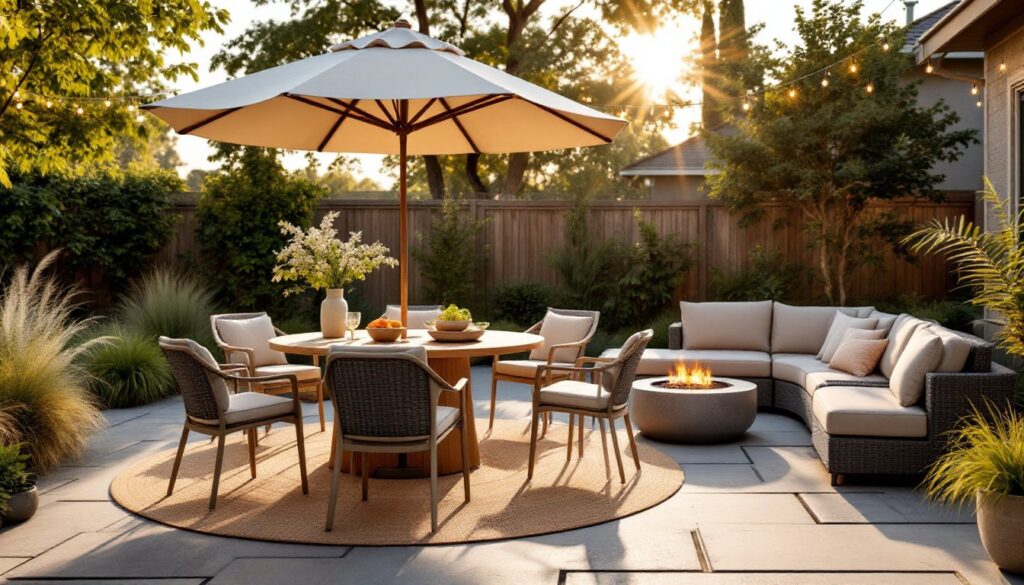
Standard round patio tables range from 36 inches (seats 2-3) to 60 inches (seats 6-8) in diameter. The 48-inch size hits the sweet spot for most families, comfortably seating four to six people with enough surface area for serving platters and centerpieces. Larger outdoor dining configurations often include a lazy Susan turntable in the center, particularly useful for condiment trays or shared appetizers.
Most dining sets pair the table with individual chairs rather than benches, since curved bench seating at dining height (28-30 inches) can feel awkward for extended meals. Look for chairs with contoured backs and armrests if the set will see regular use for multi-course dinners. Stackable aluminum or resin chairs offer flexibility for seasonal storage, though they sacrifice some comfort compared to cushioned seating.
Umbrella compatibility is non-negotiable for dining sets in full sun. Verify the table includes a center pole hole (typically 1.5 to 2 inches diameter) and an underlying support structure strong enough to hold a 9-foot canopy in moderate wind. Some budget sets skimp on reinforcement around the umbrella cutout, leading to cracked table surfaces after a season or two.
Circular Conversation Sets
Conversation sets prioritize comfort over dining functionality, with lower table heights (16-20 inches) designed for drinks and snacks rather than plated meals. These sets often feature curved sectional sofas or individual lounge chairs arranged in a semicircle or full circle around a central fire pit or coffee table.
Modular curved sectionals offer the most flexibility. Individual segments typically measure 30-36 inches wide and can be reconfigured into partial arcs, S-curves, or closed circles depending on the occasion. This adaptability makes them popular for patios that serve double duty as intimate family spaces and larger party venues.
Fire pit circle sets have surged in popularity for extending outdoor seasons into cooler months. These usually include four to six deep-seat chairs (seating depth of 24-28 inches) positioned around a 36- to 48-inch diameter fire table. Verify the set’s materials are rated for heat exposure, some resin wickers and powder coatings can warp or discolor within 24 inches of open flame. Stone, cast aluminum, and steel frames handle radiant heat better than plastic composites.
For properties with expansive patios, full-circle bench seating around large planters or fountain features creates dramatic focal points. These custom or semi-custom pieces typically require professional installation to ensure level footing and proper drainage underneath.
Choosing the Right Materials for Your Circular Outdoor Furniture
Aluminum dominates the lightweight category. Powder-coated aluminum resists rust, weighs 40-60% less than steel, and handles freeze-thaw cycles without cracking. The downside: it dents more easily than heavier metals and can feel insubstantial in windy conditions. Look for welded joints rather than bolted connections, they hold up better over time and handle the lateral stress that circular table designs can put on leg assemblies.
Teak and eucalyptus remain the gold standard for hardwood patio furniture. Both contain natural oils that repel moisture and resist insect damage. Teak weathers to a silver-gray patina unless treated annually with teak oil: eucalyptus requires similar maintenance but costs 30-50% less. Nominal dimensions matter here: a “2-inch” table slat actually measures 1.5 inches after milling. Thicker slats (true 1.5-inch or greater) resist warping better than thinner stock, especially on larger round tabletops that lack the lateral support of rectangular aprons.
Resin wicker over aluminum frames blends durability with traditional aesthetics. High-density polyethylene (HDPE) wicker won’t unravel, fade, or mildew like natural rattan. But, quality varies wildly, cheap resin wicker uses hollow strands that collapse underweight, while premium versions use solid or foam-core strands with UV stabilizers. Check weight ratings carefully: circular seating often lacks the corner bracing that adds strength to rectangular frames.
Steel with powder coating offers maximum weight and stability for fire pit sets and large dining tables. The heft keeps furniture planted during storms, but rust becomes inevitable once the coating chips. Designs favored by garden design professionals often emphasize exposed steel frames with periodic touch-ups rather than expecting maintenance-free performance. Budget an hour per year for spot sanding and spray touch-up on high-wear areas like chair legs and table edges.
All-weather cushions deserve separate consideration. Look for solution-dyed acrylic fabrics (Sunbrella is the dominant brand) with quick-dry foam cores. Cheaper polyester cushions fade within two seasons and retain water, leading to mildew. Circular seating often requires custom or specialty cushions due to curved backrests, factor an extra 20-30% cost versus rectangular equivalents.
Styling Tips for Circle Patio Furniture Arrangements
Anchor circular furniture with contrasting flooring. A round patio table looks adrift on a rectangular deck unless visually grounded. Options include:
- Circular outdoor rugs 1-2 feet larger than the furniture diameter (8-foot rug for a 6-foot table)
- Paver circles set into surrounding decking or gravel, requires layout precision but creates permanent definition
- Stained or painted deck circles using a compass jig and contrasting stain colors
Round rugs in particular help with chair scuffing on composite or softwood decking. Look for polypropylene weaves rated for outdoor use, they shed water, resist mold, and can be hosed off.
Layer heights to create visual interest around circular seating. If the main seating sits at standard chair height (18 inches), introduce planters or side tables at 24-28 inches, then add vertical elements like columnar evergreens or tall grasses at 4-6 feet. This stepped approach guides the eye upward and prevents the flat, pancake look that plague poorly styled patios.
Lighting circular arrangements requires different fixture placement than linear setups. String lights work best when hung in concentric circles or spirals rather than straight lines, this matches the furniture geometry and eliminates dark spots at the table edges. For conversation sets, consider a central pendant or chandelier hung from a pergola beam directly over the fire pit or coffee table. Ensure any overhead fixture is rated for wet locations (UL 1598 for outdoor use) and hung at least 7 feet above the deck surface to clear heads.
Many home design resources recommend avoiding perfect symmetry with circular furniture. While the table itself is symmetrical, the surrounding elements shouldn’t be. Offset the umbrella slightly if using a cantilever design, place planters at 3 and 9 o’clock rather than 12, 3, 6, and 9, and vary chair styles or cushion colors to prevent a too-matchy showroom feel.
For small patios, consider bistro-style round sets (30-36 inch diameter) placed in corners rather than centered. This opens up floor space for traffic while still providing functional seating. Pair with folding chairs that can be hung on wall hooks when not in use, this works particularly well for compact enclosed spaces where furniture needs to serve multiple purposes.
In larger yards, create satellite conversation circles rather than one massive seating area. Two or three smaller round groupings (4-6 seats each) feel more intimate than a single 12-person arrangement and allow guests to self-sort by interest or activity. Connect the circles with defined pathways, flagstone, gravel, or mulch, to establish flow without requiring hardscaping for the entire area.
Conclusion
Circle patio furniture shifts outdoor spaces from functional to intentionally social. The geometry eliminates hierarchy, improves traffic flow, and softens architectural edges, but only when matched to appropriate materials, properly scaled for the space, and anchored with thoughtful styling. Measure carefully, prioritize durability over trends, and don’t skip the prep work that makes seasonal furniture last a decade instead of three years.