Table of Contents
ToggleGrey patio furniture has quietly become the go-to choice for homeowners who want outdoor spaces that look pulled-together without a lot of fuss. It’s neutral enough to work with almost any exterior color scheme, but it’s got more character than basic beige or white. Whether someone’s working with a compact apartment balcony or a sprawling backyard deck, grey sets offer flexibility in both style and maintenance. The color hides dirt better than lighter options and doesn’t fade as noticeably as darker shades under constant UV exposure. For anyone planning an outdoor refresh in 2026, grey furniture is a smart foundation that won’t look dated in three years.
Key Takeaways
- Grey patio furniture sets offer neutral versatility that complements any exterior design while hiding dirt and resisting fading better than lighter or darker alternatives.
- Synthetic wicker with HDPE construction and powder-coated aluminum frames provide the best durability for most outdoor conditions, while steel works better in windy areas.
- Proper measurements (allowing 30–36 inches of clearance around seating) and weight capacity checks ensure grey patio furniture fits your space safely and functions as intended.
- Quality Sunbrella or solution-dyed acrylic cushions with 3–4 inches of high-density foam prevent premature fading and deterioration in full-sun environments.
- Weekly wipe-downs with damp microfiber cloth and twice-yearly deep cleaning with mild soap preserve the grey finish and extend furniture lifespan significantly.
- Layer grey patio furniture with outdoor rugs, throw pillows, umbrellas, and lighting to create a cohesive outdoor living space that mirrors interior design aesthetics.
Why Grey is the Perfect Color Choice for Outdoor Furniture
Grey hits a sweet spot that few other colors manage outdoors. It works with warm-toned brick, cool-toned siding, natural wood decks, and composite materials equally well. That versatility means homeowners don’t need to replace furniture when they repaint the house or install new landscaping.
From a practical standpoint, mid-tone greys (charcoal to slate) mask the inevitable pollen, dust, and water spots that come with outdoor use. Light greys show less fading than whites, which can yellow over time, especially on resin or plastic components. Dark greys don’t trap as much heat as black furniture, which matters when someone sits down in shorts on a July afternoon.
Grey also plays well with color. Homeowners who like to rotate cushion colors seasonally appreciate that grey frames don’t clash with jewel tones, pastels, or earth tones. It’s the outdoor equivalent of a charcoal suit, neutral enough to let accessories shine but structured enough to anchor the space. Many designers specializing in outdoor living recommend grey as a base for exactly this reason.
Finally, grey furniture blends into natural surroundings without disappearing. It doesn’t compete with gardens or views the way bright white or bold colors can. For anyone trying to create a backyard that feels like an extension of the interior, grey bridges that transition cleanly.
Types of Grey Patio Furniture Sets to Consider
Wicker and Rattan Grey Patio Sets
Synthetic wicker (typically polyethylene or resin wicker) is the workhorse of grey patio sets. It mimics the look of natural rattan but stands up to rain, snow, and UV without rotting or splitting. Most manufacturers use powder-coated aluminum frames underneath, which keeps the set lightweight enough to move but sturdy enough to handle wind.
Look for high-density polyethylene (HDPE) wicker if durability is a priority. It’s woven tighter than standard resin, resists fading better, and usually comes with a longer warranty, often 3 to 5 years on the frame and weave. The grey finish on quality synthetic wicker is baked in during extrusion, not painted on, so it won’t chip or peel.
Sets typically include a sofa, two chairs, and a coffee table, though modular sectionals are increasingly common. Modular pieces let homeowners reconfigure the layout for different gatherings or fit odd-shaped patios. Just make sure the cushions are included or budgeted separately, many sets are sold as frames only.
Natural rattan dyed grey exists, but it’s best for covered porches or sunrooms. It’ll deteriorate quickly if left exposed to the elements, even with sealant. For true outdoor use, stick with synthetic.
Metal and Aluminum Grey Patio Collections
Powder-coated aluminum is the lightest and most rust-resistant option for grey metal furniture. It won’t corrode the way steel can, and it’s easy to shift around for cleaning or rearranging. Most outdoor aluminum is extruded rather than cast, which makes it hollow and reduces weight without sacrificing strength. A typical aluminum dining set (table and four chairs) weighs 50–70 pounds total.
Steel frames offer more heft and stability, which matters in windy areas or for dining sets that need to feel solid underfoot. Look for galvanized or powder-coated steel to prevent rust. The powder coating on quality sets is electrostatically applied and then baked, creating a durable finish that resists scratches and UV fading. Grey is a popular powder-coat color because imperfections are less visible than on glossy black or white.
Wrought iron painted grey is still around, mostly in traditional or bistro-style sets. It’s heavy, a small bistro table and two chairs can weigh 60 pounds, which is great for stability but a pain to move. Wrought iron requires more maintenance: chips in the paint need touch-ups to prevent rust from spreading.
For coastal areas, aluminum is the safer bet. Salt air accelerates corrosion on steel and iron, even with protective coatings. Anyone within a mile of the ocean should avoid anything ferrous unless they’re committed to annual recoating.
How to Choose the Right Grey Patio Set for Your Space
Start by measuring the patio or deck. Add 30–36 inches of clearance around seating areas so people can walk behind chairs without squeezing. For a dining set, that means a 6-foot round table needs at least a 10-foot-diameter space. Sectionals need even more room, measure the full footprint before ordering.
Consider how the set will be used. Conversation sets (sofa, chairs, coffee table) work for lounging and casual meals. They’re typically lower to the ground, around 16–18 inches seat height, which feels relaxed but can be hard for older adults or anyone with knee issues to get out of. Dining sets sit at standard table height (28–30 inches) and are better for actual meals, especially if grilling is part of the routine.
For small balconies or patios, look for bistro sets or folding options. A 24–30 inch round table with two chairs fits in tight quarters and can be collapsed for storage. Some aluminum and steel sets fold flat enough to hang on a wall hook, which is a game-changer for apartment dwellers.
Weight capacity matters more than most people think. Commercial-grade furniture typically supports 300+ pounds per seat: residential sets can be as low as 200–250 pounds. If the household includes larger individuals or if kids will be climbing on chairs, check the specs. Lightweight aluminum frames are great for portability but may flex or tip more easily than heavier steel.
Shade and exposure also factor in. Full-sun patios need UV-stabilized materials, look for manufacturers that specify UV resistance ratings. Covered or partially shaded areas can get away with lighter-duty finishes. If the set will stay out year-round in a harsh climate (heavy snow, high desert sun), budget for higher-grade materials. The cheapest sets rarely last more than two seasons under tough conditions.
Styling Your Grey Patio Furniture with Cushions and Accessories
Grey frames are forgiving, but cushions make or break the look. Sunbrella or solution-dyed acrylic fabrics are the standard for outdoor cushions, they resist fading, mildew, and water better than cotton or polyester blends. Expect to pay $30–80 per seat cushion depending on size and thickness. Cheaper polyester cushions fade within a season in full sun.
Cushion thickness affects comfort and durability. 3–4 inches of foam with a high-density rating (1.8 lb/ft³ or higher) holds up better than thin, cheap foam that compresses into a pancake after a few months. Some higher-end cushions use quick-dry foam that sheds water faster, which is worth considering if the set is uncovered.
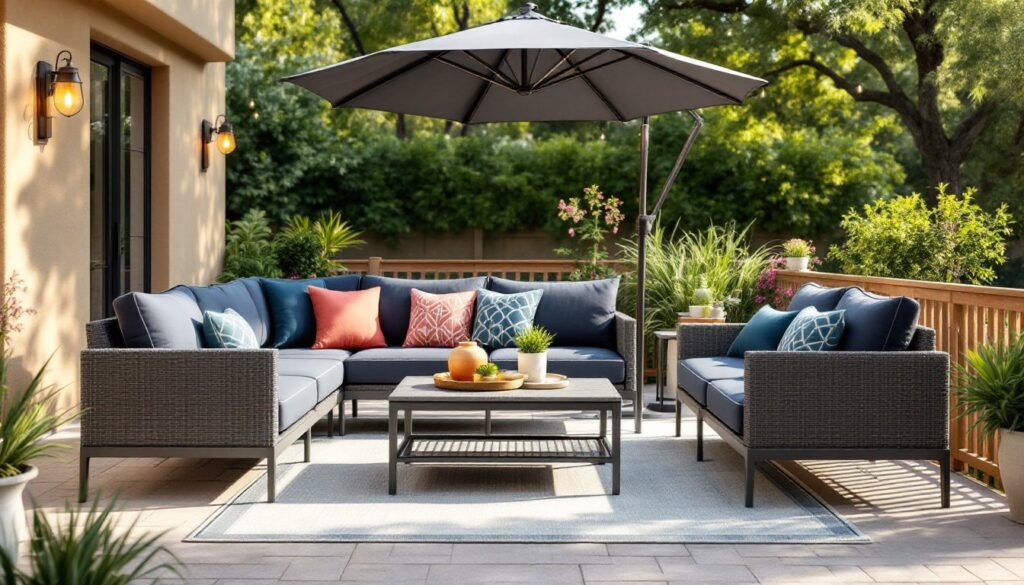
Color-wise, grey pairs well with almost anything. Navy, teal, and coral are popular accent colors that pop against grey without overwhelming it. For a more subdued look, stick with whites, creams, and soft blues. Patterned cushions (stripes, geometrics) add visual interest without requiring a full redesign when tastes change. Resources like The Spruce offer seasonal styling ideas that rotate colors and patterns to keep outdoor spaces fresh.
Accessories beyond cushions include:
- Outdoor rugs: Define seating areas and add softness underfoot. Polypropylene rugs resist mold and can be hosed off. Aim for a rug that extends 18–24 inches beyond the furniture footprint.
- Throw pillows: Smaller accent pillows (12×12 or 16×16 inches) let homeowners experiment with trends without committing to expensive cushion sets.
- Side tables: Lightweight resin or metal side tables provide landing spots for drinks. C-shaped tables slide under sofa arms, which is handy for tight spaces.
- Umbrellas and shade: A 9-foot market umbrella fits most dining sets. Look for aluminum poles with crank lifts and fade-resistant canopy fabric. Cantilever umbrellas work better for sectionals since the pole is offset.
Lighting extends usability into the evening. Solar string lights are easy to install (no electrician required) and add ambiance. For task lighting over dining tables, battery-powered LED lanterns or plug-in pendant lights work if there’s an outdoor outlet nearby. Just make sure any electrical components are rated for wet or damp locations per NEC Article 110.11.
Maintenance Tips to Keep Your Grey Patio Furniture Looking Fresh
Regular cleaning prevents most long-term damage. Wipe down frames weekly with a damp microfiber cloth to remove pollen, dust, and bird droppings. For synthetic wicker, use a soft brush to get into the weave, a toothbrush works for tight spots. Avoid pressure washers on wicker: the force can fray the resin strands.
Deep clean twice a season with mild dish soap and warm water. Mix a few drops of soap in a bucket, scrub with a soft sponge, and rinse thoroughly. For stubborn stains on powder-coated metal, a paste of baking soda and water works without scratching the finish. Never use abrasive cleaners, steel wool, or harsh chemicals like bleach, they’ll dull or strip the coating.
Cushions need attention too. Remove covers and wash according to the manufacturer’s instructions, most Sunbrella fabrics are machine washable in cold water on gentle cycle. Air dry only: heat can shrink covers or damage waterproof backing. If covers aren’t removable, spot-clean with soap and water and let them dry fully before putting them back on the furniture. Mildew grows fast on damp cushions left in humid climates.
In winter or during long periods of non-use, store cushions indoors if possible. A basement, garage, or shed works. If indoor storage isn’t an option, invest in a ventilated storage box to keep them dry and rodent-free. Furniture covers are a decent second choice but need to be breathable: waterproof tarps trap moisture and cause more problems than they solve.
Inspect hardware annually. Tighten loose bolts and screws, aluminum and steel both expand and contract with temperature changes, which can loosen fasteners. For steel or wrought iron, check for rust spots. Catch them early by sanding lightly with fine-grit sandpaper (220-grit) and touching up with matching spray paint. Let the paint cure fully before using the furniture.
If the grey finish starts to fade or look chalky after a few years, automotive wax can restore some luster. Apply a thin coat, let it haze, then buff with a clean cloth. This works on both metal and synthetic wicker. It’s not a permanent fix, but it buys another season or two before refinishing becomes necessary.
For anyone who wants coordinated outdoor and indoor aesthetics, grey furniture carries over well. The same neutral palette that works on a patio can echo in living room sets for a cohesive whole-home look.